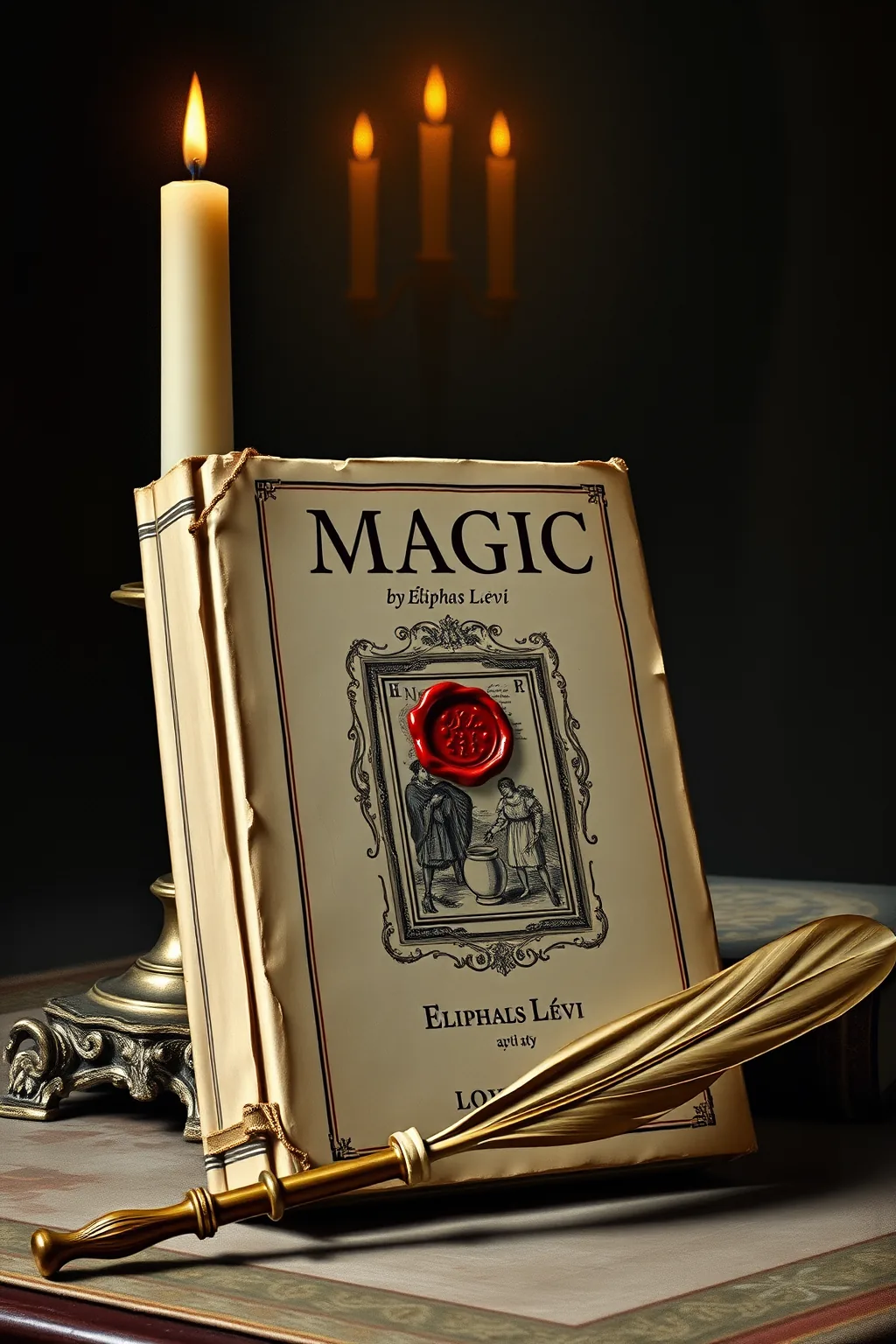
Magic
 61
61

Magic

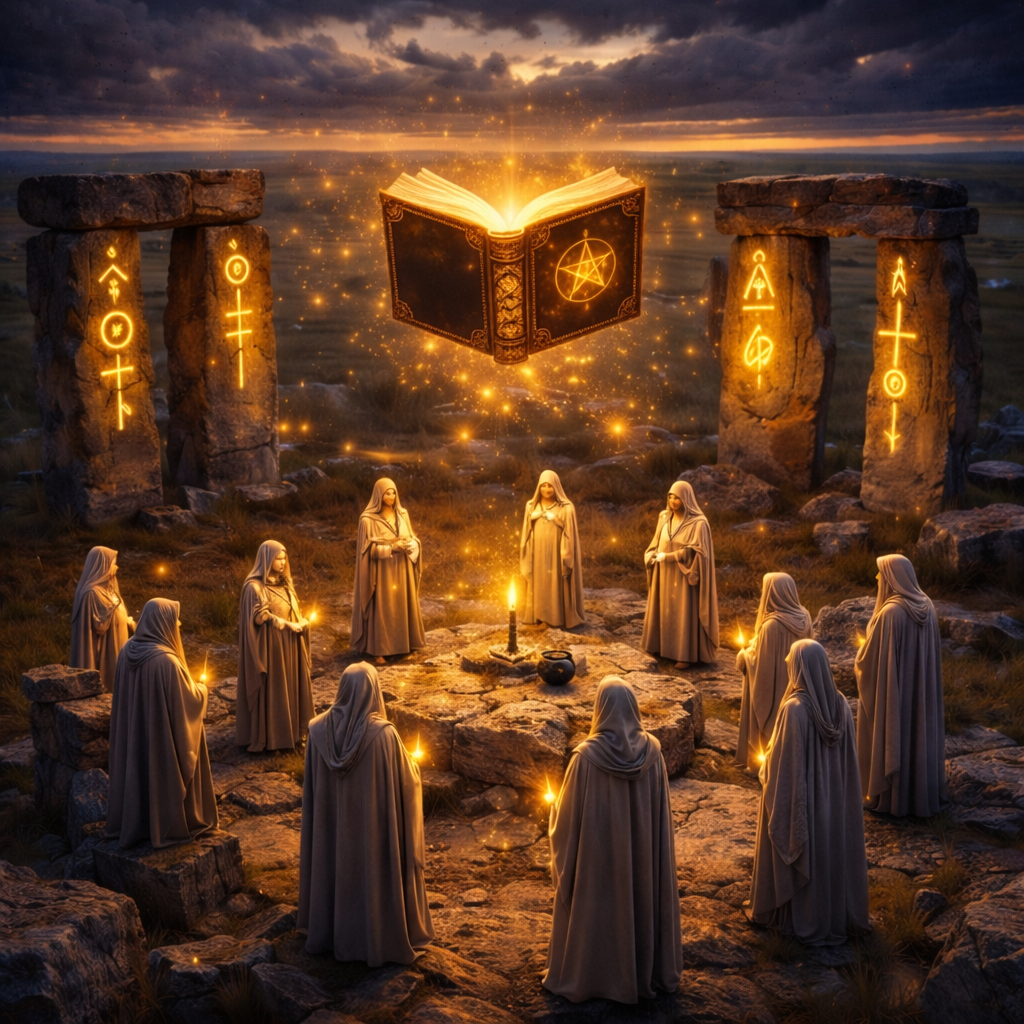

Lorelei Sage, Contemplative Literature Editor: Éliphas Lévi’s 'Magic' stands as a monumental pillar in the edifice of Western esotericism. This work transcends simple instruction, offering a profound philosophical and symbolic exegesis of magical principles. Lévi masterfully synthesizes Kabbalistic doctrines, hermeticism, and ceremonial practices, presenting a coherent system of spiritual alchemy. His intricate explanations of divine correspondences and the human microcosm are both illuminating and challenging. While dense at times, the rewards for the diligent reader are immeasurable, offering a robust framework for understanding the mechanics of manifestation and spiritual ascent. Essential for serious students of occultism and those seeking the intellectual underpinnings of magical traditions.
📝 Description
61
Éliphas Lévi's 'Magic' was published in 1856, aiming to synthesize occult traditions.
Published in 1856, Éliphas Lévi's 'Magic' presents a comprehensive system of occult philosophy. Lévi, a central figure in 19th-century esotericism, sought to reconcile various mystical traditions under a unified framework. He discusses the nature of divine will, human will, and their interaction with the material world through symbolic language. The book details correspondences between macrocosm and microcosm, drawing on Kabbalistic principles and the symbolism of the Tarot.
Lévi also covers aspects of ceremonial magic, emphasizing the role of will and imagination in spiritual practice. He explains magic as the science of the wise, a means to understand and influence natural forces through symbolic operations. The text is structured to guide the reader from basic occult principles to more advanced concepts, encouraging intellectual rigor and a disciplined approach to spiritual development. It serves as an introduction to his broader esoteric system.
Éliphas Lévi's 'Magic' is a cornerstone text of 19th-century Western esotericism, particularly for its attempt to systematize and revive occult traditions. It emerged during a period of renewed interest in magic, spiritualism, and ancient mysteries, influenced by figures like Eliphas Levi himself, as well as earlier Hermetic and Kabbalistic sources. Lévi aimed to provide a rational and philosophical basis for magic, differentiating it from mere superstition. His work bridges earlier occult texts with later developments in magical theory and practice.
💡 Why Read This Book?
Embark on a transformative journey into the very essence of magical theory and practice. Lévi's 'Magic' is indispensable for anyone seeking to understand the symbolic language of the universe, the principles of spiritual transformation, and the historical foundations of Western esotericism. Ideal for practitioners, scholars, and genuine seekers of hidden knowledge who are ready to engage with profound metaphysical concepts.
⭐ Reader Reviews
Honest opinions from readers who have explored this book.
❓ Frequently Asked Questions
What is the core philosophy of Éliphas Lévi's 'Magic'?
Lévi's philosophy centers on the belief in a universal, intelligent force (the Astral Light) that governs all existence. Magic, in his view, is the science of directing this force through will, symbolism, and ritual to achieve spiritual and material transformation.
Is this book suitable for beginners in magic?
While comprehensive, Lévi's work is intellectually demanding and best approached by those with a foundational understanding of esoteric concepts or a serious commitment to study. Beginners may find it beneficial to read alongside introductory texts.
What role does symbolism play in Lévi's magic?
Symbolism is paramount. Lévi argues that the universe is written in a symbolic language, and understanding these symbols (from hieroglyphs to Tarot) is key to communicating with and influencing the Astral Light.
What is the 'Great Work' that Lévi discusses?
The Great Work, or Magnum Opus, refers to the process of spiritual perfection and alchemical transformation, aiming to achieve union with the divine and mastery over oneself and the material world.
Does Lévi cover practical spellcasting?
While he lays the theoretical and symbolic groundwork for ceremonial magic, Lévi's focus is more on the philosophical and spiritual underpinnings rather than providing step-by-step spell instructions. Practical application requires further study and interpretation.
🔮 Key Themes & Symbolism
The Astral Light and Universal Will
Lévi posits the existence of the Astral Light, a luminous, omnipresent substance that acts as the medium for all manifestation. He teaches that human will, properly directed through focused intent and understanding, can interact with and shape this light, forming the basis of magical efficacy. This concept underscores the interconnectedness of all things and the potential for humanity to consciously participate in the cosmic order, moving beyond passive observation to active co-creation.
The Science of Symbols and Correspondences
Central to Lévi's system is the profound importance of symbolism. He argues that the universe communicates through a wide range of symbols – from the letters of the Hebrew alphabet to the figures of the Tarot and the celestial bodies. Understanding these correspondences allows the practitioner to decode the divine language, perceive hidden relationships, and perform rituals that resonate with universal forces. This theme highlights magic as an intellectual and interpretive discipline, requiring deep contemplation and study of ancient wisdom.
The Path of Initiation and Spiritual Alchemy
Lévi presents magic not just as a set of techniques, but as a path of personal transformation and spiritual evolution, often termed the Great Work. This involves rigorous self-discipline, ethical development, and the purification of the soul to align with higher spiritual principles. The book guides the reader through the stages of initiation, emphasizing the importance of inner transformation as the prerequisite for external magical achievement, mirroring the alchemical process of transmuting base matter into gold.
💬 Memorable Quotes
Direct passages from the work, attributed to the author.
“The science of magic is the science of the divine.”
— This highlights Lévi's view of magic as a sacred, divinely inspired pursuit, not mere trickery, but a profound understanding of cosmic laws.
“The key of the Great Work is the knowledge of the sacred alphabet.”
— This points to the fundamental role of language, symbolism, and esoterica, particularly the Hebrew alphabet, in unlocking the mysteries of creation and transformation.
“We are all in the Astral Light, and the Astral Light is in us.”
— An assertion of the omnipresence of the fundamental magical substance and the interconnectedness of humanity with the universal ether.
“The magician is he who knows how to want.”
— This emphasizes the power of focused will and intent as the primary engine of magical action, a core part of Lévi's system.
“To know, to dare, to will, to keep silent.”
— The four cardinal virtues of the magician, outlining the essential qualities of intellect, courage, determination, and discretion required for magical practice.
🌙 Esoteric Significance
Tradition
Lévi's work is a synthesis, primarily drawing from Kabbalah, Hermeticism, and Neoplatonism, while also incorporating elements of Gnosticism and ceremonial magic. He sought to create a universal occult science, demonstrating the underlying unity of all mystical traditions and their shared roots in ancient wisdom. His system provided a structured framework for understanding the divine, the cosmos, and the human soul's place within them.
Symbolism
Symbolism is the very language of Lévi's magic. He meticulously deciphers the symbolic meanings embedded in Tarot, the Hebrew alphabet, astrological correspondences, and alchemical imagery. For Lévi, these symbols are not mere representations but active forces that, when understood and employed correctly, can influence the Astral Light and facilitate spiritual transformation. The iconic Baphomet, for instance, is presented as a complex symbol of the equilibrium of opposites.
Modern Relevance
Despite its historical origins, Lévi's 'Magic' remains remarkably relevant. Its exploration of consciousness, will, and the power of symbolic representation resonates deeply with modern psychological and philosophical inquiries. The book offers a profound critique of materialism and a compelling argument for the existence of unseen forces and spiritual dimensions, providing a foundational text for contemporary practitioners of ceremonial magic, hermeticism, and those interested in the perennial philosophy.
👥 Who Should Read This Book
This key work is essential for serious students of Western esotericism. **Practitioners** will find a robust theoretical framework for their craft, deepening their understanding of ritual and symbolism. **Scholars** of religion, philosophy, and history will discover a critical text that shaped occult thought. **Seekers** drawn to metaphysical inquiry and the nature of consciousness will find clear insights. While accessible to the dedicated beginner, it is particularly rewarding for those with some prior exposure to occult concepts, offering a rich, challenging, and ultimately clear journey into the heart of magic.
📜 Historical Context
Written in the mid-19th century, Éliphas Lévi's 'Magic' emerged during a period of intense spiritual and intellectual ferment in Europe. The decline of traditional religious authority, coupled with the rise of scientific rationalism, paradoxically fueled a resurgence of interest in the occult, mysticism, and esoteric philosophies. This era saw the flourishing of secret societies, spiritualism, and the reinterpretation of ancient traditions. Lévi, a French occultist, was instrumental in synthesizing various streams of esotericism – Hermeticism, Kabbalah, Gnosticism, and ceremonial magic – into a coherent system that profoundly influenced subsequent generations of occultists, including figures like Aleister Crowley and the founders of the Hermetic Order of the Golden Dawn. His work bridged the gap between older magical traditions and the evolving intellectual landscape.
📔 Journal Prompts
Reflect on a personal symbol that holds deep meaning for you. How might this symbol connect to the concept of the Astral Light or universal will?
Lévi emphasizes the importance of 'knowing how to want.' Describe a situation where your will was effectively or ineffectively applied. What lessons can be drawn?
Consider the concept of divine correspondences. Choose an object or natural phenomenon and explore its potential symbolic connections to other elements (e.g., planets, colors, emotions).
How does Lévi's view of magic as a 'science of the divine' challenge or affirm your current understanding of spirituality or religion?
Meditate on the principle of 'To know, to dare, to will, to keep silent.' How can these four virtues be cultivated in your daily life, both magically and non-magically?
🗂️ Glossary
Astral Light
A subtle, luminous, and omnipresent fluid or ether believed by Lévi to be the medium through which all phenomena manifest and the primary substance manipulated in magical operations.
Kabbalah
An esoteric system of Jewish mysticism concerned with the nature of God, the creation of the universe, and the relationship between the divine and the human, often studied through the Tree of Life.
Great Work
The Main work, referring to the process of spiritual perfection, alchemical transformation, and the ultimate attainment of divine consciousness or enlightenment.
Gnosis
Spiritual knowledge, insight, or understanding, particularly a knowledge of divine things that is often considered intuitive or revealed rather than purely intellectual.
Ceremonial Magic
A structured system of ritualistic magic involving specific invocations, evocations, symbolic actions, and the use of magical tools to achieve desired spiritual or material results.
This book appears in 2 collections
🔮 Readers Also Liked
Browse all →









More by Éliphas Lévi
All books →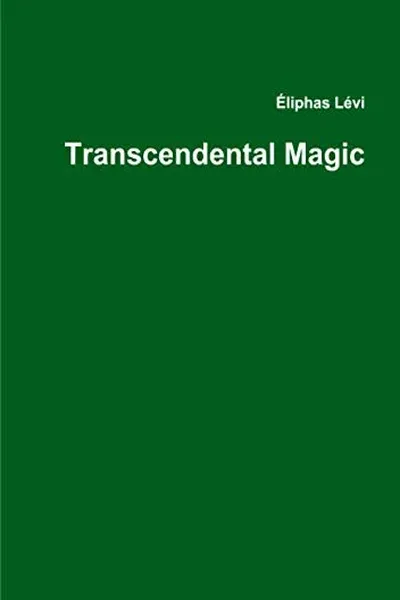



From the “Ritual Magic” Collection
View all →




More Free Magic & Ritual Books
View all →