Like Cats and Dogs
 75
75

Like Cats and Dogs
Steven Heine’s examination of the Mu Koan, "Like Cats and Dogs," provides a scholarly yet accessible entry into a foundational element of Zen practice. The strength of the work lies in its meticulous tracing of the koan's lineage and its varied interpretations across different Zen traditions. Heine’s ability to distill complex doctrinal points into understandable prose is commendable. However, the book occasionally feels overly academic, which might deter casual readers seeking purely experiential guidance. A particularly insightful passage details the translation challenges and the subsequent loss of nuance when the koan moved from Chinese to Japanese contexts. Ultimately, "Like Cats and Dogs" serves as an authoritative guide for serious students of Zen and its historical development.
📝 Description
75
Steven Heine's 2017 book examines the Mu Koan, a central text in Zen Buddhist practice.
Steven Heine's "Like Cats and Dogs" offers a close look at the Mu Koan, a key text in Zen Buddhist training. The book covers how this koan was passed down, understood, and maintained its importance across different Zen traditions. Heine follows the koan's path from its beginnings to its wide use and changes over time. This work is mainly for Zen students and practitioners who want a deeper grasp of koan study. It should also interest scholars of religion, comparative philosophy, and those curious about the history of Buddhist traditions. Some prior knowledge of Buddhist ideas is helpful for readers.
The Mu Koan became prominent in China during the Song dynasty (960–1279), particularly in the Linji school. Its spread shows how Zen prioritized direct experience over written texts. Heine places this koan within the larger development of Chan Buddhism and its later spread to Japan and Korea. The book explains the koan as a tool for spiritual awakening, meant to stop intellectual thought. Heine analyzes the "sound of one hand" question, showing how its contradictions aim to remove mental blocks. The book also discusses Zen hierarchy and how passing down koans strengthened the connection between masters and students.
The Mu Koan belongs to the tradition of koan study within Chan and Zen Buddhism, a practice designed to break through conceptual thinking and lead to direct insight. Koans, often paradoxical or nonsensical questions, are used as objects of meditation to exhaust the rational mind. The "sound of one hand" koan, central to this book, exemplifies this method. Its transmission and interpretation across dynasties and schools highlight the importance of lineage and the master's role in guiding students toward awakening. This approach contrasts with scholastic or devotional forms of Buddhism, emphasizing experiential realization.
💡 Why Read This Book?
• Gain a precise understanding of the Mu Koan's historical journey, tracing its origins in Song dynasty China and its impact on Zen pedagogy. • Learn how Zen masters employed the "sound of one hand" koan to dismantle intellectual barriers, fostering direct insight beyond conceptual thought. • Appreciate the complexities of koan transmission and interpretation, understanding how the Mu Koan's meaning evolved across different Zen schools and linguistic contexts.
⭐ Reader Reviews
Honest opinions from readers who have explored this book.
❓ Frequently Asked Questions
What is the "Mu" in the Mu Koan and why is it significant?
The "Mu" in the Mu Koan, famously posed by Master Zhaozhou Congshen in the 9th century, is often translated as "no" or "not." Its significance lies in its negation of conceptual understanding, serving as a focal point to exhaust discursive thought and provoke direct realization in Zen practice.
Who was Steven Heine and what is his contribution to Zen studies?
Steven Heine is a prominent scholar of Zen Buddhism, known for his extensive work on koans, Buddhist art, and Japanese religious history. His research has significantly contributed to understanding the historical development and textual traditions of Zen, particularly the Rinzai school.
When was the Mu Koan first widely circulated in Zen practice?
The Mu Koan gained widespread circulation and became a central practice element during the Song dynasty (960–1279) in China, particularly within the Linji (Rinzai) school, before its transmission to other East Asian countries.
How does the Mu Koan differ from other Zen koans?
While many koans present paradoxical questions, the Mu Koan's stark negation is particularly potent. Its simplicity belies its depth, focusing on a direct, non-dual response that challenges the practitioner's reliance on logic and dualistic thinking. This makes it a singular entry point for many.
What is the historical period most associated with the Mu Koan's prominence?
The Mu Koan's prominence is most strongly associated with the Song dynasty in China (960–1279), a period of significant development and codification within Chan (Zen) Buddhism, where it became a key teaching instrument.
Can "Like Cats and Dogs" be read by someone new to Zen Buddhism?
While "Like Cats and Dogs" offers clear explanations, some familiarity with Buddhist concepts is beneficial. However, its detailed exploration of the Mu Koan's history and function makes it a valuable, albeit advanced, introduction for dedicated newcomers interested in koan study.
🔮 Key Themes & Symbolism
The Mu Koan's Genesis
Heine meticulously reconstructs the origins of the Mu Koan, situating it within the vibrant intellectual and spiritual milieu of Tang and Song dynasty China. The book details how this seemingly simple negation evolved from an anecdote into a profound pedagogical tool within the Linji (Rinzai) school. It highlights the specific historical circumstances and the role of prominent masters like Zhaozhou Congshen in shaping its transmission. The exploration emphasizes how the koan was designed to circumvent intellectual understanding and point towards a direct, non-conceptual apprehension of reality, a hallmark of Zen practice.
Transmission and Adaptation
A significant focus of "Like Cats and Dogs" is the journey of the Mu Koan across East Asia, particularly its reception and adaptation in Japan. Heine examines how the koan, embedded within specific lineages and textual traditions, maintained its core function while acquiring new layers of interpretation. The work discusses the challenges and nuances of translating such a potent practice tool across linguistic and cultural boundaries. It underscores the importance of lineage and master-disciple relationships in the authentic transmission of Zen teachings, with the Mu Koan serving as a critical touchstone.
Koan Practice and Enlightenment
Heine elucidates the function of the Mu Koan as an instrument for spiritual awakening. The book explains how the koan's paradoxical nature is intended to exhaust the rational mind, forcing practitioners beyond dualistic thinking. The "sound of one hand" is presented not as a riddle to be solved intellectually, but as a direct pointer to ultimate reality. This section examines the experiential dimension of koan study, emphasizing its role in cultivating clear insights and the realization of non-duality, a central aim in Zen Buddhism.
Zen Pedagogy and Lineage
The work explores the broader context of Zen pedagogy, highlighting how koans like Mu function as critical components in the training of monks and lay practitioners. Heine discusses the significance of lineage and the authority vested in Zen masters who guide students through koan introspection. The book examines how the consistent study and transmission of specific koans, including Mu, helped to solidify and maintain the integrity of various Zen schools over centuries, ensuring the continuity of their unique interpretative frameworks and practices.
💬 Memorable Quotes
Direct passages from the work, attributed to the author.
“Transmission of the Mu Koan reinforced master-disciple bonds.”
— This interpretation highlights the social and relational aspect of Zen practice. The passing down of the koan from teacher to student was not merely an academic transfer but a deeply personal and authoritative transmission of spiritual lineage.
“Mu's journey from China to Japan shows interpretative evolution.”
— This interpretation emphasizes the dynamic nature of religious traditions. As the Mu Koan moved across cultures and languages, its presentation and the nuances of its understanding adapted, reflecting the ongoing process of religious adaptation.
💡 Key Ideas
Editorial paraphrase of the work's core concepts — not direct quotes.
The Mu Koan's direct negation aims to halt discursive thought.
This paraphrased concept captures the essence of how the koan functions. Its power lies in its simplicity and its ability to immediately confront and potentially stop the incessant stream of analytical thinking that often impedes spiritual insight.
The 'sound of one hand' challenges conventional logic.
This paraphrase points to the paradoxical nature of the koan. It is designed to be unanswerable through normal reasoning, pushing the practitioner to seek understanding through direct experience rather than intellectual deduction.
Koans serve as tools to break down conceptual barriers.
This paraphrased concept underscores the functional role of koans in Zen. They are not mere philosophical puzzles but active instruments designed to dismantle the mind's habitual patterns and limitations.
🌙 Esoteric Significance
Tradition
While Zen Buddhism is not typically categorized under Western esoteric traditions like Hermeticism or Kabbalah, its emphasis on direct, intuitive apprehension of reality and the transcendence of ordinary consciousness aligns with certain esoteric aims. The practice of koan study, particularly the Mu Koan, can be seen as a method for achieving a non-dualistic awareness, a goal shared by many mystical paths. Heine’s work explores this within the Buddhist framework, highlighting how Zen seeks liberation through direct insight rather than adherence to dogma or ritual, a characteristic that appeals to those seeking inner transformation.
Symbolism
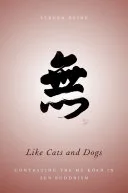
The primary symbol within the Mu Koan is the character "Mu" (無), signifying negation, emptiness, or non-being. In the context of Zen, this is not nihilistic but points to the absence of inherent, independent existence and the ultimate ground of reality. The "sound of one hand" is another potent symbol, representing the impossible or the ineffable, a paradox designed to jolt the practitioner out of conceptual ratiocination. These symbols function as direct pointers, intended to facilitate a leap in consciousness beyond linguistic and logical constructs.
Modern Relevance
Contemporary thinkers and practitioners engaged with mindfulness, contemplative practices, and non-dual philosophies often find resonance with Zen koan study. While not directly referencing Western esotericists, the Mu Koan's method of challenging ingrained thought patterns and seeking immediate experiential insight is highly relevant to modern psychology and secular mindfulness movements. Scholars and practitioners continue to draw upon Heine’s work to understand the historical depth and pedagogical efficacy of koan practice, applying its principles to contemporary spiritual and psychological exploration for personal growth and awareness.
👥 Who Should Read This Book
• Students of Zen Buddhism seeking to deepen their understanding of koan practice and its historical development, particularly those interested in the Rinzai school. • Scholars of comparative religion and East Asian philosophy looking for a detailed analysis of a foundational Zen text and its transmission. • Individuals interested in contemplative practices and mind training who wish to explore methods for transcending ordinary conceptual thought and achieving direct insight.
📜 Historical Context
Steven Heine’s "Like Cats and Dogs" emerges from a rich academic tradition dedicated to understanding East Asian Buddhism, particularly Zen. The work situates the Mu Koan within the flourishing of Chan Buddhism during China’s Song dynasty (960–1279), a period when koan literature became highly systematized. This era saw the consolidation of distinct Chan lineages, with the Linji (Rinzai) school playing a central role in the popularization of the Mu Koan. Heine’s analysis is informed by earlier scholarship on koans, building upon the foundational work of figures like D.T. Suzuki, who introduced many of these concepts to the West, and later scholars who meticulously studied the textual traditions. The book engages with the intellectual currents of the time, where Buddhism was deeply intertwined with Daoism and Confucianism, influencing the philosophical underpinnings of koan practice. The reception of the Mu Koan, particularly its transmission and interpretation in Japan, has been a subject of ongoing scholarly discourse, with Heine contributing a detailed examination of its historical trajectory and pedagogical significance.
📔 Journal Prompts
The Mu Koan's direct negation: how does it function beyond a simple 'no'?
Zhaozhou Congshen's original context for the Mu Koan.
The challenges of transmitting the 'sound of one hand' across cultures.
The role of Zen masters in guiding koan study.
Contrasting the Mu Koan's approach with intellectual problem-solving.
🗂️ Glossary
Koan
A paradoxical anecdote or riddle used in Zen Buddhism to provoke doubt and test a student's progress in Zen practice. Koans are intended to disrupt logical reasoning and lead to direct, intuitive insight.
Mu (無)
The Japanese Kanji character meaning 'nothing,' 'not,' or 'without.' In the context of the Mu Koan, it represents a negation that is meant to be experientially understood rather than intellectually grasped.
Linji (Rinzai) School
One of the major schools of Chan (Zen) Buddhism, founded by Master Linji Yixuan. It is known for its direct, often forceful, methods of teaching and its prominent use of koans, including the Mu Koan.
Chan Buddhism
The Chinese form of Buddhism that emphasizes meditation and direct experience of enlightenment. It is known as Zen in Japan and Korea. Chan developed distinctive practices, including the use of koans.
Song Dynasty
A period in Chinese history (960–1279 CE) during which Chan Buddhism flourished and its literature, including koan collections, was extensively compiled and systematized.
Sound of One Hand
A common metaphorical description referring to the Mu Koan, highlighting its paradoxical nature. The question asks for the sound produced by a single hand clapping, an impossibility in conventional understanding.
Discursive Thought
The process of reasoning, analysis, and sequential thinking. In Zen, discursive thought is often seen as an obstacle to direct realization, and koans are used to help practitioners transcend it.