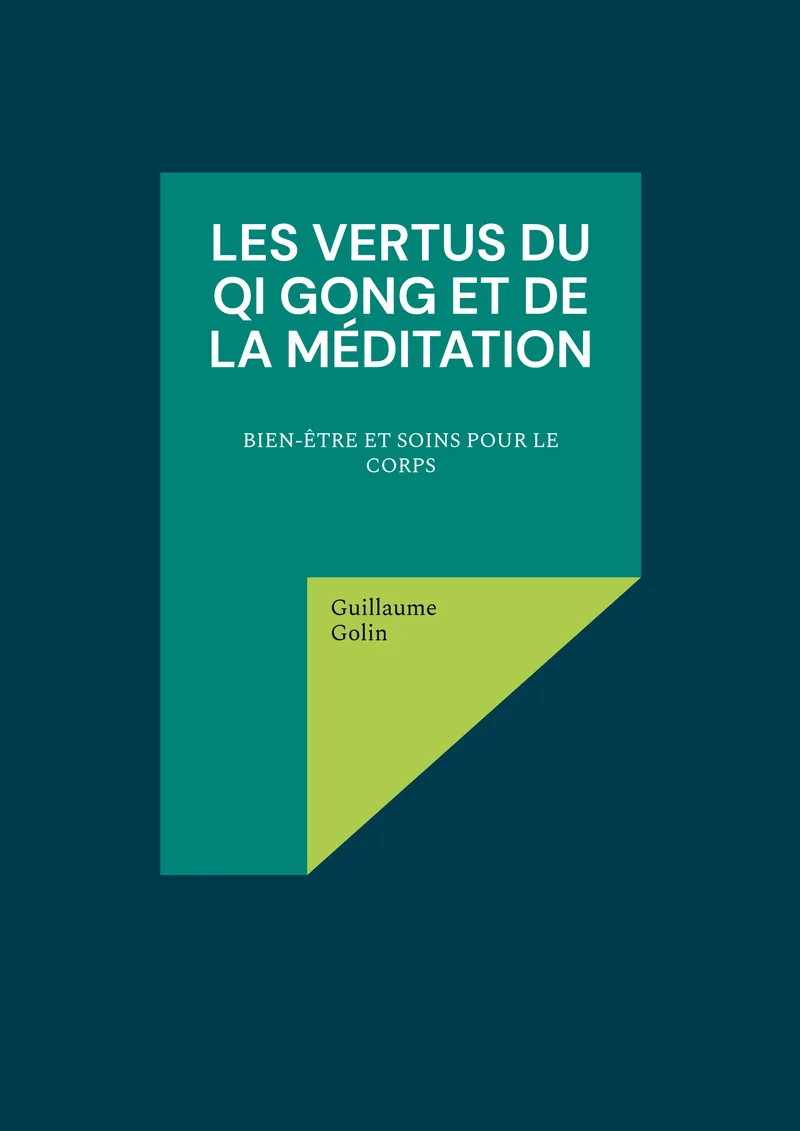
Les vertus du Qi Gong et de la méditation
 80
80

Les vertus du Qi Gong et de la méditation
Guillaume Golin's exploration of Qi Gong and meditation, initially presented in early 2026, offers a refreshingly direct approach to self-care. The book's strength lies in its clear articulation of the Ba Duan Jin's connection to Traditional Chinese Medicine principles, moving beyond generic wellness platitudes. Golin avoids esoteric jargon, making the text accessible. However, the brevity of the booklet means some concepts, like the detailed mechanics of Qi flow, are touched upon rather than fully elaborated. The section discussing the "care given to our bodies" is particularly effective in grounding the practices in tangible self-nurturing. While it could benefit from deeper dives into specific therapeutic applications, its straightforward presentation of Qi Gong's holistic benefits makes it a useful primer for newcomers.
📝 Description
80
Guillaume Golin's 2026 booklet details Qi Gong and meditation for well-being.
Published on January 31, 2026, Guillaume Golin's booklet, Les vertus du Qi Gong et de la méditation, discusses the therapeutic benefits of Qi Gong and meditation for overall health. The author highlights the importance of physical self-care as the path to wellness. Golin presents Qi Gong, specifically the Ba Duan Jin form, as more than just exercise, but as a practice that supports the body's vital energy.
This work is for individuals seeking simple methods to improve their physical and mental state. It suits those interested in holistic health from Eastern traditions, especially beginners to these practices. The book aims to make Qi Gong and meditation understandable for the average person, demystifying these ancient techniques. It connects these practices to Traditional Chinese Medicine (TCM), an ancient system that views health through the lens of vital energy flow, or Qi.
This book connects the practices of Qi Gong and meditation to the principles of Traditional Chinese Medicine (TCM). TCM views the body as a system where vital energy, or Qi, flows. Health is maintained when this flow is balanced. The Ba Duan Jin form of Qi Gong, as described in the booklet, is presented as a method to cultivate and harmonize this internal energy. Meditation further supports mental clarity and emotional balance, aligning with TCM's understanding of the mind's role in physical health.
💡 Why Read This Book?
• Gain practical understanding of Ba Duan Jin, a specific Qi Gong form, and its direct link to Traditional Chinese Medicine's emphasis on bodily care, as detailed in the text's initial sections. • Discover how meditation, presented in conjunction with Qi Gong, can be a tool for cultivating energy and well-being, a core tenet explored throughout the booklet. • Learn accessible self-care techniques grounded in ancient Chinese principles, offering a tangible method for enhancing daily health beyond superficial exercises.
⭐ Reader Reviews
Honest opinions from readers who have explored this book.
❓ Frequently Asked Questions
What is Ba Duan Jin as mentioned in Les vertus du Qi Gong et de la méditation?
Ba Duan Jin, also known as the "Eight Brocades," is a specific form of Qi Gong discussed in the booklet. It is an ancient Chinese practice involving gentle movements and breathing techniques designed to improve physical health and energy flow.
When was Les vertus du Qi Gong et de la méditation first published?
The book was first published on January 31, 2026. This recent publication date places it within contemporary discussions on wellness and holistic health practices.
What is the core philosophy behind the Qi Gong practices described?
The core philosophy, as presented in the booklet, aligns with Traditional Chinese Medicine. It emphasizes cultivating health and energy through "care given to our bodies" and promoting the balanced flow of Qi, or vital energy.
Is this book suitable for beginners in meditation and Qi Gong?
Yes, the booklet is designed for a general audience, aiming to demystify Qi Gong and meditation. It presents them as accessible practices for personal well-being, making it suitable for those new to these disciplines.
How does the book connect Qi Gong and meditation to overall well-being?
It connects them by highlighting how these practices involve holistic "care for our bodies." By focusing on gentle movement, breath, and mindful states, they are presented as direct routes to improved energy, reduced stress, and a greater sense of balance.
What is the significance of "soins portés à notre corps" in the context of the book?
This phrase, translating to "care given to our bodies," is central to the booklet's message. It signifies that the practices of Qi Gong and meditation are presented as fundamental acts of self-nurturing and physical maintenance for achieving well-being.
🔮 Key Themes & Symbolism
Holistic Body Care
The booklet champions the idea that well-being is achieved through attentive "care given to our bodies." This concept, central to the text, moves beyond superficial exercise, integrating physical practice with mental cultivation. It posits that by attending to the body's needs through Qi Gong and meditation, individuals can unlock profound improvements in their overall health and energy levels, aligning with the holistic principles of Traditional Chinese Medicine.
Qi Gong as Ba Duan Jin
The work specifically identifies Qi Gong with the Ba Duan Jin form, presenting it as an ancient Chinese practice. Far from being a mere physical regimen, Ba Duan Jin is framed as a method for cultivating health and energy by harmonizing the body's vital forces. The text underscores its roots in Traditional Chinese Medicine, suggesting a practice that works on multiple levels to restore balance and vitality.
Meditation for Well-being
Meditation is presented as a complementary practice to Qi Gong, crucial for achieving overall well-being. The booklet emphasizes its role in fostering mental clarity and emotional balance, which are seen as intrinsically linked to physical health. Through mindful states, individuals can enhance their capacity for self-care, directly impacting their energy and resilience.
Traditional Chinese Medicine Framework
The foundational principles of Traditional Chinese Medicine (TCM) underpin the entire work. The text explains how Qi Gong and meditation function within this ancient system, focusing on concepts like energy flow (Qi) and the interconnectedness of bodily systems. This provides a theoretical basis for the practical benefits discussed, offering readers an understanding of the deeper context.
💬 Memorable Quotes
Direct passages from the work, attributed to the author.
“Qi Gong is more than simple physical exercise.”
— This interpretation emphasizes the holistic nature of Qi Gong as presented in the text, differentiating it from standard fitness routines by pointing to its deeper energetic and mindful components.
💡 Key Ideas
Editorial paraphrase of the work's core concepts — not direct quotes.
The "care given to our bodies" is the path to well-being.
This paraphrased concept highlights the book's central thesis: that active, mindful attention to one's physical self through practices like Qi Gong and meditation is the primary route to health and vitality.
Ba Duan Jin aligns with Traditional Chinese Medicine principles.
This paraphrased statement underscores the book's grounding of the Ba Duan Jin practice within the established framework of ancient Chinese medical theory, linking specific movements to broader concepts of health.
Cultivating health and energy via body-focused practices.
This interpretation summarizes the book's core objective: to guide readers in actively developing their vitality and health through methods that directly engage and nurture the physical body.
Meditation supports the energetic benefits of Qi Gong.
This paraphrased concept suggests the synergistic relationship between the two practices as described in the text, where mental stillness enhances the physical and energetic outcomes of Qi Gong.
🌙 Esoteric Significance
Tradition
While not explicitly tied to a single Western esoteric lineage, this work draws heavily from Taoist principles embedded within Traditional Chinese Medicine. Its focus on cultivating vital energy (Qi) and harmonizing the body aligns with Taoist internal alchemy practices and broader concepts of energetic cultivation found in various Eastern spiritual traditions, including some Hermetic interpretations of universal life force.
Symbolism
The primary symbolic concept is Qi itself, representing the vital life force that animates all things. The Ba Duan Jin movements, while appearing simple, symbolically represent the harmonious flow and transformation of this energy. The "care given to our bodies" acts as a symbol for the mindful, respectful engagement required to maintain this vital flow, mirroring alchemical processes of purification and refinement.
Modern Relevance
Contemporary somatic practices, therapeutic movement modalities, and mindfulness-based stress reduction (MBSR) programs can be seen as inheritors of the principles discussed. Thinkers and practitioners focusing on embodied cognition, the mind-body connection, and non-dualistic approaches to health often find resonance in the integrated approach of Qi Gong and meditation as presented in works like this. It informs modern wellness coaches and therapists seeking to offer grounded, ancient techniques.
👥 Who Should Read This Book
['• Beginners interested in Traditional Chinese Medicine: Individuals curious about the foundational concepts of TCM and how practices like Qi Gong offer tangible applications for health.', '• Wellness seekers exploring complementary therapies: Those looking for gentle, accessible methods to improve physical vitality and mental calm beyond conventional fitness routines.', '• Students of mindfulness and meditation: Practitioners seeking to deepen their understanding by integrating meditative states with specific physical exercises for enhanced results.']
📜 Historical Context
Published in early 2026, Guillaume Golin's "Les vertus du Qi Gong et de la méditation" enters a contemporary landscape where interest in holistic health and ancient practices is robust. It arrives at a time when mindfulness and yoga, influenced by traditions like Buddhism and early 20th-century Theosophy, have achieved mainstream recognition. The book's direct engagement with Traditional Chinese Medicine (TCM) distinguishes it from purely spiritual or Westernized wellness trends. While TCM itself has a history of interaction with Western medicine since the mid-20th century, popularizations often simplified its complex energetic theories. Golin's work, though brief, attempts a more direct connection to these foundational principles. The reception of such works in 2026 likely reflects an ongoing public search for accessible, non-pharmaceutical approaches to well-being, potentially contrasting with the more complex theoretical underpinnings explored by scholars like Joseph Needham in his extensive works on Chinese science and civilization.
📔 Journal Prompts
Reflect on the concept of "care given to our bodies" in your daily routine.
Consider the Ba Duan Jin movements and their potential energetic impact.
How does the integration of Qi Gong and meditation foster holistic well-being?
Explore the connection between physical practice and mental states described in the text.
Identify one aspect of Traditional Chinese Medicine highlighted that speaks to your health goals.
🗂️ Glossary
Qi Gong
An ancient Chinese practice combining slow movements, deep breathing, and focused intention to cultivate and balance vital energy (Qi) for health and well-being.
Méditation
A mental practice involving focused attention and awareness, used here to enhance calm, clarity, and the overall benefits of physical exercises like Qi Gong.
Ba Duan Jin
A specific, well-known set of Qi Gong exercises, often translated as "Eight Brocades," designed to improve physical health and energy flow.
Qi
The fundamental concept of vital life force or energy in Traditional Chinese Medicine and Taoist philosophy, believed to flow through the body and sustain life.
Traditional Chinese Medicine (TCM)
An ancient system of health and healing originating in China, based on principles of balancing Qi, Yin and Yang, and the five elements.
Bien-être
A state of overall physical, mental, and emotional health and happiness; well-being.
Soins portés à notre corps
A phrase meaning "care given to our bodies," emphasizing the active and mindful attention required for self-nurturing through practices like Qi Gong and meditation.