La Flûte Enchantée
 81
81

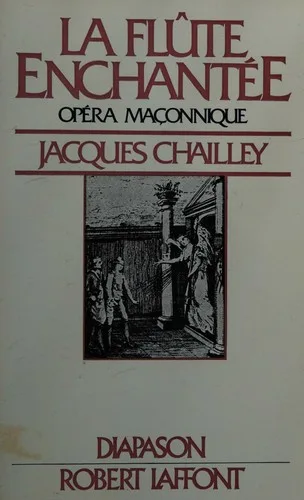
La Flûte Enchantée
Jacques Chailley’s "La Flûte Enchantée" provides a scholarly lens through which to view Mozart's opera, moving beyond the surface-level enchantment. Chailley’s strength lies in his meticulous dissection of the musical and textual elements, drawing convincing parallels between the opera's structure and Masonic ritual. He adeptly illustrates how the libretto, penned by Emanuel Schikaneder, functions as a veiled allegory for spiritual progression, particularly evident in the trials faced by Tamino and Pamina. A limitation, however, is the work's density; it assumes a significant pre-existing knowledge of both the opera and Masonic symbolism, which might alienate newcomers. The detailed analysis of the Queen of the Night's musical motifs, presented as representing a lower, materialistic force, is particularly illuminating. Ultimately, Chailley offers a compelling argument for "The Magic Flute" as a profound esoteric text, though one best approached by those already initiated into its thematic complexities.
📝 Description
81
Jacques Chailley's 1992 book analyzes Mozart's opera through the lens of Masonic symbolism.
Jacques Chailley's "La Flûte Enchantée," published in 1992, examines Wolfgang Amadeus Mozart's opera not as a simple story, but as a work rich with philosophical and Masonic symbolism. Chailley treats the opera as a complex artistic creation reflecting the esoteric currents of the late 18th century. He focuses on the opera's structure, its libretto, and the deeper meanings embedded within its musical score and narrative. This approach moves beyond a surface-level appreciation to investigate the allegorical and ritualistic dimensions of the work.
The book is aimed at readers with some familiarity with "The Magic Flute" who wish to understand its hidden layers. Musicologists, opera enthusiasts, and those interested in the connections between art, philosophy, and esoteric thought will find it valuable. Chailley's detailed analysis is particularly relevant for individuals interested in Freemasonry and the intellectual climate of the Enlightenment.
Jacques Chailley's work places "The Magic Flute" within the context of late 18th-century European esotericism, particularly the influence of Masonic ideals. The book interprets the opera as a dramatic representation of a spiritual initiation, aligning with Enlightenment concepts of reason and spiritual progress. It explores how Masonic rites and symbolism are woven into the libretto and music, suggesting the opera served as a vehicle for communicating esoteric knowledge and philosophical concepts prevalent in secretive societies of the era.
💡 Why Read This Book?
• Gain an understanding of the Masonic symbolism embedded within Mozart's "The Magic Flute," as analyzed by Chailley's detailed examination of the opera's 1791 premiere context. • Discover how the duality of characters like Tamino and the Queen of the Night serves as an allegory for spiritual initiation and the Enlightenment pursuit of knowledge. • Appreciate the intricate relationship between music and esoteric philosophy, as Chailley demonstrates how specific musical passages convey hidden meanings beyond the libretto.
⭐ Reader Reviews
Honest opinions from readers who have explored this book.
❓ Frequently Asked Questions
When was Jacques Chailley's "La Flûte Enchantée" first published?
Jacques Chailley's "La Flûte Enchantée" was first published in 1992, offering a scholarly analysis of Mozart's opera.
What is the primary focus of "La Flûte Enchantée"?
The book focuses on the musical, textual, and symbolic dimensions of Mozart's opera "The Magic Flute," particularly its Masonic and Enlightenment-era esoteric underpinnings.
Who was Emanuel Schikaneder?
Emanuel Schikaneder was the librettist for Mozart's "The Magic Flute" and a Freemason, whose work Chailley extensively analyzes for its symbolic content.
Does the book discuss the historical Freemasonry context of the opera?
Yes, "La Flûte Enchantée" delves deeply into the Masonic ideals and symbolism prevalent in Vienna during the late 18th century, which influenced the opera's creation in 1791.
Is "La Flûte Enchantée" suitable for someone unfamiliar with "The Magic Flute"?
The book is best suited for readers already familiar with Mozart's opera, as it offers an in-depth esoteric analysis rather than a general introduction.
What esoteric traditions are explored in relation to the opera?
The primary esoteric tradition explored is Freemasonry, with the book examining how its rituals and symbolism are woven into the opera's narrative and structure.
🔮 Key Themes & Symbolism
Masonic Initiation Allegory
Chailley posits that "La Flûte Enchantée" functions as a dramatic representation of Masonic initiation. The journey of Tamino, guided by the wise Sarastro and tested by trials of silence and fortitude, mirrors the stages of advancement within Masonic lodges. The opera's structure and symbolism, particularly evident from its 1791 premiere, are presented as a veiled instruction manual for achieving spiritual enlightenment through reason and virtue, aligning with Enlightenment ideals.
Enlightenment Philosophy and Reason
The work explores "The Magic Flute" as a product of the Age of Enlightenment, emphasizing the opera's embrace of reason, knowledge, and the pursuit of wisdom. Chailley highlights how characters and plotlines reflect the era's intellectual currents, contrasting the wisdom of Sarastro's solar temple with the perceived chaos and illusion represented by the Queen of the Night. This philosophical underpinning is central to understanding the opera's didactic purpose.
Symbolic Duality and Harmony
A core theme is the exploration of symbolic dualities within the opera, such as light versus darkness, spiritual versus material, and masculine versus feminine principles. Chailley analyzes how these opposing forces are represented musically and textually, and how their eventual reconciliation leads to a higher state of harmony. The balanced structure of the opera itself is presented as reflecting this pursuit of cosmic and personal equilibrium.
The Role of Music as Esoteric Language
Chailley investigates how Mozart's musical compositions serve as a vehicle for esoteric communication. He argues that specific melodies, harmonies, and instrumental choices are not merely decorative but convey deeper meanings related to ritual, initiation, and philosophical concepts. The interplay between the score and the libretto, particularly concerning the characters' emotional and spiritual states, is examined as a sophisticated esoteric dialogue.
💬 Memorable Quotes
Direct passages from the work, attributed to the author.
“The opera is a dramatic representation of Masonic initiatory rites.”
— This core assertion suggests that "The Magic Flute," beyond its fairy-tale surface, was intentionally crafted by its creators, influenced by Freemasonry, to mirror the symbolic journey of spiritual and moral development undertaken by initiates.
“Sarastro embodies the principle of wisdom and enlightened reason.”
— This highlights Sarastro's role not just as a character, but as a symbolic representation of the Enlightenment's ideal of rational governance and the pursuit of higher knowledge, contrasting with other forces in the opera.
“The trials of Tamino are symbolic steps on a path to enlightenment.”
— This interpretation emphasizes that Tamino's experiences within the opera are not mere plot devices but represent allegorical stages of personal growth and spiritual awakening, akin to an initiatory process.
“The Queen of the Night represents a darker, perhaps materialistic, spiritual perspective.”
— This frames the antagonist not as purely evil, but as representing a different, potentially flawed or incomplete, approach to spirituality or power, often associated with ignorance or lower vibrational states.
“Mozart masterfully wove Masonic symbolism into the musical fabric.”
— This points to the composer's deliberate use of musical elements—melody, harmony, instrumentation—to embed hidden meanings and esoteric references understood by those familiar with the symbolic language of the time.
🌙 Esoteric Significance
Tradition
This work is firmly rooted in the esoteric tradition of Western Esotericism, specifically focusing on its manifestation within the context of Freemasonry and Enlightenment philosophy. Chailley analyzes "The Magic Flute" not merely as a piece of music but as a symbolic narrative aligned with the principles of spiritual initiation, the pursuit of wisdom, and the harmonious ordering of the cosmos, ideas central to Hermetic and Masonic thought.
Symbolism
Key symbols explored include the sun and moon, representing divine knowledge and intuition respectively, and the number three, signifying divine perfection and trinity often found in Masonic symbolism. The trials of fire and water faced by Tamino are interpreted as purification rites, essential steps in the Masonic journey from ignorance to enlightenment, demonstrating the opera's rich symbolic language.
Modern Relevance
Chailley's analysis continues to inform contemporary discussions on the intersection of art, spirituality, and symbolism. His detailed examination of "The Magic Flute" as an initiatory text finds resonance with modern practitioners of Western Esotericism, comparative religion scholars, and artists interested in embedding deeper meaning within their work. The opera's enduring themes of balance, knowledge, and spiritual seeking, as illuminated by Chailley, remain relevant to current explorations of consciousness and personal transformation.
👥 Who Should Read This Book
• Students of Western Esotericism: Those seeking to understand how Masonic principles and Enlightenment philosophy were expressed in 18th-century art, particularly opera. • Musicologists and Opera Aficionados: Readers interested in a deeper, symbolic interpretation of Mozart's "The Magic Flute" that goes beyond standard musical analysis. • Scholars of 18th-Century Culture: Individuals examining the intellectual and spiritual currents of the Enlightenment era and their impact on artistic expression.
📜 Historical Context
Jacques Chailley's "La Flûte Enchantée," published in 1992, arrives decades after the opera's initial 1791 premiere, yet it engages directly with the historical milieu that birthed Mozart and Schikaneder's masterpiece. The late 18th century in Vienna was a fertile ground for Enlightenment ideals, rationalism, and the burgeoning influence of Freemasonry, which permeated intellectual and artistic circles. "The Magic Flute" itself was controversial, with interpretations varying widely even then, sparking debate about its political and philosophical messages. Chailley's work situates itself within a continuing scholarly conversation, following scholars like Alfred Einstein who had previously explored the opera's Masonic connections. Unlike purely musical analyses, Chailley's approach foregrounds the esoteric and ritualistic dimensions, directly confronting the opera as a coded text reflecting the era's spiritual and philosophical quests, a stark contrast to the more purely aesthetic criticisms that might have dominated earlier reception.
📔 Journal Prompts
The symbolic journey of Tamino through trials of fire and water.
The representation of enlightened reason through Sarastro's temple.
Contrasting the spiritual paths offered by Sarastro and the Queen of the Night.
The integration of Masonic symbolism into the opera's musical structure.
The Enlightenment ideals reflected in the characters' quest for wisdom.
🗂️ Glossary
Masonic Initiation
The process of formal admission and progression through various symbolic degrees within the fraternity of Freemasonry, often involving moral and spiritual instruction.
Enlightenment
An 18th-century intellectual and cultural movement emphasizing reason, individualism, skepticism, and the pursuit of knowledge, profoundly influencing Western thought and art.
The text of an opera or other long musical work, containing the words to be sung.
Allegory
A story, poem, or picture that can be interpreted to reveal a hidden meaning, typically a moral or political one.
Esotericism
Belief systems and practices that propose the existence of hidden realities, often accessible only through direct experience or specialized knowledge, typically outside mainstream religious or philosophical traditions.
Sarastro
The benevolent high priest and ruler in Mozart's opera "The Magic Flute," representing wisdom, reason, and spiritual authority.
Queen of the Night
A powerful sorceress and antagonist in "The Magic Flute," often interpreted as representing forces of chaos, illusion, or a lower spiritual path.
🔮 Readers Also Liked
Browse all →






More Free Freemasonry & Secret Societies Books
View all →