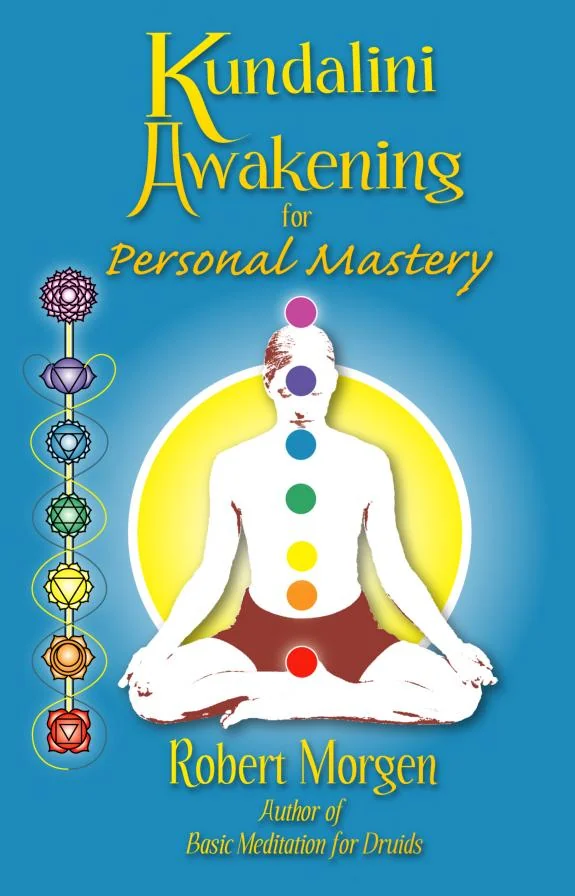
Kundalini Awakening for Personal Mastery
 79
79

Kundalini Awakening for Personal Mastery
Robert Morgen's "Kundalini Awakening for Personal Mastery" tackles a subject often draped in an impenetrable veil of mysticism. The author's direct assertion that Kundalini awakenings aren't as rare or difficult as commonly believed, especially given his own near-death experience catalyst, immediately grounds the work. His primary strength lies in shifting the narrative from the sensationalism of the awakening itself to the practical, often challenging, aftermath. The detailed exploration of managing the energetic and psychological shifts post-awakening, particularly how it impacts daily life, is where the book offers tangible value. However, the text sometimes treads a fine line between accessible explanation and oversimplification, potentially leaving seasoned practitioners wanting more depth. The section discussing the integration of Kundalini's effects into mundane routines, while useful, could benefit from more varied case studies beyond Morgen's singular experience. Ultimately, Morgen provides a much-needed practical manual for those confronting this powerful phenomenon.
📝 Description
79
Robert Morgen's 2005 book argues Kundalini awakening requires careful integration, not just initiation.
Robert Morgen's Kundalini Awakening for Personal Mastery addresses the powerful energy believed to reside at the base of the spine. The author recounts his own spontaneous awakening during a near-death experience, shifting the common focus from the initial event to the subsequent management of profound life changes. The book is for those who have experienced Kundalini activation and face its challenges, or individuals seeking to understand and potentially guide this process themselves. It also serves those interested in personal growth, spiritual development, and the study of esoteric physiology and consciousness, offering practical advice beyond theory.
Morgen frames Kundalini awakening within a long history of yogic and Tantric practices. However, he adapts these ancient ideas into a modern, accessible format, differentiating his work from strictly academic or religious texts. The book's core idea is that Kundalini is not merely raw power but a force requiring careful handling and integration. Morgen presents the awakening as a catalyst for transformation, stressing the need for psychological and emotional readiness. He details methods and considerations for managing energetic shifts and their effects on everyday existence, providing a practical viewpoint on a subject often seen as mystical.
This book places Kundalini awakening within the lineage of yogic and Tantric traditions, practices discussed for millennia. Morgen's contribution is to translate these ancient concepts into a framework relevant to contemporary readers, moving beyond purely theoretical or dogmatic religious discussions. Published in 2005, it emerged during a period of increased Western interest in Eastern spiritual practices, often interpreted through New Age perspectives. The work emphasizes the practical application of understanding and managing the energetic shifts associated with Kundalini activation.
💡 Why Read This Book?
• Understand the practical management of Kundalini's energetic shifts, moving beyond theoretical concepts to actionable steps for daily integration, as detailed in Robert Morgen's personal account. • Gain insight into the psychological and emotional changes that often accompany Kundalini Awakening, learning how to navigate them effectively as described in the book's core sections. • Explore the historical context of Kundalini practices from ancient India to modern Western esoteric thought, appreciating how Morgen's 2005 publication bridges these traditions.
⭐ Reader Reviews
Honest opinions from readers who have explored this book.
❓ Frequently Asked Questions
What is Kundalini according to Robert Morgen?
Robert Morgen describes Kundalini as a potent pool of energy residing dormant at the base of the spine. He emphasizes that its awakening is not as difficult as myth suggests, but managing its effects requires guidance.
Can Kundalini Awakening happen by accident?
Yes, Morgen states that people can experience a Kundalini Awakening completely by accident. His own awakening occurred during a near-death experience, illustrating this possibility.
What is the main challenge after Kundalini Awakening?
According to the book, the primary difficulty lies not in the awakening itself, but in learning to deal with the significant changes it can bring about in one's life.
Who is Robert Morgen?
Robert Morgen is the author of 'Kundalini Awakening for Personal Mastery'. He experienced a Kundalini Awakening during a near-death experience, which informed his perspective on the subject.
When was Kundalini Awakening for Personal Mastery first published?
The book was first published in October 2005, placing it within the early 21st-century wave of interest in esoteric and spiritual practices.
What does 'Personal Mastery' refer to in the title?
It refers to the ability to consciously manage and integrate the profound energetic and psychological shifts resulting from Kundalini Awakening, thereby gaining control over one's life.
🔮 Key Themes & Symbolism
The Dormant Serpent Power
The book conceptualizes Kundalini as a powerful, coiled energy source located at the base of the spine, often symbolized as a serpent. Morgen explains this energy, traditionally associated with yogic practices, is not merely a theoretical construct but a palpable force that can be activated. He posits that understanding its nature is the first step toward managing its potent effects on consciousness and physiology. The work explains this core concept, making it accessible beyond specialized yogic circles.
Accidental Awakenings & Integration Challenges
A central theme is that Kundalini Awakening can occur unexpectedly, often through intense experiences like near-death events, as Morgen himself experienced. The book pivots from the rarity of the awakening to the commonality of the difficulties faced afterward. It details how individuals may struggle with overwhelming sensory input, emotional volatility, and existential shifts, emphasizing the necessity of practical strategies for integration into everyday life.
Personal Mastery Through Energetic Awareness
The concept of 'Personal Mastery' is presented as the ultimate goal: achieving a state of equilibrium and control despite the radical internal shifts caused by Kundalini. This involves developing a heightened awareness of one's own energetic system and learning to consciously direct or harmonize the awakened energies. Morgen advocates for a practical, grounded approach to mastering these internal forces for enhanced well-being and personal growth.
Bridging Ancient Wisdom and Modern Life
Morgen's work aims to bridge the gap between ancient esoteric traditions, particularly those concerning Kundalini, and the demands of contemporary existence. He translates complex spiritual concepts into understandable terms, offering guidance relevant to individuals living in the modern world. The book serves as a conduit, making profound spiritual phenomena accessible and manageable for a broader audience seeking self-understanding.
💬 Memorable Quotes
Direct passages from the work, attributed to the author.
“The Kundalini is a powerful pool of energy that lies dormant at the base of the spine.”
— This foundational statement defines the central subject of the book. It presents Kundalini not as an abstract concept but as a tangible energetic resource within the human body, setting the stage for discussions on its activation and management.
“Awakening the Kundalini really isn't that hard! People do it all the time completely by accident.”
— This interpretation challenges the common perception of Kundalini awakening as an elusive or dangerous feat. It suggests a more accessible reality, shifting the focus from achieving the awakening to dealing with its consequences.
“What can be extremely difficult is learning to deal with the changes that an Awakened Kundalini can bring about in your life.”
— This highlights the book's core thesis: the real challenge lies in post-awakening integration. It frames the work as a practical guide for working through the often-disruptive transformations that follow the activation of this potent energy.
“Robert Morgen had a Kundalini Awakening during a near-death experience.”
— This biographical detail serves as both an introduction to the author's authority on the subject and an illustration of how powerful, life-altering events can trigger Kundalini activation.
“The simple fact is that Awakening the Kundalini really isn't that hard!”
— This reiterates the author's practical, explaining approach. By stating the awakening itself is not the primary obstacle, Morgen encourages readers to confront their fears and focus on the subsequent process of integration.
🌙 Esoteric Significance
Tradition
This work draws heavily from the yogic and Tantric traditions of India, which describe Kundalini as a primal, divine energy coiled at the base of the spine. However, Morgen's approach departs from traditional frameworks by emphasizing spontaneous awakening and focusing on practical, psychological integration rather than solely on ritualistic or meditative disciplines. It fits within the broader Western esoteric interest in subtle energy systems, often found in Theosophy and modern New Age thought, aiming to make these concepts universally applicable.
Symbolism
The primary symbol is Kundalini itself, often depicted as a coiled serpent, representing latent potential and primal creative force. The base of the spine symbolizes the root of manifestation and physical embodiment. The 'Awakening' signifies a shift from a dormant state to an active, transformative process, leading to expanded consciousness. Morgen's interpretation focuses on the energetic and psychological implications of this activation, moving beyond purely symbolic or ritualistic meanings.
Modern Relevance
Contemporary practitioners of energy healing, somatic experiencing, and consciousness studies find value in Morgen's practical approach to Kundalini. Thinkers exploring the intersection of spirituality and psychology, particularly those interested in peak experiences or spontaneous spiritual awakenings, often reference works that provide grounded guidance. His emphasis on managing the aftermath of intense spiritual experiences appeals to modern therapeutic approaches that integrate somatic and psychological well-being.
👥 Who Should Read This Book
• Individuals who have experienced spontaneous Kundalini symptoms and are seeking practical advice for managing the resulting physical, emotional, and mental changes. • Seekers of spiritual growth interested in understanding the nature of Kundalini energy and its potential role in personal transformation from a contemporary perspective. • Students of esoteric traditions and consciousness studies looking for accessible explanations of fundamental concepts like Kundalini, presented with a focus on real-world application.
📜 Historical Context
Published in October 2005, Robert Morgen's "Kundalini Awakening for Personal Mastery" emerged during a period of significant Western engagement with Eastern spiritual traditions. The early 21st century saw a surge in New Age literature and practices, often seeking to synthesize ancient yogic and Tantric philosophies with modern psychological and self-help paradigms. This era was characterized by a proliferation of books attempting to explain complex spiritual concepts, making them accessible to a broader audience. Morgen's work positioned itself against more academic or strictly religious interpretations, favoring a pragmatic, experience-based approach. It engaged with the popular understanding of Kundalini, which had been influenced by figures like Sir John Woodroffe (writing as Arthur Avalon) in the early 20th century and later interpretations within movements like Transcendental Meditation. While not engaging directly with academic discourse, its publication contributed to the ongoing discourse on consciousness and esoteric energy systems popularised by Theosophy and its successors.
📔 Journal Prompts
Reflect on the concept of 'dormant energy' at the base of the spine and its potential implications for your life.
Consider the challenges of integrating sudden, profound life changes following an 'Awakening' event.
Analyze the distinction between the difficulty of Kundalini Awakening and the difficulty of managing its aftermath.
Explore personal experiences of unexpected transformation and how they were navigated.
How does the idea of 'Personal Mastery' apply to managing potent internal energies?
🗂️ Glossary
Kundalini
A powerful, dormant spiritual energy believed to reside at the base of the spine, often visualized as a coiled serpent. Its awakening is associated with profound consciousness shifts.
Awakening
The process by which the dormant Kundalini energy becomes active. In this context, it can be spontaneous or intentionally induced, leading to significant internal changes.
Near-death experience
A personal experience associated with being close to death. Morgen cites his own NDE as the catalyst for his Kundalini Awakening.
Personal Mastery
The ability to consciously manage and integrate profound energetic and psychological shifts resulting from Kundalini Awakening, leading to greater control and well-being.
Spinal Energy
Refers to the energetic potential located within or associated with the human spine, with Kundalini being the primary manifestation discussed.
Integration
The process of assimilating the effects of Kundalini Awakening into one's daily life, mind, and body, often involving psychological and emotional adjustments.
Latent Energy
Energy that exists in a potential or undeveloped state, like the Kundalini before its awakening.
This book appears in 1 collection
🔮 Readers Also Liked
Browse all →









From the “Kundalini Awakening” Collection
View all →









More Free Occult Philosophy Books
View all →