Is anybody there?
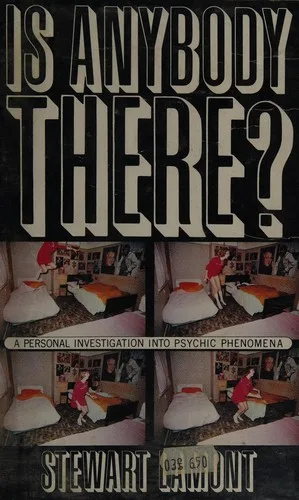
 77
77

Is anybody there?
Stewart Lamont’s "Is Anybody There?" offers a sober, methodical survey of phenomena that challenge materialist explanations of consciousness. Rather than succumbing to sensationalism, Lamont grounds his exploration in historical accounts and sociological observations. His examination of the enduring human need to believe in post-mortem survival is particularly sharp. However, the book's 1980 publication date means it predates significant advancements in neuroscience and cognitive psychology that offer alternative frameworks for understanding anomalous experiences, a limitation that colors its conclusions for a contemporary reader.
A passage discussing the Fox sisters and the spiritualist movement, while informative, could benefit from updated perspectives on the historical context of their claims. Despite this, Lamont's strength lies in his comprehensive cataloging of reported events and his consistent, almost anthropological, approach to the subject. The work serves as a valuable, if dated, primer on the persistence of belief in life after death.
Read more ↓
Lamont provides a solid historical overview of the questions surrounding consciousness after death.
📝 Description
77
Stewart Lamont's 1980 book asks if consciousness survives death.
Stewart Lamont's "Is Anybody There?", published in 1980, addresses enduring human questions about existence after physical death. This work is not a guide to communicating with spirits, but an examination of the cultural and psychological foundations of the belief in an afterlife. Lamont reviews a wide range of phenomena and historical accounts that have sustained this persistent inquiry over centuries. The book is suitable for readers interested in the sociology of belief, the history of parapsychology, and the philosophical questions raised by unexplained phenomena.
Those who want a critical yet open-minded survey of apparitions, hauntings, and mediumship, without a fixed viewpoint, will find Lamont's approach informative. It appeals to both skeptics and believers who seek to grasp the origins and expressions of the conviction that consciousness continues. Lamont's work engages with the academic and cultural climate of 1980, a time of renewed interest in the paranormal, placing contemporary beliefs within a longer historical context that includes earlier spiritualist movements and Victorian investigations.
Emerging during a period of increased paranormal interest in 1980, "Is Anybody There?" connects with a long tradition of spiritual inquiry. From ancient beliefs in an underworld to the 19th century's spiritualist movement, humanity has consistently sought evidence of continued existence. Lamont's work situates itself within this ongoing discourse, examining how phenomena like ectoplasm and poltergeists, and accounts of hauntings and mediumship, have been interpreted and investigated. He considers both the psychological comfort these beliefs offer and the historical methods, both anecdotal and scientific, used to study them.
💡 Why Read This Book?
• Understand the historical trajectory of belief in post-mortem survival, tracing its roots from early spiritualism to the late 20th century, as detailed in the book's exploration of phenomena like ectoplasm. • Gain insight into the sociological and psychological drivers behind hauntings and apparition reports, appreciating how these narratives function within communities and individual lives, as examined by Lamont. • Appreciate the challenges of investigating subjective experiences, learning from Lamont's critical yet open-minded survey of methods used to study phenomena such as poltergeists, which often defy easy explanation.
⭐ Reader Reviews
Honest opinions from readers who have explored this book.
❓ Frequently Asked Questions
When was "Is Anybody There?" by Stewart Lamont first published?
"Is Anybody There?" by Stewart Lamont was first published in 1980, reflecting the ongoing interest in paranormal phenomena and the afterlife during that era.
What is the main focus of Stewart Lamont's "Is Anybody There?"
The book's primary focus is an exploration of human beliefs and reported phenomena related to the survival of consciousness after physical death, examining historical accounts and the sociology of belief.
Does "Is Anybody There?" offer proof of life after death?
No, "Is Anybody There?" does not aim to provide definitive proof. Instead, it surveys various phenomena and beliefs, offering a historical and sociological perspective on why people believe in life after death.
What types of phenomena are discussed in the book?
The book discusses phenomena such as apparitions, hauntings, poltergeists, and mediumship, drawing on historical reports and cultural narratives.
Who would benefit from reading "Is Anybody There?"?
Readers interested in the history of parapsychology, the sociology of belief, and the philosophical questions surrounding mortality and consciousness would find this book beneficial.
How does the book approach the subject of the paranormal?
Lamont approaches the subject with a critical yet open-minded perspective, examining phenomena through historical context and sociological analysis rather than presenting them as irrefutable evidence.
🔮 Key Themes & Symbolism
Enduring Belief in Survival
The central theme is humanity's persistent conviction that consciousness survives physical death. Lamont examines how this belief manifests across cultures and historical periods, from ancient spiritual practices to the organized spiritualist movements of the 19th and 20th centuries. He explores the psychological comfort and existential framework this belief provides, particularly in the face of mortality and grief, positioning it as a fundamental aspect of the human condition.
Phenomena and Their Interpretation
Lamont catalogues a range of reported phenomena—apparitions, poltergeists, mediumistic communications, and alleged physical manifestations like ectoplasm. The book's approach is to present these accounts critically, analyzing their historical context and the societal interpretations they elicited. It questions how these experiences are perceived, documented, and integrated into belief systems, highlighting the challenges in verifying their supernatural origins.
Sociology of Belief
Beyond individual experiences, the work looks at the social construction and propagation of beliefs about the afterlife. It looks at how communities form around shared experiences or doctrines, how institutions (like spiritualist churches) arise, and how these beliefs shape societal norms and rituals surrounding death and mourning. Lamont considers the collective human impulse to seek evidence and meaning beyond the material world.
Historical Survey of Investigation
The book provides a historical overview of how attempts have been made to investigate claims of post-mortem survival. This includes early anecdotal records, the more formal investigations by societies like the Society for Psychical Research, and the burgeoning field of parapsychology in the mid-20th century. Lamont illustrates the evolving methodologies and the recurring debates between skeptical and credulous viewpoints.
💬 Memorable Quotes
Direct passages from the work, attributed to the author.
“The conviction that something of us survives death is deeply ingrained.”
— This statement captures the core idea that belief in an afterlife is not a fringe notion but a fundamental, widespread aspect of human psychology and culture, driving much of the inquiry Lamont explores.
“Apparitions have been reported across centuries and continents.”
— This highlights the cross-cultural and historical universality of reported sightings of spectral figures, suggesting a common human experience or archetypal motif that transcends specific eras or geographic locations.
“Poltergeist activity often appears to center around individuals.”
— This observation points to a key characteristic of poltergeist phenomena as described in the literature, suggesting a potential link to a specific person rather than a purely environmental haunting.
“Spiritualism offered solace and a framework for understanding loss.”
— This interpretation underscores the social and emotional function of spiritualist movements, particularly in providing comfort and explanations for bereaved individuals in the 19th and early 20th centuries.
“The challenge lies in verifying subjective experiences objectively.”
— This captures the central methodological difficulty Lamont addresses: how to study and validate phenomena that are inherently personal and often lack empirical, reproducible evidence.
🌙 Esoteric Significance
Tradition
While not strictly aligned with a single esoteric tradition like Hermeticism or Kabbalah, "Is Anybody There?" engages with the broader Western esoteric current that seeks to understand consciousness beyond physical limitations. It touches upon themes prevalent in Spiritualism and Theosophy, movements that heavily influenced esoteric thought in the late 19th and early 20th centuries by positing non-material planes of existence and communication with discarnate entities.
Symbolism
The book frequently encounters symbols of transition and persistence. Apparitions, often depicted as spectral or translucent figures, symbolize the liminal state between life and death, representing the enduring presence of an individual's essence. Ectoplasm, a substance allegedly produced by mediums, functions as a material manifestation of spiritual energy, a tangible sign of the unseen world intruding upon the physical. Hauntings themselves symbolize unresolved issues or lingering attachments, imbuing locations with narrative and energetic significance.
Modern Relevance
Contemporary interest in near-death experiences (NDEs), consciousness studies, and the scientific exploration of altered states of consciousness can be seen as a modern echo of the questions Lamont addressed. Thinkers and researchers in fields like transpersonal psychology and consciousness research, while employing different methodologies, continue to grapple with the nature of consciousness and its potential persistence beyond bodily death, drawing indirectly from the historical groundwork surveyed in Lamont's book.
👥 Who Should Read This Book
• Students of the history of paranormal research: Readers interested in the development of parapsychology and the investigation of phenomena like hauntings and mediumship from the 19th century onward. • Sociologists of belief: Individuals examining how collective beliefs about death and the afterlife are formed, maintained, and evolve within societies. • Critical thinkers on consciousness: Those who question purely materialist explanations of mind and are interested in a historical overview of alternative perspectives and reported anomalous experiences.
📜 Historical Context
First published in 1980, Stewart Lamont's "Is Anybody There?" emerged during a period of sustained interest in the paranormal, following the broader cultural shifts of the 1960s and 70s. The field of parapsychology, though often on the fringes of academia, was actively pursuing research, with organizations like the Society for Psychical Research continuing their investigations into phenomena such as telepathy and survival. Lamont's work fits within this milieu, offering a comprehensive overview that contextualizes contemporary beliefs within a long historical trajectory. It engaged with the legacy of Victorian spiritualism, the Fox sisters' alleged mediumship, and the early psychical research conducted by figures like F.W.H. Myers. While not directly engaging in philosophical debates with materialist thinkers like Richard Dawkins, whose influential works were beginning to gain traction, Lamont’s book implicitly countered reductionist views by surveying the persistent human engagement with questions of an afterlife, presenting a wide array of reported experiences and their cultural impact.
📔 Journal Prompts
The recurring theme of apparitions across different eras.
The concept of ectoplasm as described by Lamont.
Personal reflections on the role of belief in survival during times of grief.
Analyzing the social function of poltergeist narratives.
The historical context of the Fox sisters' claims.
🗂️ Glossary
Apparition
A ghostly figure or visual manifestation of a deceased person, often reported as a transient visual experience.
Ectoplasm
A supposed substance emitted by spiritualist mediums during séances, often described as a vaporous or viscous material forming spectral shapes.
Haunting
The persistent presence or manifestation of supernatural phenomena, typically associated with a specific location, believed to be the residual energy of past events or individuals.
Mediumship
The practice or ability of a person believed to be able to communicate with spirits of the dead or act as an intermediary between the spirit world and the living.
Poltergeist
A type of supernatural phenomenon characterized by physical disturbances such as loud noises, objects being moved or thrown, and physical assaults, often associated with a specific person.
Spiritualism
A religious movement that emerged in the mid-19th century, asserting the possibility of communication between the living and the spirits of the dead, often through mediums.
Parapsychology
The study of alleged psychic phenomena and other paranormal claims, including ESP (extrasensory perception) and psychokinesis, often seeking empirical validation.
🔮 Readers Also Liked
Browse all →








More Free Occult Philosophy Books
View all →