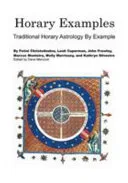
Horary Examples
 73
73

Horary Examples
The strength of John Frawley and his co-authors' Horary Examples lies in its unvarnished presentation of actual horary consultations. Unlike many texts that offer idealized scenarios, this collection showcases the messy, real-time application of astrological principles. The inclusion of varied practitioners, notably Frawley himself, provides a spectrum of interpretive styles. One limitation, however, is that the sheer volume of examples, while beneficial for breadth, can sometimes feel overwhelming for a beginner without a solid foundational understanding of horary basics. A particularly illustrative section involves the interpretation of a chart cast to determine the whereabouts of a lost item, where the precise angular relationships and house placements offer a clear, albeit complex, narrative. The book ultimately serves as a practical workshop for those committed to mastering horary.
📝 Description
73
Horary Examples (2017) shows how experienced astrologers answer specific questions using chart interpretation.
This book collects practical horary astrology case studies from professional practitioners. It moves beyond theory to demonstrate how horary charts are interpreted and applied to answer real-world questions. The work showcases tangible results of astrological inquiry, serving as a resource for understanding the mechanics of this form of divination. The compilation aims to clarify horary astrology through diverse examples.
Students and practitioners of horary astrology will find the detailed case studies valuable for learning chart analysis. Beginners can use them to approach specific queries, while experienced astrologers can compare their methods and interpretations. The book is also for anyone curious about applying astrological principles to everyday concerns.
Horary astrology, the practice of casting a chart for the moment a question is asked, has roots in ancient Babylonian and Hellenistic traditions. Its development continued through medieval Islamic and European Renaissance astrology. This book, published in 2017, appears during a time of renewed interest in traditional astrological methods, often as a counterpoint to modern psychological or evolutionary astrology. It fits within this broader appreciation for historical astrological techniques.
💡 Why Read This Book?
• Learn to interpret horary charts through 30+ real-life examples from John Frawley and other professional astrologers, moving beyond theory to practical application. • Understand how specific planetary placements and aspects directly address questions about finance, relationships, and lost objects, as demonstrated in case studies from their practices. • Gain insight into the traditional astrological methods favored by practitioners since the Renaissance, offering a distinct perspective from modern psychological astrology.
⭐ Reader Reviews
Honest opinions from readers who have explored this book.
❓ Frequently Asked Questions
What is horary astrology and how does it differ from natal astrology?
Horary astrology casts a chart for the moment a question is posed, aiming to answer that specific query directly. Unlike natal astrology, which analyzes a birth chart for lifelong potentials, horary focuses on immediate, answerable questions.
Who are the main contributors to Horary Examples?
The book features contributions from several professional horary astrologers, with John Frawley being a prominent name. Fotini Christodoulou and Leah Cuperman are also listed as contributors, bringing diverse perspectives.
Is Horary Examples suitable for absolute beginners in astrology?
While beginners can learn from the examples, the book assumes some familiarity with basic astrological concepts. It is best used as a supplement to foundational study or by those with a nascent understanding of chart interpretation.
What types of questions can horary astrology answer, according to the book?
The book demonstrates horary's application to a wide range of questions, including those concerning lost items, relationships, legal matters, career prospects, and the outcome of specific events.
When was Horary Examples first published?
Horary Examples was first published in June 2017, reflecting a contemporary interest in traditional astrological techniques.
Does the book focus on traditional or modern astrological techniques?
The book emphasizes traditional horary techniques, aligning with the methods historically used by astrologers for centuries before the development of modern psychological astrology.
🔮 Key Themes & Symbolism
Practical Chart Application
The central theme is the direct application of horary astrological principles to answer specific, real-world questions. The book moves beyond theoretical frameworks to present case studies drawn from the authors' professional practices. Readers witness how complex chart configurations are analyzed to yield concrete answers regarding lost objects, relationship outcomes, and other pressing concerns. This focus on practical demonstration aims to clarify the process for students and offer seasoned practitioners a comparative perspective on interpretive methods used by peers like John Frawley.
Traditional Horary Methodology
Horary Examples champions a traditional approach to astrology, emphasizing techniques that have been employed for centuries. This includes a rigorous focus on planetary dignities, essential and accidental, the role of the Ascendant and Midheaven, and the specific significations of houses relevant to the question. The work implicitly contrasts with more modern, psychologically-oriented astrological interpretations, grounding its analyses in the established corpus of Hellenistic and Renaissance astrological thought.
The Astrologer's Role
The book implicitly explores the role and responsibility of the horary astrologer. By presenting actual consultations, it highlights the ethical considerations and the interpretive skill required to provide meaningful guidance. The detailed examination of how different astrologers approach similar questions underscores the subjective element within the objective framework of astrological symbolism, showcasing the nuanced judgment involved in translating celestial configurations into human-understandable answers.
Question Formulation
A significant underlying theme is the importance of precisely formulating the question asked of the horary chart. The effectiveness of the astrological interpretation hinges on the clarity and specificity of the query. The examples presented implicitly demonstrate how well-posed questions lead to more direct and decipherable chart readings, underscoring the collaborative nature between the querent's need and the astrologer's interpretive lens.
💬 Memorable Quotes
Direct passages from the work, attributed to the author.
“Real examples from their practices.”
— This phrase highlights the book's core value proposition: moving beyond theoretical exercises to showcase how horary astrology is actually used by professionals in their daily work. It signals authenticity and practical relevance.
“Serve as an excellent teaching tool for beginners.”
— This indicates the book's pedagogical intent, suggesting that the case studies are structured and presented in a way that facilitates learning for those new to horary astrology.
“Fascinating stories for those who are interested in traditional astrology.”
— This points to the engaging narrative quality of the examples, appealing not just to students but also to enthusiasts of historical astrological methods, promising both instruction and entertainment.
“Collected from them real examples from their practices.”
— Emphasizes the authenticity and direct source of the material, assuring readers that the content is derived from actual astrological consultations rather than hypothetical scenarios.
“Most notably John Frawley.”
— Highlights a key figure associated with the book, leveraging his established reputation in the field of traditional astrology to attract readers interested in his specific approach and expertise.
🌙 Esoteric Significance
Tradition
Horary astrology belongs to the lineage of divinatory arts within Western esotericism, closely linked to Hermeticism and astrological traditions dating back to Hellenistic Egypt and medieval Islamic scholarship. It operates on the principle that the cosmos reflects all levels of reality, including the specific concerns of a human question. This book upholds the traditional framework, emphasizing the integrity of the chart cast at the moment of inquiry as a microcosm of the situation.
Symbolism
Central symbols include the Ascendant (representing the querent), the Descendant (the other party), the Midheaven (matters of honor, career, or the core of the question), and the Moon (representing events and the unfolding of the situation). The interpretation relies heavily on the condition and relationships of planetary rulers of relevant houses, such as the 7th house for partnerships or the 10th for career, translating these celestial symbols into concrete answers.
Modern Relevance
Contemporary horary practitioners, often associated with traditionalist astrological organizations and online forums, continue to draw upon the methodologies showcased in this book. Thinkers and groups focused on historical and traditional astrology, seeking to practice the art as it was understood before the 18th century, find works like this essential. It informs modern students seeking direct, predictive astrological counsel, bridging the gap between ancient wisdom and contemporary application.
👥 Who Should Read This Book
• Beginning students of traditional horary astrology seeking practical examples to understand chart interpretation beyond theoretical texts. • Intermediate to advanced astrologers interested in comparing their own horary techniques with those of established professionals like John Frawley. • Enthusiasts of Western esotericism and divination who wish to explore the practical application of astrology to everyday life concerns.
📜 Historical Context
Published in 2017, Horary Examples arrives during a significant resurgence of interest in traditional astrological practices, a movement that gained momentum throughout the late 20th and early 21st centuries. This revival often positioned itself as a corrective to the more psychologically focused or evolutionary astrology that had become dominant. The book taps into this renewed appreciation for historical methods, which had been largely sidelined during the Enlightenment and subsequent periods. Key figures like John Frawley have been instrumental in this revival, advocating for the restoration of techniques used by Renaissance astrologers such as William Lilly. The reception within the astrological community has largely been positive, with practitioners valuing the direct, question-oriented approach that distinguishes horary from other branches. This work stands as a practical manual within a broader intellectual current seeking to reclaim and validate older forms of astrological knowledge.
📔 Journal Prompts
The significator of the querent and its condition in the chart.
A question about a lost object and the specific house and planet used for its retrieval.
The role of the Moon as a co-significator in a relationship query.
Analysis of a house ruler's placement when answering a question about career prospects.
Reflecting on how planetary receptions clarify or complicate an answer.
🗂️ Glossary
Horary Astrology
A branch of astrology that answers specific questions by casting a chart for the precise moment the question is asked and understood by the astrologer.
Significator
A planet or point in the chart that represents a person, thing, or matter relevant to the question being asked. For example, the ruler of the 1st house signifies the querent.
Ascendant (ASC)
The zodiacal degree rising on the eastern horizon at the time the chart is cast. It represents the querent and the immediate circumstances of the question.
Midheaven (MC)
The zodiacal degree on the meridian at the time the chart is cast. It typically relates to matters of public life, career, reputation, and the core of the question.
House Rulership
The assignment of a zodiac sign and its corresponding planet to rule a specific astrological house, dictating which matters that house governs.
Aspects
The angular relationships between planets in a chart, which indicate how their energies interact. Specific aspects (conjunction, sextile, square, trine, opposition) have different qualities.
Reception
The mutual relationship between two planets based on their dignity or debility in each other's sign placement, indicating a form of influence or exchange.