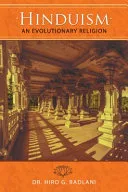
Hinduism
 72
72

Hinduism
Badlani's "Hinduism" attempts a cartographic feat: to map a faith spanning millennia and diverse traditions into a coherent, accessible guide. Its strength lies in its clarity; the author’s prose avoids the dense academic jargon that often encumbers introductions to Indic religions, making it particularly useful for the younger, diasporic audience mentioned in its blurbs. The section on the four Purusharthas—Dharma, Artha, Kama, and Moksha—is a model of concise exposition, effectively outlining life’s aims within a Hindu framework. However, the book occasionally simplifies intricate philosophical debates, such as the nuanced differences between Advaita Vedanta and Vishishtadvaita, to a degree that might leave seasoned practitioners wanting more depth. A passage detailing the concept of Brahman as the ultimate reality, while clear, could benefit from further exploration of its experiential dimensions. Ultimately, "Hinduism" is a commendable primer that successfully bridges the gap between complex spiritual philosophy and the modern seeker.
📝 Description
72
Published in 2022, Hiro G. Badlani's Hinduism offers a guide to the faith's core concepts.
Hiro G. Badlani's Hinduism aims to make the faith's vast traditions and philosophies accessible. The book is structured to guide readers from the origins of Hindu thought through to its ultimate goals. It presents Hinduism not as a fixed set of beliefs, but as a living path for personal growth and understanding.
The work is designed to reach a contemporary audience, particularly Hindu youth living away from their cultural roots, and also those new to the religion. It seeks to clarify complex ideas for newcomers and those interested in comparative religion or Eastern spiritual philosophies. The book acknowledges the ancient history of Hindu thought, tracing it back to Vedic traditions, and makes this heritage digestible for a modern readership.
This book engages with the broad spiritual and philosophical traditions of Hinduism. It discusses concepts like Dharma, Karma, and Samsara, which are central to understanding the human condition and the pursuit of liberation (Moksha) within this framework. By detailing various paths such as Jnana Yoga, Bhakti Yoga, and Karma Yoga, it touches upon different approaches to spiritual discipline and realization that have developed over centuries.
💡 Why Read This Book?
• Gain a structured understanding of Dharma, Karma, and Samsara, as presented in the book's exploration of foundational Hindu concepts, offering clarity on the interconnectedness of actions and their spiritual consequences. • Discover the significance of the Vedas and Upanishads, as Badlani details their role within the historical development of Hindu thought, providing context for these seminal scriptural texts. • Explore the practical paths to spiritual realization, including Jnana Yoga and Bhakti Yoga, as outlined in the text's discussion of margas, enabling a clearer view of diverse devotional and intellectual approaches to the divine.
⭐ Reader Reviews
Honest opinions from readers who have explored this book.
❓ Frequently Asked Questions
What is the primary goal of Hiro G. Badlani's 'Hinduism'?
The book aims to serve as a clear, accessible map for spiritual journeys within Hinduism, guiding readers from the starting point of their inquiry through to the ultimate spiritual destination.
Who is the intended audience for this book on Hinduism?
It is specifically designed to appeal to the Hindu youth diaspora, providing information in an easily readable format, as well as for individuals new to the faith seeking a structured introduction.
When was 'Hinduism' by Hiro G. Badlani first published?
The book was first published on April 12, 2022, positioning it as a contemporary exploration of ancient traditions.
What core concepts of Hinduism does the book cover?
It delves into fundamental concepts such as Dharma, Karma, Samsara, and Moksha, alongside explanations of key scriptures and diverse paths to spiritual realization.
How does the book present the spiritual journey?
The work frames the spiritual journey as a structured progression, illustrating where one might begin and the ultimate end of spiritual seeking within the Hindu context.
What kind of information can one expect regarding Hindu deities?
The book provides explanations of the diverse deities within Hinduism, offering insight into their roles and significance within the broader theological landscape.
🔮 Key Themes & Symbolism
The Four Purusharthas
The work meticulously outlines the Purusharthas—Dharma, Artha, Kama, and Moksha—as the foundational goals of human life within Hinduism. It elucidates how these aims are interconnected, guiding the individual's spiritual and material existence. This framework provides a structured lens through which to understand the ethical and existential dimensions of living a Hindu life, from societal duties to the ultimate pursuit of liberation.
Paths to Liberation (Moksha)
Badlani details the various yogic paths, or margas, leading to Moksha, the final liberation from Samsara. The book differentiates between Karma Yoga (path of action), Bhakti Yoga (path of devotion), and Jnana Yoga (path of knowledge). It emphasizes that these are not mutually exclusive but offer different approaches suited to individual temperaments and life stages.
Scriptural Foundations
The book underscores the importance of Hindu scriptures, particularly the Vedas and the Upanishads, as the bedrock of the tradition. It explains their role in shaping Hindu philosophy and practice, offering context for the complex theological and cosmological ideas that have evolved over centuries. Understanding these texts is presented as crucial for grasping the depth of Hindu thought.
The Concept of Brahman
Central to Hindu metaphysics, Brahman—the ultimate, unchanging reality—is explored as the source and sustainer of all existence. The text addresses the concept of Brahman in its impersonal (Nirguna) and personal (Saguna) aspects, providing a nuanced view of this fundamental principle that underpins the diverse manifestations of the divine within Hinduism.
💬 Memorable Quotes
Direct passages from the work, attributed to the author.
“Your book is definitely written in a way that provides abundant of information about Hinduism in an easily readable format and style that would clearly appeal to the Hindu youth Diaspora.”
— This testimonial emphasizes the book's accessibility and its specific aim to engage younger generations of Hindus, making complex religious information relatable and easy to digest.
“Dharma provides the ethical and social framework for life's pursuits.”
— This interpretation captures the essence of Dharma as not merely duty, but as the underlying order that governs righteous conduct and societal harmony within the Hindu worldview.
“Moksha represents the ultimate goal: liberation from earthly existence.”
— This interpretation defines Moksha as the supreme spiritual objective within Hinduism—the release from the cycle of reincarnation and the attainment of ultimate freedom.
💡 Key Ideas
Editorial paraphrase of the work's core concepts — not direct quotes.
This book is like a map of Hinduism, which showa from where once should start his or her spiritual journey and the journey ends.
This quote highlights the book's intended function as a directional guide, offering a clear starting point and ultimate destination for spiritual seekers within the Hindu tradition.
The cycle of Samsara is driven by the accumulation of Karma.
This paraphrased concept illustrates the causal relationship between one's actions (Karma) and the continuous process of birth, death, and rebirth (Samsara) that defines existence in Hindu philosophy.
🌙 Esoteric Significance
Tradition
While not strictly adhering to a single Western esoteric lineage like Hermeticism or Kabbalah, Badlani's work engages with the profound metaphysical and spiritual dimensions inherent in Hinduism. It aligns with esoteric traditions that view religions as outward expressions of universal spiritual laws and inner realities. The book's focus on paths to liberation and the nature of ultimate consciousness echoes themes found in Gnostic and Neoplatonic thought, albeit through an Indic lens.
Symbolism
The Om (Aum) symbol, representing the primordial sound and the totality of consciousness, is a central motif explored. The concept of the chakras, energy centers within the subtle body, also features, linking the physical form to spiritual awareness. Furthermore, the various forms of Deities, such as Vishnu and Shiva, are presented not just as anthropomorphic figures but as symbolic manifestations of divine attributes and cosmic functions.
Modern Relevance
Contemporary thinkers and practitioners in fields like mindfulness, yoga studies, and comparative spirituality frequently draw upon Hindu philosophical concepts. Schools of thought emphasizing non-dualism, consciousness studies, and the integration of spiritual practice into daily life find resonance in the principles of Vedanta and Yoga as presented in works like this. The book serves as a bridge, connecting ancient wisdom to modern psychological and philosophical inquiries.
👥 Who Should Read This Book
• Beginning students of comparative religion seeking a clear, structured overview of one of the world's major faiths. • Individuals of Hindu heritage, particularly the youth diaspora, looking to connect with and understand their cultural and spiritual roots in an accessible format. • Spiritual seekers interested in Eastern philosophies who desire a foundational text that explains core concepts like Dharma and Karma without overwhelming complexity.
📜 Historical Context
Hiro G. Badlani's "Hinduism," published in 2022, arrives in a global landscape increasingly receptive to Eastern spiritual philosophies, yet still marked by a need for clear, modern introductions. Its publication follows decades of scholarly and popular interest spurred by figures like Swami Vivekananda, who introduced Vedanta to the West in the late 19th century, and later by the Theosophical Society's engagement with Indic traditions. The book's accessible approach can be seen as a response to the vastness of Hindu literature, which includes ancient texts like the Rigveda, dating back to approximately 1500 BCE, and philosophical schools such as Samkhya and Yoga that developed alongside it. In an era where online discourse often simplifies complex faiths, Badlani's work offers a structured narrative, contrasting with the sometimes fragmented or polemical discussions found in other contemporary sources. Its reception is likely to be shaped by the ongoing dialogue between traditional Hindu scholarship and modern interpretations seeking relevance.
📔 Journal Prompts
The concept of Dharma as a guiding principle for action.
Mapping the journey from Samsara to Moksha.
Bhakti Yoga's emphasis on devotion as a spiritual path.
The many-sided nature of Brahman.
Understanding the role of the Vedas in Hindu thought.
🗂️ Glossary
Dharma
The principle of cosmic order, righteousness, duty, and law that sustains the universe and guides human conduct within Hinduism.
Karma
The universal law of cause and effect, where actions (karma) determine an individual's future experiences and rebirths.
Samsara
The continuous cycle of birth, death, and reincarnation, driven by desire and ignorance, from which liberation (Moksha) is sought.
Moksha
Liberation from the cycle of Samsara; the ultimate spiritual goal in Hinduism, signifying release and union with the divine or ultimate reality.
Brahman
The supreme, unchanging, ultimate reality or consciousness that underlies all existence in the universe.
Vedas
The oldest and most revered scriptures of Hinduism, considered to be divinely revealed, containing hymns, rituals, and philosophical insights.
Upanishads
A collection of philosophical texts within the Vedas that form the theoretical basis of Hinduism, focusing on concepts like Brahman and Atman.