Hieroglyphic Monad
 83
83

Hieroglyphic Monad
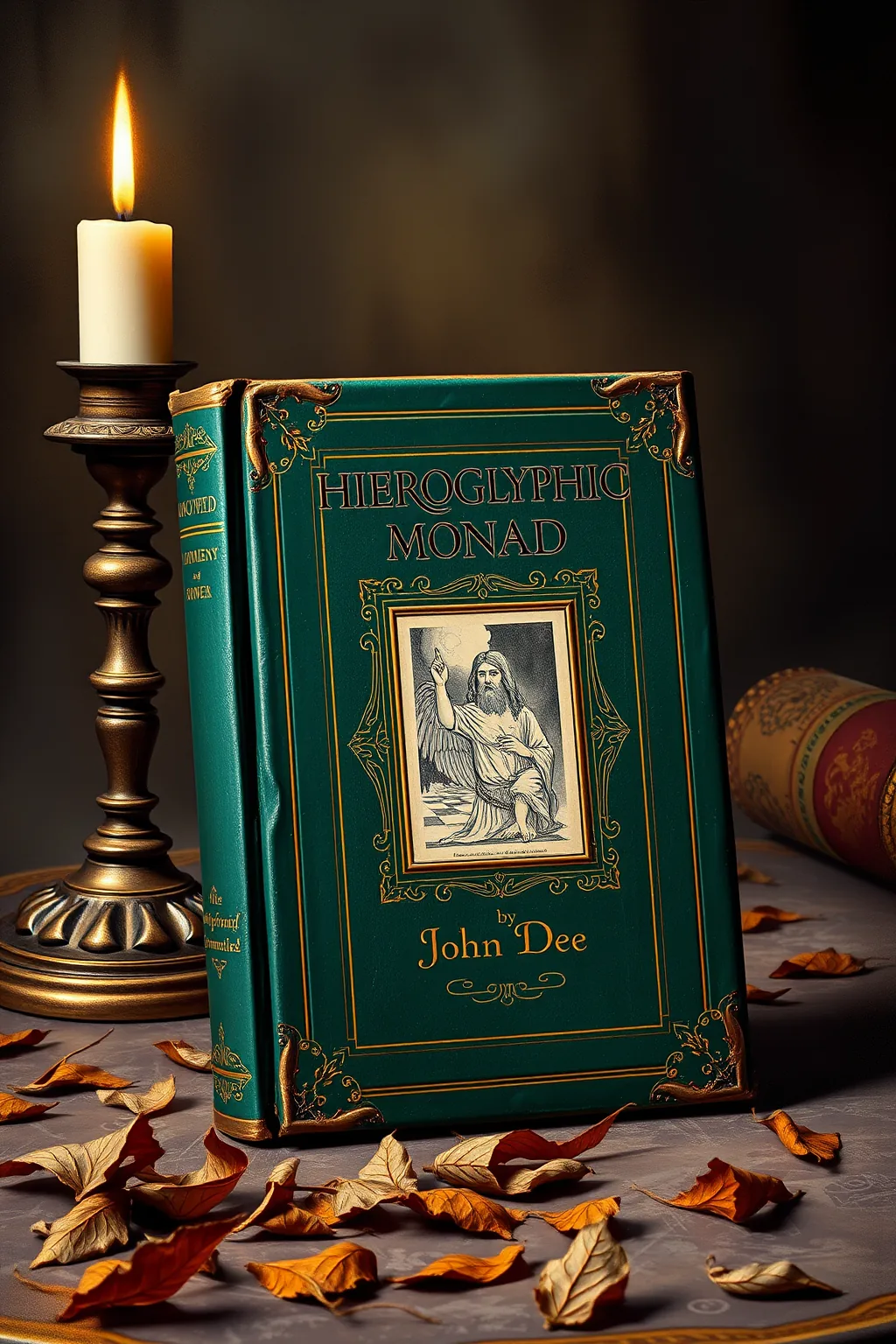
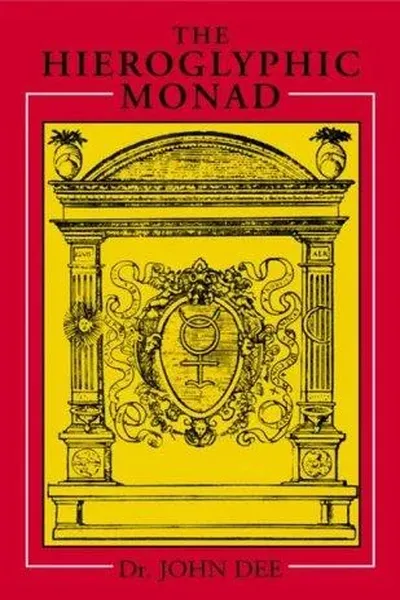
John Dee's *Hieroglyphic Monad* is less a book to be read and more a cipher to be decoded. Its publication in 2001, long after Dee’s death in 1597, finally gives scholars and practitioners direct access to a pivotal text from the English Renaissance occult revival. The strength of the *Monad* lies in its sheer density of symbolic meaning. Dee meticulously crafts 24 allegorical figures, each a stepping stone in a complex alchemical and spiritual ascent. For instance, Figure IV, depicting the conjunction of the Sun and the Alchemical Egg, offers a potent visual metaphor for the union of opposites central to the Great Work. However, the *Monad*'s profound obscurity is also its primary limitation. Dee’s private symbolic language, while deeply personal and expressive, requires substantial prior knowledge of Hermetic, Kabbalistic, and alchemical traditions to even begin to unravel. Without extensive annotation or commentary, the reader is often left adrift in a sea of symbols without a reliable compass. It is a work that demands immense scholarly effort or a profound intuitive grasp of Dee's unique visionary framework. Ultimately, the *Hieroglyphic Monad* is a challenging but rewarding artifact for those dedicated to understanding the intricate symbolic universe of John Dee.
📝 Description
83
John Dee composed his Hieroglyphic Monad in Antwerp in 1564.
The Hieroglyphic Monad is not a narrative but a symbolic treatise by John Dee, first published in its complete form in 2001. Dee, an Elizabethan mathematician and occultist, structured the work around 24 figures, each with an explanation. These figures represent a progression of spiritual and material transformation. The text is a dense, personal system of mystical thought, intended as a guide for initiates who wish to gain gnosis through symbolic interpretation. It demands careful study from readers interested in Dee's unique visionary approach.
This book is for serious students of Western esotericism, especially those focused on Renaissance occultism. A background in Hermeticism, Kabbalah, or Renaissance alchemy is necessary, as Dee assumes familiarity with their terms and symbols. The work suits individuals who appreciate rigorous symbolic analysis and can engage with abstruse language. It does not follow a conventional narrative structure, appealing instead to those seeking a direct encounter with Dee’s specific system.
Penned in 1564 during the High Renaissance, the Hieroglyphic Monad emerged from a period of intense intellectual and religious change in Europe. The revival of Neoplatonism and Hermetic philosophy, spurred by translations of texts like the Corpus Hermeticum, deeply influenced scholars. Dee, connected to Queen Elizabeth I's court, was immersed in this environment. The Monad reflects the era's use of symbolic language to understand divine secrets, bridging scientific inquiry and mystical exploration.
💡 Why Read This Book?
• Gain direct insight into John Dee's unique alchemical and Hermetic philosophy, moving beyond secondary interpretations by studying his original 24 figures and accompanying explanations from 1564. • Understand the intricate symbolic language Dee employed, including the representation of the Monad and celestial bodies, which forms a cornerstone of Renaissance esoteric thought. • Explore the historical intersection of mathematics, astronomy, and occultism during the Elizabethan era, learning how figures like Dee integrated diverse traditions into a singular symbolic system.
⭐ Reader Reviews
Honest opinions from readers who have explored this book.
❓ Frequently Asked Questions
When was John Dee's Hieroglyphic Monad originally written?
John Dee originally composed the Hieroglyphic Monad in 1564 during his travels in Antwerp, though it was first published in its complete form much later, in 2001.
What is the main purpose of the Hieroglyphic Monad?
The Hieroglyphic Monad serves as a symbolic and allegorical treatise, presenting a system of 24 figures intended to guide the initiate through alchemical and spiritual transformation.
What esoteric traditions influenced the Hieroglyphic Monad?
The work is deeply influenced by Hermeticism, Kabbalah, Renaissance Neoplatonism, and alchemical symbolism, reflecting the intellectual currents of the Elizabethan era.
Who was John Dee and why is he significant?
John Dee (1527-1597/8) was a prominent Elizabethan mathematician, astronomer, astrologer, occultist, and consultant to Queen Elizabeth I, renowned for his contributions to navigation and his extensive work in esoteric sciences.
Is the Hieroglyphic Monad easy to understand?
No, the Hieroglyphic Monad is notoriously dense and complex, requiring significant background knowledge in esoteric traditions and symbolic interpretation to fully grasp its meaning.
Where can I find the Hieroglyphic Monad?
The Hieroglyphic Monad, first published in its complete form in 2001, is available through academic publishers and specialized esoteric bookstores; its original manuscript dates to 1564.
🔮 Key Themes & Symbolism
The Monad as Divine Unity
The central concept of the Hieroglyphic Monad is the 'Monad' itself, representing the primordial unity and divine principle from which all existence emanates. Dee's initial figures explore this concept through basic geometric forms – the point, circle, and line – linking Pythagorean and Platonic ideas with alchemical cosmology. This theme underscores the work's Hermetic foundation, emphasizing the 'All is One' principle and the potential for the microcosm (human consciousness) to apprehend the macrocosm (universe) through symbolic contemplation.
Alchemical Transformation and the Great Work
Dee employs the symbolic language of alchemy to represent stages of spiritual and material purification. The 24 figures are structured as an allegorical progression mirroring the Great Work. Symbols like the Sun, Moon, Mercury, and the alchemical egg are not merely decorative but represent specific operations, principles, or stages in the Major work. The work implicitly guides the reader towards achieving inner transformation, aligning their consciousness with divine principles through rigorous symbolic interpretation and contemplation.
Hermetic Synthesis of Knowledge
The Hieroglyphic Monad exemplifies the Renaissance ideal of synthesizing diverse fields of knowledge – mathematics, astronomy, Kabbalah, alchemy, and theology – into a unified esoteric system. Dee's background as a mathematician and cosmographer informs his precise, geometric approach to symbolism. He uses these disciplines not in isolation but as interconnected facets of a single, divinely ordered reality. The work demonstrates how symbolic language can serve as a universal key to unlock the hidden correspondences within creation.
The Power of Visual Symbolism
Dee's primary method in the Monad is through visual representation and symbolic interpretation. Each of the 24 figures is a carefully constructed emblem designed to convey complex ideas non-verbally. The text emphasizes that true understanding comes not just from intellectual study but from contemplative engagement with these visual keys. This focus on the potency of sacred geometry and emblematic art reflects a broader trend in Renaissance esotericism, where images were seen as direct conduits to higher knowledge.
💬 Memorable Quotes
Direct passages from the work, attributed to the author.
“The Monad itself is God.”
— This statement expresses Dee's understanding of the Monad as the ultimate divine principle, the singular source from which all creation originates. It reflects a pantheistic or panentheistic view where the divine is immanent in all things and is the fundamental unity underlying reality.
“Figure IV shows the Sun's conjunction with the Alchemical Egg.”
— This refers to a specific stage in Dee's symbolic progression, where the celestial power of the Sun (representing active, masculine principle) merges with the nascent potential within the 'Egg' (often symbolizing the prima materia or the beginnings of transformation).
“The point is the beginning of all figures.”
— Dee establishes the foundational nature of the point as the origin of all geometric forms and, by extension, all manifest reality. This links to Pythagorean concepts of the Monad as the primal unit from which numbers and forms arise.
“The circle represents the divine circumference.”
— In Dee's symbolic system, the circle signifies the divine, encompassing all things, without beginning or end. It reflects the perfection and totality of God or the cosmos, a common motif in Hermetic and Neoplatonic thought.
“The figures are a ladder to understand God's work.”
— This interpretation highlights the didactic and progressive nature of the Hieroglyphic Monad. The series of emblems is presented as a structured path or 'ladder' for the adept to ascend towards a greater comprehension of divine mysteries and creation.
🌙 Esoteric Significance
Tradition
The Hieroglyphic Monad firmly belongs to the Western Esoteric Tradition, drawing heavily from Hermeticism, Kabbalah, and Renaissance Alchemy. It represents a crucial stage in the development of English occultism, showcasing John Dee's attempt to systematize and synthesize these diverse streams into a coherent personal philosophy. Dee departs from purely theoretical Kabbalah by integrating it with alchemical processes and geometric symbolism, creating a unique visionary system aimed at spiritual illumination and understanding the divine order.
Symbolism
Key symbols in the *Monad* include the point, circle, and line, which represent primordial unity and the fundamental building blocks of creation, linking to Pythagorean and Platonic metaphysics. The Sun and Moon are prominent, symbolizing the masculine and feminine, active and passive principles essential in alchemical union and cosmic duality. The Alchemical Egg also features, representing the prima materia or the contained potentiality awaiting transformation, a core concept in the Great Work of alchemy.
Modern Relevance
Contemporary practitioners of Hermeticism and ceremonial magic often reference John Dee's work, including the *Monad*, as a foundational text. Its complex symbolic system continues to inspire discussions on the integration of science and mysticism. Modern esoteric thinkers and researchers of Renaissance occultism find value in Dee's attempt to create a unified symbolic language that bridges mathematics, cosmology, and spiritual attainment, influencing studies in comparative esotericism and the history of ideas.
👥 Who Should Read This Book
• Students of John Dee and Elizabethan Esotericism: Those seeking to understand Dee's personal philosophy and his important role in the development of Western occultism will find the *Monad* indispensable. • Practitioners of Hermeticism and Alchemy: Individuals engaged in symbolic interpretation and the study of the Great Work can draw inspiration and conceptual frameworks from Dee's unique allegorical system. • Scholars of Renaissance Intellectual History: Researchers interested in the intersection of mathematics, science, theology, and magic during a period of profound intellectual change will find the *Monad* a primary source.
📜 Historical Context
John Dee's *Hieroglyphic Monad*, composed in Antwerp in 1564, emerged during an important era of intellectual and spiritual exploration. The Renaissance had witnessed the rediscovery and translation of the *Corpus Hermeticum*, sparking a renewed interest in Hermetic philosophy and Neoplatonism among scholars and mystics. Dee, a figure deeply embedded in this milieu, was also a respected mathematician and astronomer, holding royal favor with Queen Elizabeth I. The *Monad* reflects this unique synthesis, bridging the empirical sciences with esoteric traditions. It was written amidst a Europe grappling with religious upheaval following the Reformation, where symbolic languages offered alternative pathways to understanding the divine. Dee's work engaged with the Kabbalistic revival and alchemical theories prevalent at the time, standing apart from purely scholastic or nascent scientific approaches. While contemporaries like Nicolaus Copernicus were revolutionizing astronomy, Dee sought understanding through a deeply personal, symbolic cosmology.
📔 Journal Prompts
The Monad as the divine origin: How does Dee's representation of the point and circle inform your understanding of ultimate unity?
Contemplation of Figure IV: What personal alchemical transformations does the Sun's conjunction with the Alchemical Egg suggest to you?
Dee's symbolic language: Reflect on the process of creating your own visual symbols to represent abstract spiritual concepts.
The ladder of understanding: How can systematic study of symbolic texts, like the 24 figures of the Monad, lead to deeper self-knowledge?
Bridging disciplines: Consider how mathematical principles, as used by Dee, might illuminate other areas of esoteric study.
🗂️ Glossary
Monad
In Dee's context, the primordial unity, the divine principle, or God, from which all multiplicity emanates. It is often represented geometrically as a point or a circle.
Great Work
The Major work of alchemy, referring to the process of creating the Philosopher's Stone and achieving spiritual perfection or enlightenment.
Prima Materia
The fundamental, undifferentiated substance from which all matter is derived, often depicted as the 'Egg' in alchemical symbolism.
Hermeticism
A philosophical and religious tradition based on writings attributed to Hermes Trismegistus, emphasizing divine wisdom, cosmic unity, and the interconnectedness of all things.
Kabbalah
A system of Jewish mysticism and esoteric interpretation that explores the nature of God and the universe through symbolic readings of scripture and divine emanations (Sephirot).
Alchemical Egg
A symbolic representation of the prima materia, containing the potential for transformation and the development of the Philosopher's Stone.
Figure
In the Hieroglyphic Monad, refers to one of the 24 distinct symbolic diagrams presented by Dee, each accompanied by an explanation representing a stage in his esoteric system.
🔮 Readers Also Liked
Browse all →








More by John Dee
All books →



More Free Alchemy & Hermeticism Books
View all →