Freemasonry
 71
71

Freemasonry
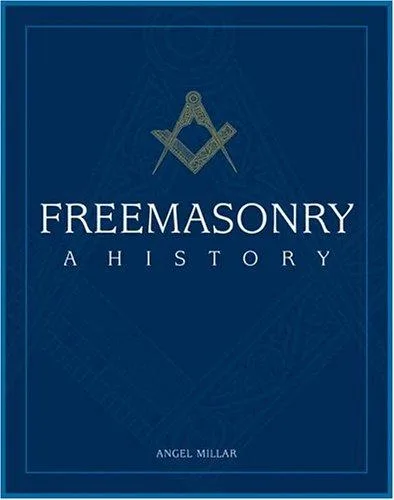
Angel Millar's "Freemasonry" presents a commendable effort to demystify a subject often obscured by conjecture. The author's strength lies in his disciplined approach to historical evidence, particularly in detailing the transition from operative to speculative Masonry around the early 18th century. He avoids sensationalism, focusing instead on the intellectual and philosophical threads that informed the craft. A notable passage explores the symbolic resonance of the 'lost word,' highlighting its elusive nature within Masonic discourse. However, the book occasionally suffers from a dense prose style that can make complex ideas feel more inaccessible than necessary. While comprehensive, a more dynamic exploration of the lived experience of early Masons might have added another layer of depth. Despite this, Millar's work serves as a solid, fact-based introduction for the serious student.
📝 Description
71
Angel Millar's "Freemasonry" (2022) details the fraternal organization's origins and evolution.
Angel Millar's "Freemasonry" examines the history and philosophical underpinnings of the fraternal organization. The book traces the development of Masonic practice through centuries of esoteric thought, investigating its rituals and symbols. Millar moves beyond surface-level interpretations to consider the intellectual currents that shaped Freemasonry's growth. This work offers a comprehensive overview for anyone interested in the historical and symbolic aspects of the fraternity.
The book is suited for students of Western Esotericism, comparative religion, and those curious about the history of secret societies. It appeals to readers who value historical research applied to subjects often surrounded by myth. Individuals interested in the intersection of philosophy, ritual, and social history will find substantial material here.
Millar situates Freemasonry within post-Reformation Europe, a time of intellectual change and new philosophical systems. The book acknowledges the organization's roots in operative guilds and its shift to a speculative fraternity. It addresses the historical context of Grand Lodge establishments and the spread of Masonic ideas in the 18th century.
This book places Freemasonry within the broader currents of Western Esotericism, particularly as it developed in post-Reformation Europe. It acknowledges the influence of earlier esoteric traditions on Masonic teachings, alongside Enlightenment philosophy. The work investigates how operative guild practices were transformed into speculative philosophical principles and symbolic systems. Millar connects Masonic symbolism, such as the tools of operative masonry and the allegory of Solomon's Temple, to a wider history of Hermeticism and Rosicrucianism.
💡 Why Read This Book?
• Gain a structured understanding of Freemasonry's evolution from operative guilds to speculative lodges, a process detailed with specific historical references to the early 18th century. • Grasp the allegorical significance of Masonic symbols, such as the construction of Solomon's Temple, and how these elements function within the fraternity's philosophical system. • Appreciate the influence of Enlightenment thought and earlier esoteric traditions on Masonic teachings, providing context for the ethical and spiritual dimensions explored by Millar.
⭐ Reader Reviews
Honest opinions from readers who have explored this book.
❓ Frequently Asked Questions
When was Freemasonry first established as a speculative fraternity?
While operative masonry has older roots, the establishment of speculative Freemasonry as a formal organization is largely traced to the formation of the Premier Grand Lodge of England in 1717.
What is the significance of Solomon's Temple in Freemasonry?
Solomon's Temple serves as a central allegorical and symbolic structure in Masonic ritual, representing divine presence, order, and the pursuit of wisdom and perfection.
Did Enlightenment ideals influence Freemasonry?
Yes, the Enlightenment's emphasis on reason, individual liberty, and universal brotherhood significantly shaped Masonic philosophy and its spread during the 18th century.
Are Masonic rituals publicly known?
While the general principles and symbols of Masonic degrees are widely discussed in literature like Millar's, the specific details of rituals are traditionally kept private among members.
What is the difference between operative and speculative Freemasonry?
Operative Freemasonry involved actual stonemasons and architects, while speculative Freemasonry, emerging in the late 16th and early 17th centuries, adopted their tools and terminology for allegorical and philosophical purposes.
Who was Angel Millar's first published year for 'Freemasonry'?
Angel Millar's "Freemasonry" was first published in 2004, offering a contemporary scholarly perspective on the historical subject.
🔮 Key Themes & Symbolism
Symbolic Architecture
The work examines how Masonic symbolism is deeply rooted in the architecture and construction of King Solomon's Temple. This isn't merely structural; it represents the building of a spiritual edifice within the individual and the fraternity. Millar details how operative masonry's tools are reinterpreted as allegorical instruments for moral and spiritual development, signifying concepts like rectitude, stability, and the pursuit of perfection.
The Journey of Light
Central to Masonic teachings is the progression from darkness to light, symbolizing the acquisition of knowledge and spiritual enlightenment. Millar explores how Masonic degrees chart this journey, often through narratives and rituals that mirror the seeker's path toward understanding profound truths. This progression is linked to the pursuit of the 'lost word,' a potent symbol of divine knowledge.
Philosophical Roots
Millar situates Freemasonry within the intellectual currents of the Enlightenment and earlier esoteric traditions. The book discusses how concepts of reason, tolerance, and universalism, prevalent in the 18th century, were integrated into Masonic philosophy. It also touches upon potential influences from Hermeticism and Kabbalah, offering a view of Masonry as a synthesis of diverse philosophical inquiries.
Ritual and Allegory
The book provides an analysis of Masonic ritual not as literal instruction but as a vehicle for allegory and moral instruction. Millar explains how dramatic reenactments and symbolic actions serve to convey complex philosophical and ethical principles to the initiates. The adherence to these structured forms is presented as crucial for the transmission of Masonic tradition.
💬 Memorable Quotes
Direct passages from the work, attributed to the author.
“The tools of operative stonemasons became potent symbols for the speculative Mason's self-improvement.”
— This highlights the core Masonic method of transforming practical implements into vehicles for moral and spiritual lessons, emphasizing personal development through allegory.
“Solomon's Temple stands not just as a historical building but as a blueprint for inner order.”
— This interpretation points to the symbolic representation of the Temple as an ideal of perfection and divine presence, which Masons strive to recreate within themselves.
“The pursuit of the 'lost word' signifies an ongoing quest for divine truth.”
— This suggests that the 'lost word' is a metaphor for unattainable or hidden ultimate knowledge, representing the continuous human endeavor to comprehend profound mysteries.
“Enlightenment ideals of reason and brotherhood found fertile ground within Masonic lodges.”
— This observation connects the philosophical movements of the 18th century with Masonic principles, showing how lodges became spaces for exploring and propagating these humanist values.
“Ritual in Freemasonry functions as a language of symbols for moral education.”
— This emphasizes that Masonic ceremonies are designed to teach ethical and philosophical concepts through symbolic actions and narratives rather than direct exposition.
🌙 Esoteric Significance
Tradition
Millar's work engages with the Western Esoteric tradition, particularly its manifestation in post-Renaissance Europe. While Freemasonry is not a singular esoteric school like Hermeticism or Kabbalah, it has absorbed and synthesized elements from these traditions. The book positions Freemasonry as a unique, syncretic system that developed its own symbolic language and philosophical framework, drawing inspiration from operative guilds and intellectual movements.
Symbolism
Key symbols analyzed include the Square and Compasses, representing morality and the control of passions, and the Winding Staircase, symbolizing the aspirant's journey toward higher knowledge. The Master's Carpet, a symbolic representation of the lodge room, is also explored as a microcosm of the universe and a map for spiritual progress.
Modern Relevance
Contemporary esoteric practitioners and scholars of Western esotericism continue to reference foundational Masonic texts and symbolism. The book's exploration of ritual, allegory, and ethical development appeals to modern interest in embodied knowledge and symbolic practice. Thinkers exploring the history of consciousness and the evolution of fraternal orders often find Millar's work a valuable resource for understanding Masonry's enduring influence.
👥 Who Should Read This Book
• Students of Western Esotericism seeking to understand the historical development and symbolic language of a major fraternal order. • Researchers in comparative religion and philosophy interested in the intersection of Enlightenment thought, ancient traditions, and organized ritual. • Individuals curious about the origins and evolution of secret societies and their impact on social and intellectual history.
📜 Historical Context
Angel Millar's "Freemasonry" emerges from a scholarly landscape seeking to understand the fraternal order beyond myth. Published in 2004, it engages with a long tradition of Masonic historiography that gained significant traction in the 18th and 19th centuries. The era of Freemasonry's formalization, particularly the early 1700s with the establishment of Grand Lodges in England and Scotland, is a critical period explored. Millar situates his work within the intellectual milieu of the Enlightenment, where reason, empiricism, and humanism flourished, influencing Masonic tenets. He implicitly contrasts this rationalist approach with earlier, more mystical interpretations of craft guilds. Contemporaries like Margaret Jacob, who explored the political dimensions of early modern associations, provide a backdrop for understanding the social and intellectual currents. The book's detailed examination of symbols and rituals taps into perennial academic interest in secret societies and their role in shaping social and philosophical discourse.
📔 Journal Prompts
The Square and Compasses as symbols of moral conduct.
Reflecting on the transition from operative to speculative Masonry.
The allegorical meaning of Solomon's Temple in personal development.
The concept of the 'lost word' as a metaphor for seeking truth.
How Enlightenment ideals are reflected in Masonic philosophy.
🗂️ Glossary
Speculative Masonry
Freemasonry as practiced today, focusing on moral and philosophical teachings through allegory and ritual, distinct from operative masonry.
Operative Masonry
The historical craft of stonemasons and architects who built cathedrals and other structures, from which speculative Masonry derived its symbols and rituals.
The Lost Word
A central, elusive symbol in Masonic lore, representing divine truth, the name of God, or perfect knowledge, the recovery of which is a key theme.
Winding Staircase
A symbolic element in Masonic ritual representing the journey of initiation and the ascent toward greater knowledge and enlightenment.
Master's Carpet
A symbolic floor cloth or diagram within a Masonic lodge, depicting various emblems and symbols of the degree being worked.
Allegory
The use of symbols and symbolic narratives to convey hidden meanings, particularly moral, spiritual, or philosophical truths, central to Masonic teachings.
Enlightenment
An 18th-century intellectual and cultural movement emphasizing reason, individualism, and skepticism towards traditional authority, which influenced Masonic ideals.
🔮 Readers Also Liked
Browse all →






More by Angel Millar
All books →
More Free Freemasonry & Secret Societies Books
View all →