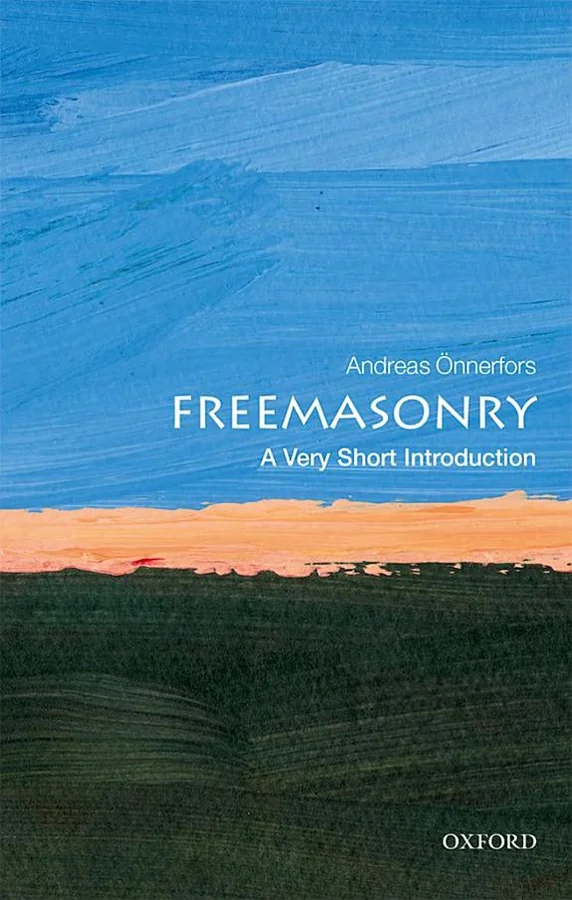
Freemasonry
 78
78

Freemasonry
Andreas Önnerfors's "Freemasonry" provides a much-needed anchor in empirical reality for a subject often adrift in rumor and speculation. The author excels at delineating the organizational framework and the philosophical underpinnings of the fraternity, moving beyond the lurid tales of secret world control. A particular strength is the methodical examination of Masonic symbolism, where Önnerfors offers clear explanations for motifs like the plumb line and level, linking them to principles of moral rectitude and civic duty. However, the book occasionally feels overly cautious, perhaps to a fault. While it meticulously sorts fact from fiction, it sometimes overlooks the genuine spiritual and psychological resonance these symbols can hold for practitioners, a dimension that fuels much of the enduring fascination with Masonry. The work’s limitation lies in its somewhat dry, academic presentation, which may alienate readers seeking a more visceral connection to the subject matter. Nevertheless, Önnerfors delivers a competent and essential primer for anyone needing a factual baseline on Freemasonry.
📝 Description
78
Andreas Önnerfors examines Freemasonry not as a secret conspiracy, but as an evolving fraternal order.
Andreas Önnerfors's study presents Freemasonry as a complex, evolving fraternal order with a global reach, separating historical fact from popular speculation. The book details the organization's structure, its degrees of progression, and the guiding principles for its members. It clarifies that Masonic lodges function as spaces for mutual self-improvement and charitable activities.
This work is intended for anyone interested in prominent voluntary societies, especially those seeking an objective view beyond sensationalist claims. It is useful for understanding the mechanics of fraternal organizations, the development of their symbolism, and their place in civic life. Students of organizational sociology, comparative religion, and secret societies will find a factual basis here, distinct from conspiratorial or overly devotional accounts.
Önnerfors places Freemasonry within the context of the Enlightenment and the rise of philosophical societies during the 17th and 18th centuries. The book traces its lineage from operative stonemason guilds to speculative societies, particularly in England. It discusses the founding of the first Grand Lodge in London in 1717 as a key moment in its formalization. The study acknowledges the varied interpretations and criticisms directed at Freemasonry by religious and political entities throughout history.
This book engages with the tradition of examining Freemasonry as a system of moral and philosophical instruction rather than a purely secret society. It discusses the allegorical nature of Masonic rituals and symbols like the 'Great Architect of the Universe' and the 'Square and Compasses.' The work frames these elements as tools for personal development and moral teaching, situating them within the historical development of post-Renaissance European speculative societies.
💡 Why Read This Book?
• Understand the foundational principles of Masonic ethics and governance, learning how the concept of the 'Square and Compasses' serves as a guide for moral conduct, as detailed in the book's exploration of core values. • Gain clarity on the historical evolution of Freemasonry from operative guilds to speculative societies, specifically noting the significance of the 1717 formation of the first Grand Lodge in London. • Disentangle verifiable facts from persistent myths surrounding Masonic rituals and their aims, appreciating how Önnerfors explains the allegorical intent behind widely recognized symbols.
⭐ Reader Reviews
Honest opinions from readers who have explored this book.
❓ Frequently Asked Questions
What is the primary purpose of Freemasonry according to Andreas Önnerfors?
Andreas Önnerfors describes Freemasonry's primary purpose as the moral and spiritual improvement of its members through ritual, symbolism, and fellowship, alongside a commitment to charitable work and civic engagement.
Does Freemasonry require members to adhere to a specific religion?
No, the book clarifies that Freemasonry requires belief in a Supreme Being but does not dictate a specific religious doctrine, allowing individuals of various faiths to participate.
What are some common symbols used in Freemasonry and their meanings?
Common symbols include the Square and Compasses, representing morality and self-control, and the Rough and Perfect Ashlars, symbolizing the process of personal refinement and perfection.
When and where did Freemasonry as a speculative organization originate?
Freemasonry transitioned into a speculative organization primarily in England, with the establishment of the first Grand Lodge in London in 1717 marking a key point in its formalization.
Is Freemasonry still relevant in modern society?
Önnerfors's work suggests Freemasonry remains relevant by continuing its traditions of fraternity, moral instruction, and charitable activities, adapting its presence within contemporary social structures.
How does Önnerfors differentiate Freemasonry from conspiracy theories?
Önnerfors distinguishes factual accounts of Masonic organization, rituals, and values from speculative theories by relying on historical evidence and organizational documentation, separating common fictions from realities.
🔮 Key Themes & Symbolism
Ritual and Moral Instruction
The work meticulously details Masonic rituals, presenting them not as arcane ceremonies but as structured allegorical dramas designed for moral instruction. Önnerfors explains how the progression through degrees, such as Entered Apprentice, Fellowcraft, and Master Mason, uses symbolic tools and narratives to teach virtues like brotherly love, relief, and truth. The emphasis is on self-improvement and the cultivation of character, using these dramatic presentations to impress upon members the importance of ethical conduct in their daily lives.
Symbolism as a Philosophical Language
Freemasonry's rich symbolic language is a central focus. Önnerfors deciphers common emblems such as the All-Seeing Eye, the Pillars of Solomon's Temple, and the working tools of stonemasons. These symbols, he explains, are not merely decorative but serve as a profound philosophical lexicon, conveying complex ideas about creation, human nature, justice, and the pursuit of knowledge. The book clarifies that the interpretation of these symbols is intended to foster contemplation and personal understanding rather than dictate dogma.
Fraternalism and Civic Engagement
Beyond its internal practices, the book explores Freemasonry's role as a voluntary organization dedicated to fraternity and social good. Önnerfors outlines the historical contributions of Masonic lodges to community welfare and charitable initiatives. He discusses the values of mutual support and brotherhood that bind members, emphasizing how these fraternal bonds extend into efforts to improve society. The work positions Freemasonry as an institution that fosters responsible citizenship and collective action for betterment.
Distinguishing Fact from Fiction
A significant aspect of Önnerfors's approach is the systematic debunking of myths and misconceptions surrounding Freemasonry. The book directly addresses the sensationalist narratives and conspiracy theories that have often obscured the organization's reality. By presenting historical evidence and clear explanations of Masonic structures and purposes, the author provides a grounded perspective, separating the colorful fictions from the actual operations, values, and societal contributions of the fraternity.
💬 Memorable Quotes
Direct passages from the work, attributed to the author.
“The organization works by outlining how it operates, its rituals and symbols, its values, and the work it does.”
— This statement captures the book's direct, factual approach. It promises a clear exposition of Freemasonry's mechanics, ethical framework, and societal function, cutting through speculative narratives to present an organizational overview.
“Freemasonry is one of the oldest and most widespread voluntary organizations in the world.”
— This highlights the historical significance and global reach of Freemasonry, establishing its enduring presence and influence as a subject worthy of serious, factual study beyond its more esoteric associations.
“Andreas Onnerfors sorts the facts from the colorful fictions surrounding this organization.”
— This assertion points to the book's critical methodology. It signals an intent to provide a balanced, evidence-based account, distinguishing verifiable history and organizational practices from popular myths and unsubstantiated claims.
“The book outlines... its rituals and symbols, its values, and the work it does in modern society.”
— This phrase indicates the comprehensive scope of the work, promising detailed explanations of Masonic practices, ethical principles, and contemporary relevance, offering readers a structured understanding of the fraternity.
“The author clarifies the nature of Masonic lodges as meeting places for mutual self-improvement and charitable endeavors.”
— This interpretation focuses on the core function of Masonic lodges as presented by Önnerfors: centers for personal development and community service, clarifying their purpose and emphasizing their constructive role.
🌙 Esoteric Significance
Tradition
While Freemasonry itself is not strictly an esoteric tradition in the same vein as Hermeticism or Kabbalah, Önnerfors's work positions it at a crucial intersection. It emerged from operative guilds during a period influenced by Hermetic and alchemical thought, absorbing symbolic and philosophical currents that permeated Renaissance and Enlightenment Europe. The book explores how Freemasonry adopted and adapted these ideas, creating a unique system of moral and spiritual allegory that draws upon, but is distinct from, more overtly mystical lineages. It represents a form of "esotericism for the public sphere," accessible and focused on civic virtue alongside personal betterment.
Symbolism
The book extensively covers Masonic symbolism, interpreting key motifs. The Square and Compasses, for instance, are presented as representing morality and the boundaries of conduct, guiding members to act justly and live within due bounds. The Rough and Perfect Ashlars symbolize the journey of personal transformation – from the unrefined state of the initiate to the perfected individual through Masonic labor and instruction. The concept of the 'Great Architect of the Universe' serves as a unifying symbol for a Supreme Being, allowing individuals of diverse faiths to participate without compromising their personal beliefs.
Modern Relevance
Önnerfors's analysis of Freemasonry's structure, values, and charitable work remains relevant for understanding contemporary fraternal organizations and their societal impact. Thinkers interested in civil society, voluntary associations, and the persistence of ritualistic practices in secularizing societies find value in this work. Contemporary discussions on community building, moral education, and the role of non-governmental organizations in social welfare can draw parallels from Masonic models. The book's demystification also provides a useful lens for individuals engaging with modern interpretations or adaptations of Masonic symbolism in various cultural contexts.
👥 Who Should Read This Book
• Individuals seeking a factual, unbiased introduction to Freemasonry, moving beyond sensationalist myths to understand its organizational structure, history, and stated principles. • Students of comparative religion and sociology of organizations who wish to analyze the mechanics, rituals, and symbolic language of a prominent global voluntary society. • Curious members of the public interested in the historical context of fraternal orders and their enduring presence in civic life, particularly concerning their moral and charitable dimensions.
📜 Historical Context
Andreas Önnerfors's "Freemasonry" emerges from a scholarly tradition seeking to contextualize fraternal organizations within broader social and intellectual movements. Written in the early 21st century, it engages with centuries of debate and interpretation surrounding the Craft. The book implicitly situates itself against the backdrop of Enlightenment rationalism, which saw the rise of numerous philosophical societies, including Freemasonry, particularly after the establishment of the Premier Grand Lodge of England in 1717. This period was marked by an increasing interest in reason, morality, and self-governance, ideals often reflected in Masonic lodges. Önnerfors’s work also stands in contrast to more esoteric or conspiratorial interpretations that gained traction in the 19th century, fueled by authors like Éliphas Lévi and later, occultists. By focusing on organizational structure, verifiable history, and stated values, the book provides a counterpoint to such speculative accounts, offering a grounded perspective on a phenomenon that has fascinated and sometimes alarmed figures across the spectrum of European thought.
📔 Journal Prompts
The concept of the Rough and Perfect Ashlars: how does your own self-improvement mirror this Masonic allegory?
Reflect on the function of ritual in conveying moral truths, considering the examples of Masonic symbols like the Square and Compasses.
Consider the historical context of Freemasonry's rise in the 18th century; what societal needs did it address then, and are those needs still present?
Analyze the 'Great Architect of the Universe' concept: what does this term suggest about the intersection of faith and fraternity in Freemasonry?
How does Önnerfors's distinction between Masonic 'facts' and 'fictions' inform your understanding of other historical or social phenomena?
🗂️ Glossary
Entered Apprentice
The first degree in Craft Masonry, representing the initial stage of a candidate's journey, focused on basic moral instruction and introduction to Masonic principles.
Fellowcraft
The second degree in Craft Masonry, signifying a stage of intellectual and moral development, often associated with the pursuit of knowledge and the liberal arts.
Master Mason
The third and highest degree in Craft Masonry, representing a stage of completion and full membership, carrying responsibilities and deeper understanding of Masonic tenets.
Great Architect of the Universe
A term used in Freemasonry to refer to a Supreme Being, allowing members of diverse religious backgrounds to unite under a common belief in a divine creator.
Square and Compasses
One of the most recognizable Masonic symbols, representing morality, temperance, and self-control, guiding members in their conduct towards God, their neighbors, and themselves.
Rough and Perfect Ashlars
Symbolic stones used in Masonic ritual: the Rough Ashlar represents the unrefined state of humanity, while the Perfect Ashlar symbolizes the perfected individual achieved through Masonic education and virtuous living.
Lodge
The local assembly or chapter of Freemasons, serving as the primary unit for meetings, rituals, and charitable activities.
This book appears in 1 collection
🔮 Readers Also Liked
Browse all →








From the “Freemasonry” Collection
View all →




More Free Freemasonry & Secret Societies Books
View all →


![The Freemasons' quarterly (magazine and) review [afterw.] The Freemasons ...](/img/thumb/the-freemasons-quarterly-magazine-and-review-afterw-the-freemasons-freemasons-magazine-ia.webp)