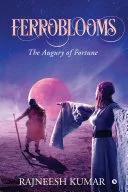
FERROBLOOMS
 74
74

FERROBLOOMS
Rajneesh Kumar's FERROBLOOMS sets out with a bold premise: a world defined by ceaseless warfare between tribal kingdoms. The opening blurb promises a coming-of-age story against this grim backdrop, focusing on a young boy destined for more than just tales of battles. The strength of the initial concept lies in its raw, primal depiction of a world where conflict is the primary arbiter of power. However, the narrative, as presented in the initial synopsis, risks falling into familiar tropes of warlike societies and destined heroes without immediate differentiation. A particularly intriguing element is the implied transition from mere "survivors" to "saviors," suggesting a moral or spiritual dimension to the protagonist's journey that merits deeper investigation. While the foundation is solid, the execution will determine if FERROBLOOMS offers a fresh perspective or a reiteration of established conflict narratives. Kumar's work ultimately hinges on its ability to imbue its world and characters with a unique resonance beyond the established warrior-tribe archetype.
📝 Description
74
Rajneesh Kumar's 2019 novel, FERROBLOOMS, depicts a world fractured by warring tribal kingdoms.
FERROBLOOMS is set in a world where territorial disputes and the pursuit of power define existence, making conflict the standard solution. Amidst this backdrop, individuals emerge as both survivors and potential saviors. The narrative examines resilience and the development of leadership.
This work suits readers who enjoy allegorical fiction that contemplates the recurring nature of conflict and the seeds of hope. It will particularly resonate with those drawn to stories following young protagonists as they rise from obscurity to exert influence within a severe, structured society. The book appeals to readers seeking narratives where inner strength and outward action determine fate.
Kumar's novel engages with themes of power dynamics, the induction of protagonists into leadership, and the constant specter of existential conflict. It scrutinizes how societal structures, especially those reliant on military might, mold individual futures and the collective path forward. The presence of figures who are both survivors and saviors points to an examination of individual agency and the potential for fundamental change within rigid systems.
While not explicitly stated as esoteric, FERROBLOOMS engages with archetypes common in speculative and occult fiction. The story's focus on cyclical conflict, the rise of unlikely leaders from harsh conditions, and the potential for transformative change within oppressive systems often mirrors themes found in spiritual or philosophical traditions that explore human potential and societal evolution beyond material concerns. These narratives frequently touch on the idea of awakening or becoming aware of deeper forces shaping reality.
⭐ Reader Reviews
Honest opinions from readers who have explored this book.
❓ Frequently Asked Questions
What is the primary setting of FERROBLOOMS?
FERROBLOOMS is set in a world divided into numerous kingdoms dominated by warrior tribes. These kingdoms are characterized by their varying sizes and levels of power, constantly engaged in territorial disputes and conflicts.
Who is the central protagonist of FERROBLOOMS?
The central protagonist is a young boy who grows up hearing only stories of battles, weapons, and kings. His narrative arc involves his transformation into a figure of significance within his war-torn world.
What is the main conflict driving the plot of FERROBLOOMS?
The primary conflict stems from the constant warfare between expanding tribal kingdoms. The narrative suggests that 'war' is often seen as the only solution to problems, leading to potential devastation for entire populations.
What themes does FERROBLOOMS explore?
The book explores themes of power, conflict, survival, leadership, and the emergence of hope. It examines how individuals navigate and potentially transcend environments defined by constant warfare and territorial ambition.
When was FERROBLOOMS first published?
FERROBLOOMS by Rajneesh Kumar was first published on November 27, 2019.
What is the significance of 'survivors and saviors' in FERROBLOOMS?
The concept of 'survivors and saviors' highlights the emergence of individuals who not only endure catastrophic conflicts but also possess the potential to lead and protect their people, offering a counterpoint to the pervasive destruction.
🔮 Key Themes & Symbolism
The Crucible of War
FERROBLOOMS positions war not merely as a backdrop but as the fundamental architect of its world. The narrative scrutinizes how constant conflict shapes societal structures, individual psychologies, and the very concept of progress. It presents a vision where kingdoms are defined by their military might and expansionist desires, suggesting a primal state where 'war' is the default, almost ritualistic, response to any perceived problem. This theme studies the cyclical nature of violence and its potential to either annihilate or forge resilient individuals and communities capable of enduring.
Emergence of the Savior Archetype
Against the backdrop of widespread destruction, the work introduces the critical figures of 'survivors and saviors.' This duality suggests a progression beyond mere endurance to active salvation. The narrative explores the genesis of these figures, particularly focusing on a young boy whose early life is steeped in the lore of conflict. The theme examines the transformation from passive recipient of war stories to an active agent of change, questioning the qualities and circumstances that elevate an individual from a survivor to a savior capable of altering the destructive trajectory of their world.
Kingdoms and Power Dynamics
The structure of FERROBLOOMS is built upon a foundation of distinct tribal kingdoms, each vying for dominance. This theme dissects the mechanics of power in a pre-modern, fragmented geopolitical landscape. It addresses the inherent inequalities between larger, more powerful entities and smaller ones, and the differing motivations driving them – some seeking stability, others expansion. The narrative implies a constant state of flux and potential conflict, where the balance of power is precarious and subject to the ambitions of tribal leaders, shaping the lives of their populations.
The Boy Who Heard Stories
A central narrative thread involves a young boy whose initial exposure to the world is through stories of war, weapons, and kings. This theme focuses on the formative impact of narrative and legend on an individual's perception and future actions. It sets the stage for his eventual emergence as a significant figure, implying a journey of personal growth and transformation. The contrast between the boy's limited initial understanding and the brutal reality of his world forms a compelling axis around which his development, and potentially the story's resolution, revolves.
💬 Memorable Quotes
Direct passages from the work, attributed to the author.
“To every problem, there existed just one solution, WAR.”
— This stark statement expresses the core conflict and worldview presented in FERROBLOOMS. It suggests a society trapped in a destructive paradigm, where diplomacy and alternative resolutions are absent or ignored, highlighting the pervasive militarism of the world.
“The world was divided into kingdoms of warrior tribes.”
— This opening sentence immediately establishes the geopolitical and social structure of the narrative's setting. It signals a focus on tribalism, conflict, and a fragmented world order ripe for power struggles.
“Some wanted to maintain peace and stability, while others wanted to expand their territories and power.”
— This phrase outlines the fundamental motivations driving the conflict between kingdoms. It introduces a dichotomy between preservation and ambition, setting up the central tensions that propel the narrative forward.
“But then, there were survivors and saviors.”
— This is a central declaration, signaling a counter-narrative to the pervasive destruction. It introduces the possibility of agency and transformative leadership emerging from catastrophic circumstances, hinting at the protagonist's potential role.
“A young boy who had only heard of battles, weapons and kings in stories grew up to be one of the greate”
— This incomplete sentence fragment powerfully introduces the protagonist's arc. It contrasts his initial, distant exposure to warfare with his eventual, significant role, suggesting a journey from innocence or ignorance to impactful action.
🌙 Esoteric Significance
Tradition
While FERROBLOOMS is presented as a work of fiction, its thematic underpinnings can be explored through an esoteric lens. The division of the world into warring tribes and the potential for survivors to become saviors touch upon archetypal patterns often found in Gnostic narratives, which frequently depict a fragmented material world and the emergence of enlightened beings who can guide humanity toward liberation. The cyclical nature of conflict and the search for a guiding principle also resonate with Hermetic concepts of cosmic order and the challenges faced by the soul in its journey.
Symbolism
The 'ferroblooms' themselves, while not explicitly detailed in the provided blurb, suggest a potent symbol: the idea of life or beauty ('blooms') emerging from hardness, metal, or conflict ('ferro'). This could symbolize the potential for growth, resilience, and even spiritual awakening to arise from the harsh realities of war and societal collapse. The 'warrior tribes' and their kingdoms can be seen as representing the lower, ego-driven aspects of human nature or societal structures that must be overcome, while the 'survivors and saviors' embody the higher potential for consciousness and leadership.
Modern Relevance
In contemporary discourse, the themes of societal fragmentation, endemic conflict, and the search for authentic leadership are highly relevant. FERROBLOOMS speaks to modern anxieties about geopolitical instability and the potential for widespread societal upheaval. The concept of emergent saviors can be interpreted in the context of modern movements seeking transformative change or charismatic leadership, prompting reflection on the qualities needed to navigate complex global challenges and foster a more stable, equitable future.
👥 Who Should Read This Book
["• Students of comparative mythology and archetypal narratives, to analyze the recurring themes of war, leadership, and the hero's journey within a unique fictional framework.", '• Readers interested in allegorical fiction exploring societal structures and the human condition, particularly those who appreciate narratives that examine the consequences of unchecked power and conflict.', '• Aspiring writers and storytellers seeking examples of how to build compelling worlds based on conflict and introduce protagonists who rise to meet extraordinary challenges, as exemplified by the premise of FERROBLOOMS.']
📜 Historical Context
Rajneesh Kumar's FERROBLOOMS, published in 2019, enters a literary landscape rich with speculative fiction exploring societal breakdown and rebuilding. Its depiction of warring tribal kingdoms and the constant threat of annihilation echoes narratives found in historical fiction referencing periods like the Migration Period in Europe (roughly 4th to 6th centuries CE), where large-scale population movements and conflicts reshaped political boundaries. The book's focus on the emergence of leaders from dire circumstances aligns with enduring archetypes present in epic poetry and mythology, which have been continuous throughout literary history. While no specific contemporary author is directly cited as engaging with Kumar's work at its publication, the thematic resonance with works exploring post-apocalyptic scenarios or reimagined historical conflicts is notable. The narrative's emphasis on war as a primary solution could be seen as a counterpoint to more utopian or pacifist speculative fiction that gained traction in the late 20th and early 21st centuries.
📔 Journal Prompts
The world's reliance on 'WAR' as a solution.
Protagonist's transition from hearing stories to enacting change.
The qualities defining a 'survivor' versus a 'savior' within tribal kingdoms.
The balance of power between kingdoms seeking peace and those seeking expansion.
The symbolic meaning of 'ferroblooms' in a world of conflict.
🗂️ Glossary
Warrior Tribes
Societal groups characterized by a martial culture, where military prowess and combat are central to their identity, social structure, and political power. These tribes often engage in territorial disputes and warfare.
Kingdoms
Organized political entities ruled by a king or queen, often formed by consolidating power among various tribes or territories. In FERROBLOOMS, these are depicted as centers of power engaged in constant competition.
Survivors
Individuals or groups who manage to endure and persist through periods of extreme hardship, disaster, or conflict, often characterized by resilience and adaptability.
Saviors
Figures who emerge during times of crisis to rescue or deliver others from danger, oppression, or destruction. They often embody hope and possess the leadership qualities to guide a community towards a better future.
Territorial Expansion
The act or policy of a state or ruler extending its influence or dominion by acquiring new territory, often through military conquest or political maneuvering.
Stability
A state of balance and order within a society or political system, characterized by the absence of major disruption, conflict, or rapid change.
Conflict
A serious disagreement or argument, typically a protracted one, involving opposing forces or groups. In FERROBLOOMS, this often manifests as warfare between kingdoms.