Exploring Lost Dimensions in Christian Mysticism
 78
78

Exploring Lost Dimensions in Christian Mysticism
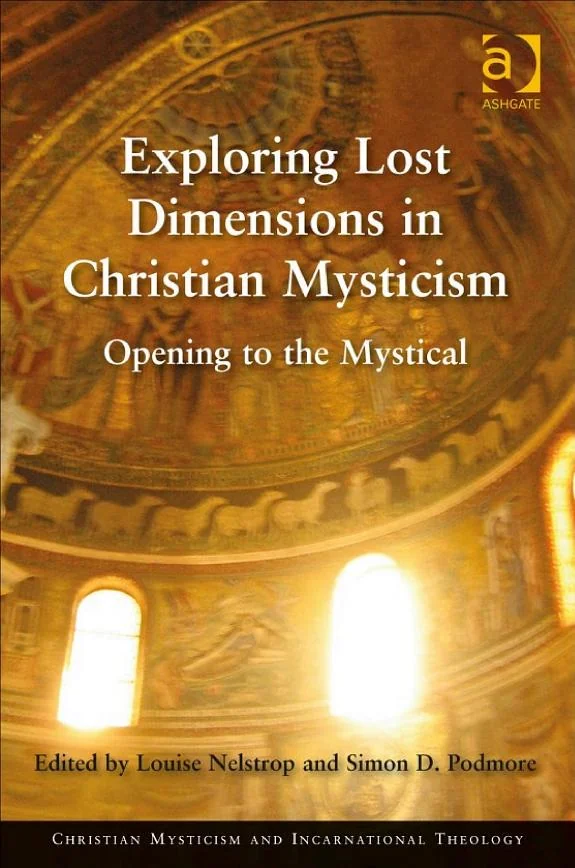
Dr Louise Nelstrop and Dr Simon D Podmore's "Exploring Lost Dimensions in Christian Mysticism" offers a scholarly dissection of how "mystical theology" has been understood across Christian history. The strength lies in its granular examination of specific thinkers and their scriptural hermeneutics, avoiding broad generalizations. A particularly illuminating passage discusses the subtle shift in emphasis from communal scriptural interpretation to individual soul ascent in later periods. However, the density of academic discourse can sometimes obscure the very 'lost dimensions' the title promises to explore, making it less accessible to the lay seeker. The work’s academic rigor is its primary asset, though it occasionally borders on the purely academic. It is a significant contribution for specialists.
📝 Description
78
Published in 2013, this book examines the development of mystical theology in Christianity.
This volume traces the concept of mystical theology through Christian history, starting with early scriptural interpretations and moving to later ideas about the soul's ascent to the divine. It scrutinizes the historical figures and intellectual debates that influenced these doctrines. The authors look at how understandings of divine meaning and spiritual progress have changed over time. The work considers the philosophical basis for spiritual experiences and their connection to textual analysis.
The book is aimed at scholars of religion, theologians, and those deeply involved in Christian contemplative practices. It offers a detailed academic study of historical mystical thought. Readers interested in the philosophical underpinnings of spiritual life and its relationship to scripture will find it particularly relevant. The research situates itself within current scholarship on medieval and early modern Christian thought.
This work engages with Christian mysticism's long tradition, from the Desert Fathers and Pseudo-Dionysius to figures like Meister Eckhart and John of the Cross. It focuses on how the concept of 'mystical theology' evolved, encompassing both hidden scriptural meanings and the structured path of spiritual development. The book analyzes intellectual disputes surrounding these ideas and the enduring questions about humanity's ability to experience the divine.
💡 Why Read This Book?
• Gain a nuanced understanding of 'mystical theology's' varied historical meanings, from early scriptural exegesis to later ascetical doctrines, as explored in the book's initial chapters. • Analyze the intellectual lineage of Christian mysticism, tracing its development from ancient concepts through medieval figures like Pseudo-Dionysius the Areopagite. • Grasp the intricate relationship between scriptural interpretation and the soul's perceived ascent into divine communion, a core theme discussed throughout the work.
⭐ Reader Reviews
Honest opinions from readers who have explored this book.
❓ Frequently Asked Questions
What is the primary focus of 'Exploring Lost Dimensions in Christian Mysticism'?
The book examines the historical development and shifting meanings of 'mystical theology' within Christianity, from ancient scriptural interpretation to later concepts of the soul's ascent to God.
Who are the main authors contributing to this work?
The authors are Dr Louise Nelstrop and Dr Simon D Podmore, with the original publication date being December 28, 2013.
Does the book compare Christian mysticism with other religions?
Yes, the original blurb indicates the work 'brushing allusively into parallel concerns in other religions,' suggesting comparative elements.
What historical periods or figures are likely discussed?
Given the subject, expect discussions on early Christian communities, medieval mystics, and potentially figures like Pseudo-Dionysius the Areopagite or Meister Eckhart.
Is this book suitable for beginners in mysticism?
The book is academic in tone, focusing on scholarly analysis. It is likely more suited for students of theology, religious studies, or those with a prior background in Christian mystical traditions.
What does the book aim to achieve by exploring 'lost dimensions'?
It seeks to uncover and re-examine historical interpretations and philosophical nuances of Christian mystical experience that may have been overlooked or transformed over time.
🔮 Key Themes & Symbolism
The Shifting Nature of Mystical Theology
This theme addresses how the term 'mystical theology' has been understood differently across Christian history. Initially, it referred to discerning hidden divine significance within sacred texts. Later, it evolved to describe the systematic spiritual discipline of the soul's journey towards union with God. The book charts this conceptual transformation, exploring the intellectual and spiritual contexts that prompted these changes, and how these shifts impacted the practice and understanding of Christian contemplation.
Scripture as a Gateway
A central tenet explored is the role of scripture in Christian mysticism. The work examines how communities and individuals have historically interpreted biblical texts not merely for their literal meaning, but as conduits to divine revelation and mystical experience. This includes analyzing exegetical methods designed to uncover deeper, symbolic, or allegorical layers that point towards the divine, facilitating the soul's perceived ascent or communion with God.
The Soul's Ascent and Divine Communion
The book studies the concept of the soul's journey or ascent towards God, a prominent theme in later mystical traditions. It analyzes the theological frameworks and spiritual practices proposed to achieve this union, exploring the 'science of the soul' as it developed. This involves understanding the internal range of the mystic and the stages or states of consciousness believed to lead to direct, albeit often ineffable, experience of the divine.
Interreligious Echoes in Christian Thought
While focusing on Christian mysticism, the work acknowledges the broader spiritual landscape. It notes how Christian mystical concepts and questions sometimes align with or echo concerns found in other religious traditions. This comparative perspective suggests a universal human yearning for the divine and the diverse ways spiritual traditions have conceptualized and pursued mystical knowledge, even while maintaining distinct theological boundaries.
💬 Memorable Quotes
Direct passages from the work, attributed to the author.
“Mystical theology' has developed through a range of meanings.”
— This foundational statement highlights the core academic pursuit of the book: tracing the evolution of a specific theological concept and its varied interpretations across different eras and thinkers.
“from the hidden dimensions of divine significance in the community’s interpretation of its scriptures”
— This phrase points to the early Christian understanding of mystical theology, emphasizing communal engagement with sacred texts to uncover deeper, divinely inspired meanings.
“to the much later ‘science’ of the soul’s ascent into communion with God.”
— This contrasts the earlier concept with a later development, framing the soul's journey towards God as a structured, almost methodical, pursuit within mystical traditions.
“The thinkers and questions addressed in this book draws us into the heart of a complicated, beautiful, and often tantalisingly unfinished conversation”
— This conveys the book's approach: engaging with the ongoing, complex historical dialogue among mystics and theologians, acknowledging its complexity and enduring questions.
“continuing over centuries and often brushing allusively into parallel concerns in other religions.”
— This emphasizes the historical depth of the mystical tradition discussed and hints at a comparative dimension, noting how Christian mystical thought intersects with broader spiritual inquiries.
🌙 Esoteric Significance
Tradition
This work engages with the Western Esoteric Christian tradition, specifically focusing on its theological and philosophical underpinnings. While not a manual for practice, it examines the intellectual architecture that supports esoteric Christian paths. It traces lineages from Neoplatonism through figures like Pseudo-Dionysius the Areopagite, whose concept of the 'divine names' and apophatic theology became foundational for many esoteric Christian thinkers seeking direct experience of God.
Symbolism
Key symbolic motifs likely explored include the 'ladder' or 'ascent' of the soul, representing the stages of spiritual purification and illumination. Another significant symbol is the 'cloud of unknowing,' representing the apophatic approach where God is encountered beyond conceptualization. The divine names themselves, as explored by Pseudo-Dionysius, function symbolically, pointing to God's ineffable nature through affirmative and negative attributes.
Modern Relevance
Contemporary esoteric Christian groups, contemplative prayer movements, and scholars of comparative mysticism draw upon the historical analyses presented in works like this. Thinkers interested in the integration of contemplative practice with theological scholarship, and those exploring the perennial philosophy within a Christian context, find value in understanding these historical dimensions. It informs modern discussions on the nature of religious experience and its theoretical frameworks.
👥 Who Should Read This Book
• Advanced students of theology and religious studies seeking a rigorous academic exploration of mystical theology's historical evolution. • Scholars of medieval and early modern Christian thought interested in the philosophical and scriptural underpinnings of contemplative traditions. • Practitioners of Christian contemplative prayer who wish to deepen their understanding of the historical and intellectual context of their spiritual path.
📜 Historical Context
Published in 2013, 'Exploring Lost Dimensions in Christian Mysticism' emerges from a vibrant field of scholarship dedicated to the history of Christian spirituality and theology, particularly focusing on the medieval and early modern periods. The work situates itself within a long-standing academic conversation that gained significant momentum in the mid-20th century, building upon the foundational work of scholars like Étienne Gilson and Bernard McGinn. It engages with the intellectual currents that shaped Christian thought from late antiquity, referencing figures such as Pseudo-Dionysius the Areopagite, whose writings were crucial in defining mystical theology for centuries. The book implicitly addresses how these traditions were received and sometimes challenged by subsequent intellectual movements, such as the Reformation and the Enlightenment, which often viewed mystical experiences with skepticism. Its publication engages with contemporary scholarship that seeks to understand the continuity and discontinuity of mystical thought across different eras.
📔 Journal Prompts
The concept of 'mystical theology' as a 'science of the soul's ascent'.
Comparing the 'hidden dimensions of divine significance' in early Christian scripture interpretation with later ascetical practices.
The unfinished conversation between mystics and theologians across centuries.
The role of specific thinkers, like Pseudo-Dionysius the Areopagite, in shaping mystical discourse.
Reflecting on the 'parallel concerns in other religions' mentioned in relation to Christian mysticism.
🗂️ Glossary
Mystical Theology
A branch of theology concerned with direct, experiential knowledge of God, often involving contemplation and spiritual ascent, and historically encompassing the interpretation of divine significance in scriptures.
Soul's Ascent
A spiritual concept found in various mystical traditions, describing the journey of the soul through stages of purification and contemplation towards union or direct communion with the divine.
Scriptural Interpretation
The act or process of explaining the meaning of sacred texts. In mystical theology, this often involves seeking deeper, allegorical, or symbolic layers beyond the literal sense.
Communion with God
The state of intimate union or direct experience of the divine, a central goal in many mystical traditions, often described as ineffable or beyond ordinary human comprehension.
Apophatic Theology
A theological approach that emphasizes what God is not, rather than what God is, using negation to approach the divine mystery beyond conceptual limitations. Associated with figures like Pseudo-Dionysius.
Exegesis
Critical explanation or interpretation of a text, especially of scripture. Mystical exegesis seeks spiritual or allegorical meaning.
Divine Significance
The underlying, often hidden, spiritual or theological meaning attributed to divine actions, revelations, or scriptural passages within a religious framework.
This book appears in 1 collection
🔮 Readers Also Liked
Browse all →







From the “Christian Mysticism” Collection
View all →








More Free Mysticism & Contemplation Books
View all →