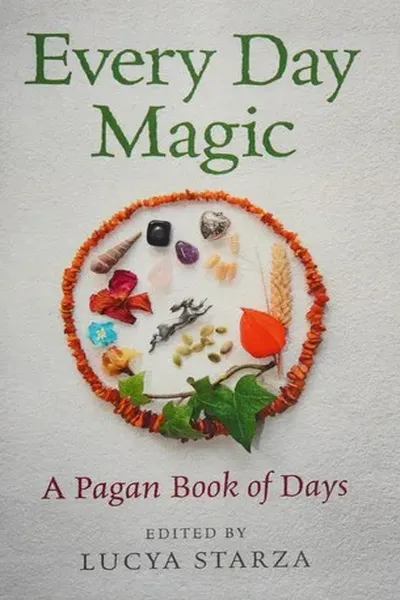
Every Day Magic - a Pagan Book of Days
 76
76

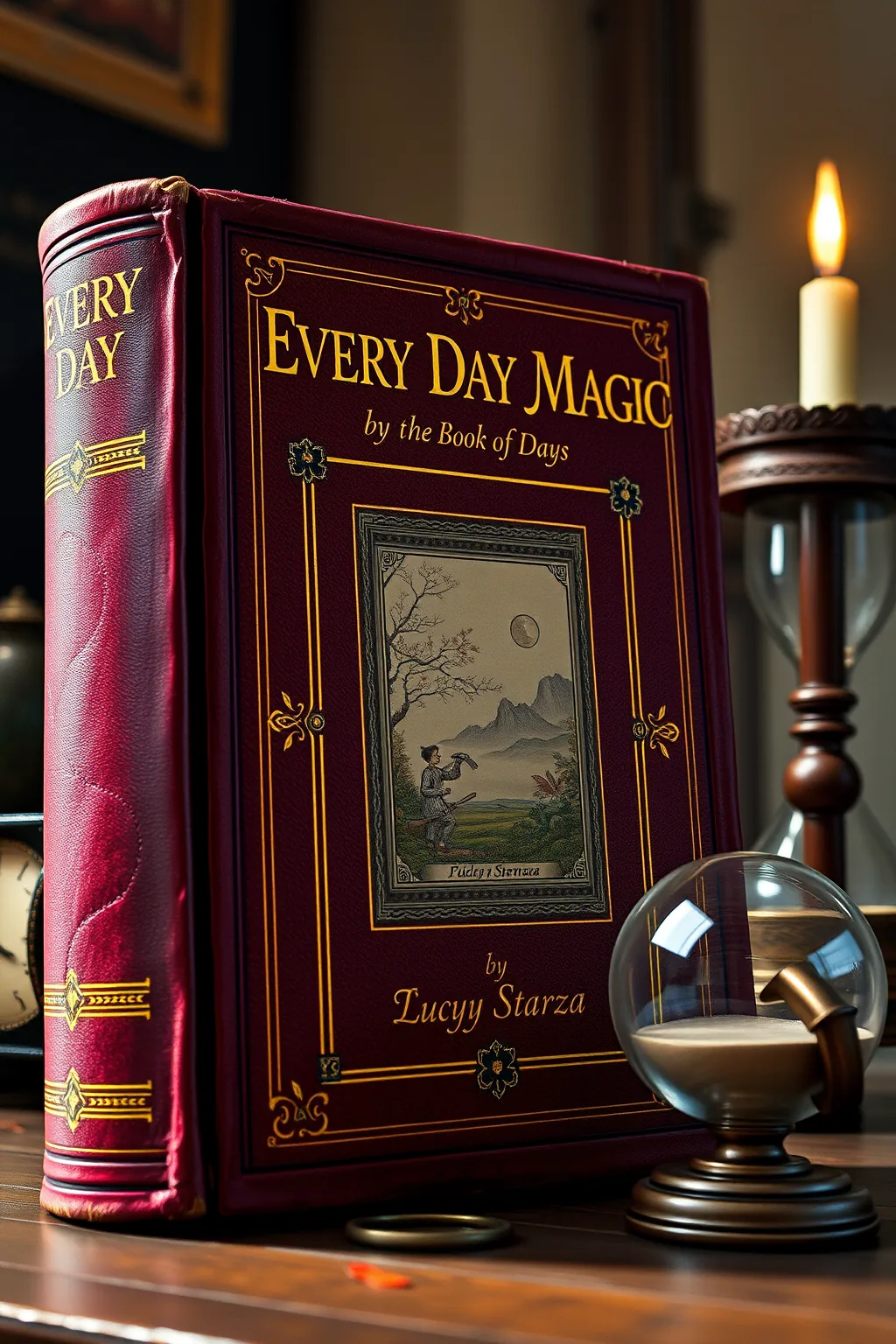
Every Day Magic - a Pagan Book of Days
Lucya Starza’s *Every Day Magic* presents a practical, grounded approach to the Pagan calendar, offering a much-needed antidote to overly academic or overly romanticized interpretations of seasonal observance. The strength of the book lies in its directness and accessibility; Starza avoids dense theoretical discourse, instead providing clear instructions and accessible rituals. For instance, the section on Imbolc offers simple yet effective ways to honor the emerging light and cleansing energies of early spring, demonstrating the book's commitment to everyday practice. However, its very practicality can sometimes feel limiting for those seeking deeper theological or philosophical exploration of the archetypes associated with each festival. While it excels at *how* to celebrate, it offers less on the profound *why* beyond a general reverence for nature. Ultimately, *Every Day Magic* serves as a reliable, functional guide for integrating the turning of the year into one's spiritual life.
📝 Description
76
Lucya Starza's 2017 book structures magical practices around the solar year.
Every Day Magic: A Pagan Book of Days serves as a guide for contemporary Pagans, organizing spiritual observances by the solar calendar. It connects magical and religious practices to the changing seasons and established festivals. The book moves beyond simple theory to give readers practical ways to bring these cycles into their everyday lives. It includes rituals and meditations, presenting a range of activities from simple daily acts to more involved seasonal celebrations. This approach makes the Pagan calendar understandable for many.
This book is for people involved with or curious about modern Pagan paths, especially those focused on nature-based spirituality. It is useful for solitary practitioners who want a yearly structure, as well as covens or groups looking for shared rituals. Readers interested in the Earth's seasonal rhythms and how they are celebrated in Pagan traditions will find it valuable. It works for beginners needing a starting point and experienced practitioners wanting a deeper connection to the Wheel of the Year.
Published in 2017, Every Day Magic continues a long line of Pagan and Neopagan books that aim to organize and share seasonal practices. It follows earlier works that shaped the modern understanding of the Wheel of the Year, drawing on influences from scholars like Mircea Eliade and early Neopagan figures. The book reflects the growing diversity within Paganism in the late 20th and early 21st centuries, acknowledging different viewpoints and evolving spiritual ideas.
💡 Why Read This Book?
• Learn to observe the eight major Pagan festivals, from Samhain to Mabon, with practical rituals and meditations detailed within the book, allowing for a deeper connection to the Earth's cycles. • Discover accessible folk magic techniques and understand the concept of immanent divinity, finding the sacred in everyday moments and natural occurrences throughout the year. • Gain a structured approach to personal spiritual practice by following the solar calendar as outlined by Starza, providing a framework for consistent engagement with nature-based spirituality.
⭐ Reader Reviews
Honest opinions from readers who have explored this book.
❓ Frequently Asked Questions
What is the "Wheel of the Year" as presented in Every Day Magic?
The "Wheel of the Year" is a central concept representing the eight major Pagan festivals celebrated throughout the solar year. These festivals, including Yule, Beltane, and Mabon, mark significant points in the seasonal cycle and are explored with practical observances in the book.
Is Every Day Magic suitable for beginners in Paganism?
Yes, the book is highly suitable for beginners. It provides clear explanations and practical, accessible rituals for observing seasonal festivals, making it easy for newcomers to engage with nature-based spirituality.
What kind of magic is discussed in Lucya Starza's book?
The book focuses on "folk magic" – practical, often simple, magical techniques accessible to most people. It emphasizes integrating these practices into daily life and seasonal observances rather than complex ceremonial magic.
When was Every Day Magic first published?
Every Day Magic: A Pagan Book of Days by Lucya Starza was first published in 2017, reflecting contemporary Pagan practices and interests.
Does the book offer solitary practice suggestions?
Absolutely. The book is designed to be useful for solitary practitioners, offering meditations, rituals, and reflections that can be performed individually throughout the year, aligning with the turning of the seasons.
What is the concept of 'immanent divinity' in this book?
Immanent divinity refers to the belief that the sacred is present within nature and everyday life, rather than solely in a distant, transcendent realm. Starza encourages readers to find this sacredness in the natural world and their daily experiences.
🔮 Key Themes & Symbolism
The Wheel of the Year
This theme centers on the cyclical nature of time as observed in Pagan traditions, marked by eight primary festivals. Starza guides readers through each station—from the deep rest of Yule to the abundance of Lughnasadh—providing practical rituals, meditations, and correspondences. It's an invitation to align personal spiritual practice with the Earth's seasonal transformations, fostering a sense of connection and belonging to the natural world's rhythms.
Immanent Divinity and Nature Worship
Starza emphasizes finding the sacred within the natural world and everyday existence, a core tenet of many contemporary Pagan paths. This perspective shifts focus from a distant deity to the immanent divine present in trees, seasons, and life cycles. The book encourages readers to see magic and spirituality not as separate from life, but as woven into its very fabric, accessible through mindful observation and interaction with nature.
Practical Folk Magic
The book champions accessible, grounded magical practices often referred to as 'folk magic.' This approach eschews elaborate ceremonialism for simple, effective techniques that can be easily integrated into daily life. Examples include charms, blessings, and seasonal craftwork, empowering individuals to engage in magic relevant to their personal circumstances and the turning of the year.
Pagan Calendrical Observance
This theme focuses on the structured celebration of Pagan holidays throughout the year. *Every Day Magic* provides the historical and practical framework for observing these festivals, from ancient roots to modern adaptations. It serves as a guide for creating meaningful rituals and personal connections to the significant dates on the Pagan calendar, fostering a sense of community and shared spiritual experience.
💬 Memorable Quotes
Direct passages from the work, attributed to the author.
“Magic is not something apart from life, but woven into its very fabric.”
— This highlights the book's philosophy of immanent divinity, suggesting that spiritual and magical energies are inherent in the natural world and daily activities, not separate from them.
“Each festival offers a unique opportunity for reflection and connection.”
— This points to the book's core function: using the Pagan calendar (the Wheel of the Year) as a framework for personal spiritual growth and attunement with seasonal energies.
“Simple actions can create powerful sacred space.”
— This emphasizes the book's focus on practical, accessible folk magic, indicating that creating a spiritual atmosphere doesn't require elaborate setups but can be achieved through intentional, simple acts.
“The turning of the year mirrors the cycles within ourselves.”
— This interpretation connects the external seasonal changes celebrated in the book to internal human experiences, suggesting a holistic approach to spirituality that integrates personal and natural rhythms.
“Embrace the energy of each season for personal transformation.”
— This expresses the book's call to action, encouraging readers to actively engage with the specific spiritual and magical currents associated with each festival on the Wheel of the Year.
🌙 Esoteric Significance
Tradition
This work sits comfortably within the broad umbrella of contemporary Paganism and Neo-Paganism, drawing heavily from nature-based spiritual traditions. It aligns with a modern Western Esoteric current that emphasizes immanent divinity and the sacredness of the natural world, often synthesizing elements from older folk traditions, Wicca, and Druidry. It departs from more rigidly hierarchical or dogmatic esoteric systems by prioritizing personal experience and accessible practice tied to ecological cycles.
Symbolism
Key symbols include the Wheel of the Year itself, representing the cyclical flow of life, death, and rebirth; the Solstices and Equinoxes as points of cosmic balance and transition; and agricultural symbols (seeds, harvest) representing fertility, abundance, and the connection between humanity and the land. Fire, representing the Sun's power at Beltane and Litha, and water, symbolizing purification and emotion, are also recurrent motifs tied to specific seasonal energies.
Modern Relevance
Contemporary Pagan practitioners, eco-spiritual activists, and those interested in mindfulness and nature connection continue to draw on the principles outlined in *Every Day Magic*. Its focus on practical, home-based ritual appeals to individuals seeking spiritual grounding outside of institutional religion. Thinkers and practitioners exploring sustainable living, seasonal eating, and place-based spirituality find its emphasis on aligning with natural cycles highly relevant in today's environmentally conscious world.
👥 Who Should Read This Book
• Solitary practitioners of nature-based spirituality seeking a structured guide for observing seasonal festivals throughout the year. • Beginners exploring Paganism or Neopaganism who need clear, practical instructions for understanding and celebrating the Wheel of the Year. • Experienced practitioners looking for fresh ritual ideas or a simplified framework to deepen their connection to the Earth's cycles and immanent divinity.
📜 Historical Context
Lucya Starza's *Every Day Magic*, published in 2017, arrives in a landscape already rich with contemporary Pagan literature, following foundational works that helped define the modern Wheel of the Year. While figures like Dion Fortune explored seasonal cycles in earlier 20th-century esoteric writing, and Gerald Gardner's mid-century Wiccan traditions influenced many practices, Starza's work represents a 21st-century synthesis. It reflects the ongoing diversification of Paganism, moving beyond the largely Wiccan-centric focus of some earlier texts to embrace a broader spectrum of nature-based spiritualities. The book's practical, accessible approach contrasts with more academic or theoretical explorations of comparative mythology and religion, such as those by Mircea Eliade, which explored cyclical time in broader contexts. Published in an era of widespread internet access to esoteric knowledge, *Every Day Magic* serves as a tangible, curated guide for practitioners seeking to root their spiritual lives in the Earth's turning.
📔 Journal Prompts
Reflection on the symbolism of the Yule log during the winter solstice.
How does the concept of 'immanent divinity' manifest in your local environment?
Personal interpretation of the Beltane fires and their connection to vitality.
Exploring the themes of harvest and gratitude associated with Lughnasadh.
Mapping personal cycles of growth and rest against the Wheel of the Year.
🗂️ Glossary
Wheel of the Year
A cyclical calendar marking eight major Pagan festivals (Samhain, Yule, Imbolc, Ostara, Beltane, Litha, Lughnasadh, Mabon) that represent significant points in the solar year and seasonal transitions.
Immanent Divinity
The spiritual concept that the divine or sacred is present within nature and all of creation, rather than existing solely in a transcendent realm outside the world.
Folk Magic
Practical, often simple, magical practices rooted in traditional customs and accessible to most individuals, typically focused on everyday concerns and natural energies.
Solstice
The two astronomical points in the year (around June 21 and December 21) when the Sun reaches its highest or lowest excursion relative to the celestial equator, marking the longest and shortest days.
Equinox
The two astronomical points in the year (around March 20 and September 22) when the Sun is directly above the Earth's equator, resulting in roughly equal periods of daylight and darkness worldwide.
Correspondences
In esoteric traditions, these are symbolic associations between different elements, energies, or concepts (e.g., colors, herbs, planets) used in magical workings and rituals.
Sacred Space
An area consecrated or set apart for spiritual or ritualistic purposes, created through intention and practice to facilitate connection with the divine or heightened awareness.
🔮 Readers Also Liked
Browse all →







More by Lucya Starza
All books →


More Free Magic & Ritual Books
View all →