Environmental Cosmology
 79
79

Environmental Cosmology
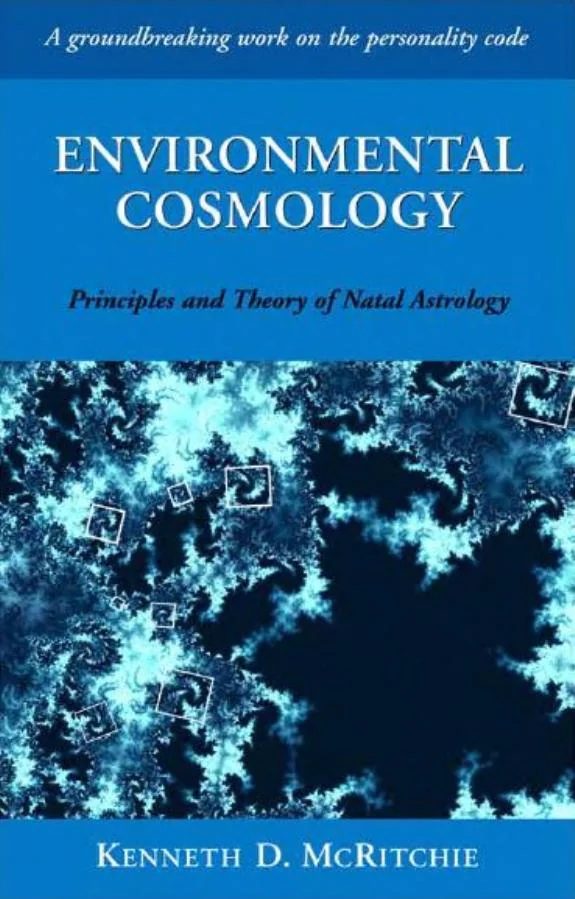
Kenneth D. McRitchie’s Environmental Cosmology is an ambitious attempt to re-enchant the natural world by re-establishing its cosmic origins. The 2004 publication offers a vision of Earth as a participant in celestial rhythms, a perspective often lost in contemporary discourse. McRitchie’s strength lies in his ability to synthesize disparate ideas—drawing from esoteric traditions and ecological thought—into a cohesive, albeit speculative, framework. He presents the concept of 'Geocosmic Resonance' with a compelling earnestness, urging readers to reconsider the planet not as a passive stage, but an active participant in cosmic dramas. However, the book’s primary limitation is its lack of concrete, verifiable mechanisms for the proposed connections. While the assertion that "the Earth breathes with the planets" (interpretation of a core concept) is evocative, the explanatory power remains largely within the realm of philosophical assertion rather than scientific demonstration. The work is best appreciated as a philosophical treatise or a spiritual re-imagining of ecology, rather than a scientific text. It succeeds as a call to see the world anew, even if the precise ‘how’ remains elusive.
📝 Description
79
Kenneth D. McRitchie's 2004 book, Environmental Cosmology, links planetary cycles to Earth's living consciousness.
Environmental Cosmology, published in 2004, argues that celestial events are not separate from Earth but are integral to a conscious global system. McRitchie proposes a philosophical view where the environment reflects cosmic energies and intelligence, a perspective that contrasts with common scientific and spiritual ideas that divide the earthly and the cosmic. The book frames ecological problems as signs of universal disharmony, suggesting that understanding these connections is vital for the planet's health.
This work is for individuals interested in alternative cosmologies, ecological philosophy, and esoteric thought. It speaks to those who perceive a gap between current scientific views and a felt sense of Earth's spiritual or energetic dimensions. Readers seeking non-materialist explanations for environmental issues or exploring spiritual traditions that synthesize science and mysticism will find value here. It is aimed at those who question the separation between observer and observed, planet and cosmos.
Published in 2004, Environmental Cosmology emerged within an intellectual climate where environmental concerns coincided with renewed interest in esoteric and holistic perspectives. This period saw challenges to purely mechanistic science, with figures like Rupert Sheldrake questioning biological models. McRitchie's book contributes to this milieu by offering an esoteric counterpoint to secular environmentalism, connecting ecological awareness to broader cosmological frameworks.
💡 Why Read This Book?
• Gain a novel perspective on ecological issues by understanding 'Geocosmic Resonance,' the concept that Earth's well-being is intrinsically linked to celestial cycles and cosmic energies, offering a spiritual dimension to environmentalism not found in secular texts. • Explore the esoteric interpretation of 'Living Systems Theory' as presented in McRitchie's 2004 work, which posits a conscious, interconnected Earth system that mirrors cosmic intelligence, providing a philosophical foundation for planetary stewardship. • Re-evaluate your relationship with the planet through the lens of the 'Planetary Mind,' a concept suggesting Earth possesses a collective consciousness influenced by celestial bodies, fostering a deeper sense of connection and responsibility beyond anthropocentric views.
⭐ Reader Reviews
Honest opinions from readers who have explored this book.
❓ Frequently Asked Questions
What is the primary focus of Kenneth D. McRitchie's Environmental Cosmology?
The book's primary focus is exploring the esoteric concept of 'Cosmic Ecology,' arguing that Earth is a sentient entity deeply interconnected with universal forces and celestial phenomena, challenging the separation between the terrestrial and the cosmic.
When was Environmental Cosmology first published and what was the intellectual climate like?
Environmental Cosmology was first published in 2004. This period saw a rise in environmental concern alongside a renewed interest in esoteric and holistic philosophies, providing fertile ground for McRitchie's unique synthesis.
What does the term 'Geocosmic Resonance' mean in the context of the book?
'Geocosmic Resonance' is a key concept in the book, suggesting a dynamic, reciprocal relationship between Earth's ecological state and cosmic alignments or planetary cycles, implying that planetary health is tied to universal rhythms.
Does Environmental Cosmology offer scientific proof for its claims?
The work is primarily a philosophical and esoteric exploration, not a scientific treatise. While it presents compelling ideas about interconnectedness, it does not offer empirical scientific proof but rather a framework for spiritual and philosophical understanding.
Who would benefit most from reading Environmental Cosmology?
Readers interested in esoteric philosophy, ecological spirituality, comparative cosmology, and those seeking to understand environmental issues from a non-materialist, interconnected perspective would find this book particularly valuable.
What is the 'Planetary Mind' concept discussed in the book?
The 'Planetary Mind' is presented as Earth's collective consciousness, an entity that is both influenced by and influences celestial bodies. McRitchie uses this concept to imbue ecological systems with a form of intelligence mirroring cosmic order.
🔮 Key Themes & Symbolism
Cosmic Ecology
This theme posits that Earth is not an isolated planet but an active participant in a vast cosmic system. McRitchie argues for an inherent intelligence within the universe that extends to our planet, shaping its environment and life. The book challenges the idea of a purely mechanistic universe, suggesting instead a living, interconnected cosmos where terrestrial and celestial events are intrinsically linked. This perspective reframes ecological challenges as potential imbalances within a larger geocosmic order, urging a holistic understanding of our place within universal cycles.
Geocosmic Resonance
Central to McRitchie's thesis is 'Geocosmic Resonance,' the idea that Earth's physical, biological, and even spiritual states are in constant dialogue with celestial bodies and cosmic energies. This is not merely an astrological concept but a philosophical assertion of a fundamental energetic exchange. The work explores how planetary cycles, solar activity, and other astronomical phenomena might directly influence Earth's ecosystems and consciousness. Understanding this resonance is presented as crucial for comprehending both planetary health and potential solutions to environmental crises from an esoteric viewpoint.
Planetary Consciousness
Environmental Cosmology explores the notion of a 'Planetary Mind' or consciousness inherent to Earth itself. This concept suggests that the planet possesses a form of sentience, a living intelligence that integrates and responds to cosmic influences. The book encourages readers to perceive ecological systems not as mere biological mechanisms but as expressions of this larger planetary awareness. This perspective invites a deeper, more spiritual relationship with the Earth, viewing environmental issues as symptoms of disharmony within this global consciousness and its cosmic connections.
Esoteric Environmentalism
This work offers a distinct form of environmentalism rooted in esoteric philosophy rather than solely scientific data or secular ethics. It advocates for a worldview where the Earth is sacred and its well-being is inseparable from the cosmos. McRitchie's approach seeks to re-enchant nature, imbuing it with spiritual significance and interconnectedness. This theme challenges readers to move beyond anthropocentric views and embrace a cosmology that recognizes the Earth as a vibrant, conscious entity within a larger, purposeful universal order.
💬 Memorable Quotes
Direct passages from the work, attributed to the author.
“The Earth breathes with the planets.”
— This evocative phrase captures the core idea of 'Geocosmic Resonance,' suggesting a fundamental, rhythmic connection between Earth's vitality and celestial movements, implying a shared energetic life.
“Our environmental crises are elements of cosmic disharmony.”
— This statement reframes ecological problems not as isolated human failures but as manifestations of deeper imbalances within the larger geocosmic order, hinting at universal principles at play.
“Cosmology is not just about stars; it is about the Earth's place among them.”
— This highlights the book's unique focus on terrestrial existence within a universal framework, emphasizing that understanding the cosmos fundamentally requires understanding our planet's integral role within it.
“To heal the Earth is to align ourselves with the universal pulse.”
— This interpretation suggests that planetary healing is achieved not just through practical measures but through a conscious attunement to the fundamental rhythms and energies of the cosmos.
💡 Key Ideas
Editorial paraphrase of the work's core concepts — not direct quotes.
The planet possesses a mind, a consciousness that registers the celestial dance.
This paraphrased concept introduces the 'Planetary Mind' theme, asserting that Earth itself is a sentient entity, actively experiencing and responding to cosmic influences and events.
🌙 Esoteric Significance
Tradition
Environmental Cosmology draws implicitly from Hermetic, Neoplatonic, and Theosophical currents, emphasizing the principle of 'As Above, So Below' and a universe imbued with intelligence and consciousness. It departs from some traditional esoteric schools by focusing specifically on the Earth's ecological state as a primary manifestation of cosmic principles, rather than solely on individual spiritual ascent or occult mechanics. The work seeks to synthesize these ancient notions with modern ecological concerns, forming a unique branch of contemporary esoteric thought.
Symbolism
Key symbols in the work include the Earth itself, often personified as Gaia or a planetary entity, representing a living, conscious system. Celestial bodies—stars, planets, moons—function as symbolic regulators and communicators within the geocosmic resonance. The 'pulse' or 'rhythm' of the universe is a recurring motif, symbolizing the underlying order and energetic flow that connects all things, from the smallest organism to the grandest nebula.
Modern Relevance
Contemporary thinkers in ecological spirituality, ecopsychology, and certain strains of New Age philosophy find resonance in McRitchie's ideas. His concept of 'Planetary Mind' informs discussions on Earth's sentience and consciousness. The emphasis on 'Geocosmic Resonance' is relevant for those exploring astrological influences on ecology or seeking a more spiritually integrated approach to environmental stewardship, moving beyond purely scientific or political solutions.
👥 Who Should Read This Book
• Students of esoteric philosophy and comparative cosmology seeking to understand alternative frameworks for viewing Earth's place in the universe. • Environmental activists and thinkers interested in exploring spiritual and metaphysical dimensions of ecological crises beyond conventional scientific paradigms. • Individuals feeling a deep connection to nature and seeking a philosophical or spiritual language to articulate the interconnectedness between planetary health and the cosmos.
📜 Historical Context
Published in 2004, Kenneth D. McRitchie's Environmental Cosmology emerged in an era marked by growing environmental anxieties and a concurrent resurgence of interest in esoteric and holistic worldviews. This period saw a diffusion of ideas that sought to bridge the perceived gap between science and spirituality, with authors like Fritjof Capra exploring connections between physics and mysticism, and a general cultural inclination towards systems thinking. McRitchie's work can be situated within this intellectual milieu, offering a unique esoteric perspective on ecological issues. While the book doesn't directly engage with specific contemporary scientific debates in detail, its core concepts echo earlier esoteric traditions and contemporary movements exploring Earth-based spirituality. It presented an alternative to purely secular environmentalism, positioning planetary health within a grand cosmic narrative, a perspective that contrasted with the dominant materialistic paradigms of the time.
📔 Journal Prompts
Reflect on the concept of 'Geocosmic Resonance' in relation to a personal experience of nature's cycles.
Consider the implications of a 'Planetary Mind' for understanding current environmental challenges.
How does McRitchie's 'Cosmic Ecology' differ from a purely scientific view of the universe?
Explore the symbolism of celestial bodies as presented in the context of Earth's well-being.
What does 'aligning ourselves with the universal pulse' mean for daily life?
🗂️ Glossary
Cosmic Ecology
The theoretical framework presented by McRitchie, viewing Earth as an integral, conscious component of a larger, living universe, where terrestrial and celestial phenomena are fundamentally interconnected.
Geocosmic Resonance
A key concept denoting the dynamic, reciprocal energetic relationship between Earth's systems (ecological, biological, conscious) and celestial influences, cycles, and alignments.
Planetary Mind
The idea that Earth possesses a collective consciousness or sentience, which is influenced by and influences cosmic events, acting as a unified, responsive entity.
Universal Pulse
A metaphor for the underlying cosmic rhythm, energy flow, or fundamental order that connects all parts of the universe, including Earth and its inhabitants.
Esoteric Environmentalism
An approach to environmentalism that integrates spiritual, metaphysical, and cosmological principles, viewing ecological issues as intrinsically linked to the nature of the cosmos and consciousness.
Living Systems Theory (Esoteric)
An interpretation of ecological and biological systems as possessing inherent consciousness and intelligence, mirroring the perceived consciousness of the wider cosmos.
Celestial Phenomena
Events or occurrences related to celestial bodies, such as planetary cycles, solar activity, and astronomical alignments, which are considered influential within the geocosmic framework.
This book appears in 1 collection
🔮 Readers Also Liked
Browse all →









From the “Natal Astrology” Collection
View all →









More Free Astrology & Cosmology Books
View all →