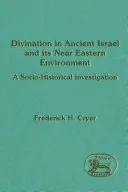
Divination in Ancient Israel and Its Near Eastern Environment
 82
82

Divination in Ancient Israel and Its Near Eastern Environment
Cryer’s analysis of ancient Israelite divination, contextualized within its Near Eastern milieu, offers a rigorous, if occasionally dry, academic treatment. The strength lies in its comprehensive cataloging of methods and its refusal to isolate Israelite practices from their regional antecedents. For instance, the discussion of how divination served both personal and state-level needs, drawing parallels with Mesopotamian practices, is particularly illuminating. However, the dense prose and lack of accessible narrative can make it challenging for readers seeking a more engaging exploration of the subject. The work’s meticulous detail, while a scholarly asset, sometimes overshadows the human element of those who sought answers through these ancient arts. Ultimately, it is a valuable reference for specialists but less so for the casual inquirer.
📝 Description
82
Frederick H. Cryer's 1994 study details divination in ancient Israel and its neighbors.
Published in 1994, Frederick H. Cryer's work examines the diverse methods of divination used in ancient Israel and its surrounding Near Eastern cultures. It moves beyond simple categories to analyze the complex relationship between religious belief, social function, and the human desire to understand divine will and the future. The book is aimed at academics, students of religious studies, ancient history, and archaeology. It also suits those interested in comparative religion and the historical origins of divination. A basic knowledge of ancient Near Eastern history and biblical studies is necessary.
Cryer places divination within the broader religious and cultural context of the ancient Near East. This was a time when oracles, dreams, and omen interpretation were important for decisions made by rulers and commoners. The study engages with scholarship on Mesopotamian, Egyptian, and Canaanite divination, positioning Israelite practices within this wider scope. Central to the research are the various divination forms found in biblical and extrabiblical texts. These include the Urim and Thummim, ecstatic prophecy, dream interpretation, necromancy, and the examination of animal entrails or celestial events. The book analyzes the theological reasons and social roles given to these practices.
This book engages with ancient Near Eastern traditions where understanding the divine will through various means was common practice. It focuses on the historical development and social integration of divination, such as interpreting omens or receiving prophetic messages. By examining these practices in ancient Israel and its cultural neighbors like Mesopotamia and Egypt, Cryer shows how societies sought to connect with the unseen. This is a scholarly look at how humans have historically attempted to gain insight into the unknown.
💡 Why Read This Book?
• Gain a nuanced understanding of divination in ancient Israel, moving beyond simplistic interpretations by examining specific practices like the Urim and Thummim, as discussed within the book’s analysis of biblical texts. • Appreciate the interconnectedness of ancient Near Eastern cultures through comparative study, learning how practices in Mesopotamia and Egypt, for example, informed or paralleled those in Israel. • Develop a critical framework for analyzing religious phenomena, recognizing how divination served both spiritual and socio-political functions, a perspective highlighted by the book’s examination of official state oracles.
⭐ Reader Reviews
Honest opinions from readers who have explored this book.
❓ Frequently Asked Questions
What specific methods of divination are explored in Frederick H. Cryer's book?
The book explores a range of methods including Urim and Thummim, ecstatic prophecy, dream interpretation, necromancy, and the interpretation of omens derived from celestial events or animal behavior, placing them within their ancient Near Eastern context.
When was 'Divination in Ancient Israel and Its Near Eastern Environment' first published?
The work was first published in 1994, offering a scholarly examination of its subject matter that has informed academic discourse since.
How does the book differentiate Israelite divination from other Near Eastern practices?
Cryer's work highlights both similarities and distinctions, showing how Israelite divination, while sharing common forms with Mesopotamian and Egyptian traditions, was often integrated into a unique covenantal theology.
Who is the intended audience for this academic study?
The primary audience includes scholars, graduate students in religious studies and ancient history, and researchers interested in comparative religion and the historical development of divination.
Does the book discuss the ethical or theological implications of divination?
Yes, the book examines the theological justifications and the sometimes contentious place of divination within Israelite religious thought, contrasting it with prophetic authority.
What specific biblical figures or events are referenced in relation to divination?
The work references various biblical narratives, including consultations with the Urim and Thummim, prophetic consultations, and dream interpretations experienced by figures like Jacob and Joseph.
🔮 Key Themes & Symbolism
Urim and Thummim
The book dedicates significant attention to the Urim and Thummim, often understood as sacred lots used by the high priest to discern divine will. Cryer analyzes their biblical references, potential origins, and function within the Israelite priestly system, situating them as a specific form of cleromancy (divination by casting lots) that distinguished Israelite practice, though similar lot-casting methods existed elsewhere in the ancient Near East.
Prophecy and Divination
Cryer explores the complex relationship between ecstatic prophecy and other forms of divination within ancient Israel. He examines instances where prophetic utterances might be intertwined with or contrasted against omen interpretation, dream analysis, or necromancy. The work probes how the divine message was perceived to be conveyed and received, distinguishing authentic prophetic guidance from potentially illicit divinatory practices.
Comparative Divinatory Practices
A core theme is the comparative analysis of divination across the ancient Near East. Cryer details practices in Mesopotamia (e.g., extispicy – examining entrails) and Egypt, highlighting shared cultural assumptions about the permeability of the divine realm and the human capacity to access its secrets. This comparative approach underscores that Israelite divination did not emerge in a vacuum but participated in broader regional traditions.
Social and Political Functions
The study emphasizes that divination was not merely a spiritual exercise but served crucial social and political roles. Whether employed by kings to guide military campaigns, by priests to adjudicate disputes, or by individuals seeking personal guidance, these practices were integrated into the fabric of ancient life. Cryer illustrates how divination reinforced social hierarchies and state authority.
💬 Memorable Quotes
Direct passages from the work, attributed to the author.
“The theological justification for divination in Israel.”
— This points to how ancient Israelites reasoned about the legitimacy and purpose of seeking divine knowledge through various means, often linking it to God's will and covenant relationship.
“Forms of divination shared between Israel and Mesopotamia.”
— This suggests that despite unique theological frameworks, certain methods of understanding divine signs and messages were common across cultures in the ancient Near East.
“The role of dreams in biblical narratives.”
— This highlights the significance of dream interpretation as a recognized channel for divine communication within the biblical world, as depicted in numerous stories.
“Cleromancy and the casting of lots.”
— This refers to specific techniques of divination involving chance, such as the Urim and Thummim, which were used to make decisions when other means were insufficient.
“The distinction between prophecy and other divinatory arts.”
— This indicates that the text addresses the nuances and potential conflicts between direct prophetic speech and methods that involved interpreting signs or omens.
🌙 Esoteric Significance
Tradition
While the book itself is a scholarly, non-practitioner's analysis, it functions as a critical resource for esoteric traditions that draw inspiration from ancient Near Eastern religions. It provides a factual grounding for understanding practices that later influenced Hermetic, Kabbalistic, and occult systems, clarifying the historical context of symbols and rituals now reinterpreted within modern esoteric frameworks.
Symbolism
The book implicitly touches upon symbols crucial to esoteric thought. The Urim and Thummim, for example, can be seen as symbolic instruments of divine judgment and revelation, representing an ancient form of accessing hidden knowledge. Dreams, too, are presented not just as psychological phenomena but as potential conduits for spiritual insight, a concept central to many mystical paths.
Modern Relevance
Contemporary practitioners of Western esotericism, particularly those interested in biblical magic, angelology, or divination systems like Tarot, can find value in understanding the historical antecedents discussed by Cryer. His work offers a critical lens through which to examine the origins of these practices, informing modern interpretations with historical accuracy.
👥 Who Should Read This Book
• Academic researchers in religious studies and ancient history seeking comprehensive data on Near Eastern divination. • Students of comparative religion interested in the shared and distinct religious practices across ancient cultures. • Esoteric practitioners aiming to understand the historical roots and scholarly analysis of divination methods that inform modern occult traditions.
📜 Historical Context
Published in 1994, Frederick H. Cryer's work emerged during a period of sustained academic interest in the religious practices of the ancient Near East. It engaged with ongoing scholarly debates concerning the syncretism of Israelite religion and its Canaanite, Mesopotamian, and Egyptian neighbors. At the time, scholars like Patrick D. Miller Jr. were also exploring the theological dimensions of ancient Israelite religion, providing a backdrop against which Cryer’s focus on divination as a functional aspect of religious life stood out. While not a controversial topic in terms of censorship, the reception of such detailed comparative studies often involved rigorous peer review within academic journals, where the meticulous sourcing and analysis of biblical and extrabiblical texts were paramount.
📔 Journal Prompts
The function of Urim and Thummim in ancient Israelite decision-making.
Comparing Mesopotamian extispicy with Israelite prophetic consultation.
The role of dream interpretation in biblical narratives and its modern echoes.
Analyzing the social authority derived from divinatory practices.
Evaluating the theological justifications for seeking divine knowledge in the ancient Near East.
🗂️ Glossary
Cleromancy
A form of divination by casting lots or dice, aiming to determine the will of the gods or make decisions through chance.
Extispicy
A Mesopotamian divination practice involving the examination of the internal organs, particularly the liver, of sacrificed animals.
Necromancy
A practice involving alleged communication with the dead, often to gain knowledge about the future or hidden matters.
Urim and Thummim
Biblical artifacts, likely carried by the High Priest, used for divination. Their exact nature and function remain subjects of scholarly debate.
Omens
Events or phenomena observed in nature or human activity, interpreted as signs of future occurrences or divine intent.
Prophecy
Divine communication conveyed through a prophet, often involving foretelling future events or delivering messages from the deity.
Syncretism
The merging of different religions, cultures, or schools of thought, often seen in the interaction between Israelite religion and its neighbors.