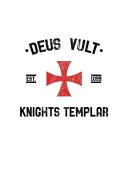
Deus Vult Knights Templar
 81
81

Deus Vult Knights Templar
The 'Deus Vult Knights Templar' operates less as a narrative and more as a thematic anchor for a specific piece of merchandise. Its strength lies in its direct appeal to a niche audience already conversant with Templar lore and associated popular mysteries. The blurb effectively identifies key interest points: Freemasonry, Oak Island, and the Holy Grail, suggesting a desire to connect the tangible symbol of the cross to these broader narratives. However, the work’s primary limitation is its brevity and focus on marketing; it doesn't offer deep historical analysis or new esoteric interpretations. A particularly salient element is the repeated invocation of "Soldiers of Christ" and "Warriors of Christ," which speaks to a particular devotional and martial interpretation of the Templar legacy. Ultimately, it serves best as an accessory to a historical curiosity rather than a standalone scholarly or esoteric text.
📝 Description
81
This book examines the Templar cross as a symbol connecting medieval knights to modern esoteric interests.
Deus Vult Knights Templar is not a scholarly history but a thematic study focused on the Templar cross and its symbolism. The author draws parallels between the medieval military order and contemporary fascination with Freemasonry, the Crusades, and mystery investigations such as Oak Island. The Templar cross is presented as a personal emblem signifying an interest in history, Christian soldiery, and the pursuit of artifacts, functioning as a wearable historical memento.
The book appeals to those with a deep interest in the Knights Templar, their historical context, and related esoteric societies. It is also geared towards gift buyers looking for distinctive presents for individuals who resonate with the 'Soldiers of Christ' or 'Warriors of Christ' ideals. Readers interested in historical relics, the legends of the Holy Grail, and the lore of Solomon's Temple will find thematic connections within its pages.
This work situates itself within modern interpretations of the Knights Templar, an order whose history has been richly embellished with esoteric lore since the Enlightenment. It bridges the historical military and religious functions of the Templars with contemporary occult and fraternal interests, particularly Freemasonry. The book taps into a long tradition of Templar mythology that explores themes of lost knowledge, hidden legacies, and spiritual quests, often linking them to artifacts like the Holy Grail and sites such as Oak Island.
💡 Why Read This Book?
• Gain a tangible connection to the "Deus Vult" concept, understanding its use as a personal emblem linking medieval fervor to contemporary interest in Christian soldiery. • Explore the symbolic overlap between the Knights Templar, Freemasonry, and treasure-hunting narratives, particularly concerning the Oak Island mystery. • Appreciate the Templar cross as a medieval souvenir that encapsulates notions of faith, history, and the enduring quest for artifacts like the Holy Grail.
⭐ Reader Reviews
Honest opinions from readers who have explored this book.
❓ Frequently Asked Questions
What is the meaning behind the 'Deus Vult' phrase associated with the Knights Templar?
'Deus Vult' is Latin for 'God wills it.' It was a rallying cry during the Crusades, famously used to invoke divine sanction for military campaigns, including those undertaken by the Knights Templar.
How does this book connect the Knights Templar to Freemasonry?
The work suggests a thematic link and shared symbolism, acknowledging that many modern interpretations of the Knights Templar are intertwined with Masonic traditions and lore, though direct historical continuity is debated.
What is the significance of the Templar cross mentioned in the book?
The Templar cross, often depicted as a red cross on a white surcoat, symbolized their faith and military order. In this context, it's presented as a keepsake and a personal emblem for those fascinated by Templar history and ideals.
Is this book a historical account of the Knights Templar?
No, 'Deus Vult Knights Templar' is not a detailed historical account. It functions more as an thematic exploration and a descriptor for related symbolic items, drawing on popular interest in the order.
What kind of gifts does this book suggest?
The book's context suggests it's ideal for gifts related to the Knights Templar, such as crosses or other medieval souvenirs, suitable for birthdays or Christmas for history enthusiasts and those interested in Christian Crusades.
Does the book discuss the Oak Island treasure?
The book mentions Oak Island as a point of fascination for readers interested in the Knights Templar, suggesting a popular connection between the order's legends and modern treasure-hunting mysteries.
🔮 Key Themes & Symbolism
The Deus Vult Cross
The central symbol explored is the 'Deus Vult Templar Cross'. This motif serves as the primary emblem connecting the medieval Knights Templar order with contemporary interests. The phrase 'Deus Vult' ('God wills it') itself evokes the fervor of the Crusades. The work positions the cross not merely as a historical artifact but as a personal keepsake, a tangible link for individuals who identify with the warrior-monk ethos, Christian soldiery, and the enduring mystique surrounding the Templars and their quests.
Crusader Legacy & Christian Soldier
A core theme is the enduring legacy of the Crusades and the ideal of the 'Soldier of Christ' or 'Warrior of Christ'. The book taps into a romanticized view of the Knights Templar as exemplars of faith and martial prowess. It appeals to those who see historical parallels or aspire to embody virtues associated with medieval Christian warriors. This theme extends beyond mere historical interest to a personal identification with a spiritual and combative mission, often symbolized by the Templar cross.
Esoteric Connections & Mysteries
The work deliberately bridges the historical Knights Templar with popular esoteric and mystery traditions. It highlights perceived connections to Freemasonry, a fraternal order whose own symbolism and rituals are often linked to Templar lore. Furthermore, it draws parallels with modern treasure-hunting narratives, specifically mentioning the Oak Island mystery, and the legendary quest for the Holy Grail. These associations frame the Templars as custodians of hidden knowledge or participants in grand, unfolding mysteries.
Medieval Souvenir & Historical Affinity
Positioned as a 'Medieval souvenir,' the Templar cross represents a form of wearable history. The book suggests that possessing or displaying such an item is a declaration of affinity for the Knights Templar and their historical context. It caters to collectors of historical artifacts and enthusiasts seeking items that embody specific historical periods or symbolic orders. This aspect emphasizes the object's role in personal identity and its function as a conversation starter among like-minded individuals.
💬 Memorable Quotes
Direct passages from the work, attributed to the author.
“This cross keepsake is great for anyone who loves history, artifacts, The Deus Vult Templar Cross...”
— This highlights the target audience and the symbolic value, emphasizing that the item appeals to those drawn to historical objects, specific symbols, and the broader mystique of the Templars.
“Its a great Birthday or Christmas gift for Christians, Crusaders, Soldiers of Christ and Warriors of Christ.”
— This identifies specific gift occasions and recipient profiles, underscoring the book's connection to a particular devotional and historical identity, particularly the martial-religious aspect.
“Are you fascinated with the freemasons, Christian Crusades or Oak Island treasure?”
— This question directly probes the reader's interests, linking the Knights Templar to popular modern mysteries and historical events, suggesting the book explores these thematic connections.
“Get your sword, shield and armor and wear this out as a Knights Templar c”
— This is an interpretation of the spirit of the Templar identity, encouraging an embrace of the warrior ethos associated with the order, even in a symbolic, modern context.
💡 Key Ideas
Editorial paraphrase of the work's core concepts — not direct quotes.
Say you love the Knights Templar with this Medieval souvenir.
This quote frames the Templar cross as more than just an object; it's a statement of personal interest and affiliation, a way to outwardly express fascination with the historical order.
🌙 Esoteric Significance
Tradition
The work aligns with modern esoteric interpretations that view the Knights Templar not just as historical warriors but as inheritors or guardians of ancient wisdom, possibly Gnostic or Hermetic in nature, though this is speculative. It draws from the popular lineage connecting Templars to secret societies and hidden knowledge, a theme prevalent in 19th and 20th-century occultism and fringe historical theories.
Symbolism
The primary symbol is the Templar cross ('Deus Vult' variant), representing divine will, Christian faith, and martial purpose. The work also implicitly touches upon the symbolism of the Holy Grail, often associated with Templar quests and esoteric secrets, suggesting it represents not just a relic but a hidden spiritual attainment or knowledge.
Modern Relevance
Contemporary interest in the Templars persists in various circles, including historical reenactment groups, Masonic lodges (particularly those with Templar degrees), and conspiracy theory communities. Thinkers exploring alternative histories, secret societies, and the intersection of faith and power often reference the Templars as a foundational element in Western esoteric traditions.
👥 Who Should Read This Book
• Enthusiasts of medieval history and the Crusades seeking symbolic connections to the Knights Templar. • Individuals interested in Freemasonry and esoteric societies who explore the historical roots and alleged legacies of the Templars. • Collectors of historical memorabilia and unique gifts looking for items representing Christian chivalry and historical intrigue.
📜 Historical Context
The Knights Templar emerged during the fervent era of the Crusades, officially recognized around 1129 by the Council of Troyes. This period, marked by intense religious zeal and military expansion, saw the creation of powerful military orders like the Templars and Hospitallers. Their influence grew significantly throughout the 12th and 13th centuries, controlling vast lands and financial networks across Europe and the Levant. However, their power also bred suspicion, leading to their abrupt dissolution starting in 1307 under King Philip IV of France, who orchestrated accusations of heresy and blasphemy. This dramatic downfall fueled centuries of speculation, conspiracy theories, and later associations with groups like the Freemasons, whose own origins trace to stonemason guilds of the late medieval period and early Renaissance.
📔 Journal Prompts
The 'Deus Vult' rallying cry: divine sanction or human ambition?
Reflecting on the Warrior of Christ archetype: historical reality vs. modern romanticization.
Symbolism of the Templar cross: faith, power, or hidden knowledge?
Oak Island and the Holy Grail: enduring mysteries linked to Templar lore.
Freemasonry's alleged Templar connections: continuity or invention?
🗂️ Glossary
Deus Vult
Latin phrase meaning 'God wills it.' It served as a prominent battle cry and rallying slogan during the medieval Crusades, invoked to sanctify military actions.
Knights Templar
A Catholic military order founded around 1119, officially recognized in 1129. They were known for their role in the Crusades, financial activities, and eventual suppression amid accusations of heresy.
Crusades
A series of religious wars initiated, supported, and sometimes directed by the Latin Church in the medieval period, primarily aimed at recovering holy sites from Islamic rule.
Freemasons
Members of a fraternal organization originating from stonemason guilds. Modern Freemasonry often incorporates symbolism and traditions allegedly derived from medieval orders like the Knights Templar.
Oak Island
A Canadian island famous for the "money pit" and ongoing search for legendary buried treasure, often linked speculatively to the Knights Templar and other historical groups.
Holy Grail
The cup or dish used by Jesus at the Last Supper. In Arthurian legend and later esoteric traditions, it is often associated with mystical quests and hidden knowledge, sometimes linked to the Templars.
Soldiers of Christ
A designation often applied to members of military orders like the Knights Templar, emphasizing their dual role as warriors and devoted servants of God.