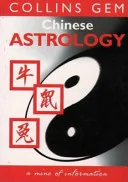
Collins Gem Chinese Astrology
 83
83

Collins Gem Chinese Astrology
Bridget Giles' Collins Gem Chinese Astrology provides a surprisingly thorough grounding in the subject for its pocket-sized format. The strength lies in its clarity; it avoids the arcane jargon that can plague esoteric texts, making the twelve animal signs and their basic elemental associations readily understandable. I particularly appreciated the section on the Dragon, often seen as the most auspicious sign, detailing its associated traits with a balanced perspective. However, the book's brevity is also its limitation. While excellent as an introduction, it offers little on the more complex interactions between elements, animal signs across different years, or the finer points of the 60-year cycle, which are crucial for deeper astrological readings. The flexibinding, while practical for travel, feels somewhat less substantial than a traditional hardcover. For a beginner seeking a quick, factual overview, it serves its purpose well, but seasoned practitioners will find it too superficial. A solid, if uninspired, primer.
📝 Description
83
First published in 1998, Collins Gem Chinese Astrology offers a compact guide to the twelve zodiac animals.
This book breaks down the principles of the Chinese zodiac into clear segments. It covers the characteristics, strengths, and potential challenges for each of the twelve animal signs. Readers can use this information to understand themselves and others through the framework of this tradition. The guide is suitable for those new to the subject or looking to build on existing knowledge. It presents practical insights into how animal energies affect personality, relationships, and life paths. The book focuses on providing a concise, factual overview rather than extensive analysis.
Bridget Giles places the Chinese zodiac within its historical and cultural background. This system is deeply connected to Chinese philosophy and calendar traditions, with origins in folk tales and astronomical observations. Understanding the cyclical nature of the twelve animals, each linked to a five-element cycle (Wood, Fire, Earth, Metal, Water), is key to grasping Chinese astrology. The book touches on these elements, showing the tradition's lasting presence in East Asian culture and its global reach.
Chinese astrology, rooted in ancient Chinese philosophy and calendrical systems, interprets celestial patterns to understand human affairs. It is a complex cosmology that links yearly cycles to animal archetypes and elemental forces. Unlike Western astrology, which centers on planetary movements, Chinese astrology emphasizes the lunar calendar and a sixty-year cycle composed of animal signs and the five elements. This system has been used for centuries to predict fortune, guide decisions, and understand interpersonal dynamics, reflecting a worldview where cosmic order is mirrored in earthly life.
💡 Why Read This Book?
• Gain a foundational understanding of the twelve Chinese zodiac animals and their core characteristics, as presented in Bridget Giles' accessible 1998 guide, allowing you to identify personal traits based on your birth year. • Learn about the interplay of Yin and Yang with the zodiacal animals, a key concept that adds a layer of nuance to understanding personality dynamics beyond the basic animal sign. • Discover the historical context of the Chinese zodiac, appreciating its ancient roots and its connection to the five-element cycle (Wood, Fire, Earth, Metal, Water) which underpins the entire system.
⭐ Reader Reviews
Honest opinions from readers who have explored this book.
❓ Frequently Asked Questions
When was Collins Gem Chinese Astrology first published?
Collins Gem Chinese Astrology by Bridget Giles was first published in November 1998, making it a relatively contemporary introduction to the ancient system of Chinese zodiacal interpretation.
What are the twelve animals of the Chinese zodiac mentioned in the book?
The book covers the twelve animals: Rat, Ox, Tiger, Rabbit, Dragon, Snake, Horse, Goat, Monkey, Rooster, Dog, and Pig, detailing the characteristics associated with each.
Does the book explain the five elements in Chinese astrology?
Yes, Bridget Giles' guide introduces the five elements—Wood, Fire, Earth, Metal, and Water—and how they interact with the zodiacal animals to influence personality and destiny.
Is this book suitable for beginners interested in astrology?
Absolutely. Its concise format and clear explanations make it an ideal starting point for anyone new to the Chinese zodiac system, offering a straightforward overview without overwhelming detail.
What is the significance of the flexibinding format?
The flexibinding offers a compromise between a paperback and a hardcover, providing durability for frequent use while maintaining a lighter, more portable feel, suitable for study on the go.
Does the book discuss compatibility between zodiac signs?
While primarily focusing on individual sign characteristics, the book lays the groundwork for understanding compatibility by explaining the fundamental traits and elemental associations of each animal.
🔮 Key Themes & Symbolism
The Twelve Zodiac Animals
The core of this volume revolves around the twelve animals of the Chinese zodiac: Rat, Ox, Tiger, Rabbit, Dragon, Snake, Horse, Goat, Monkey, Rooster, Dog, and Pig. Each animal is presented as a distinct archetype, embodying specific personality traits, strengths, weaknesses, and influences based on the lunar calendar cycle. The book details how one's birth year dictates their primary animal sign, offering insights into inherent tendencies and life paths. It emphasizes that understanding these animal energies is key to self-awareness and navigating interpersonal dynamics within the framework of Chinese cosmology.
The Five Element Theory
Beyond the animal signs, the book introduces the foundational Five Element theory (Wu Xing) of Chinese cosmology: Wood, Fire, Earth, Metal, and Water. It explains how these elements are not static but cyclical, interacting with each other in generative and destructive phases. The text outlines how each zodiac animal is associated with one or more elements, creating a more nuanced astrological profile than a simple animal sign designation. This elemental interplay is crucial for understanding the deeper layers of Chinese astrological interpretation and its dynamic nature.
Yin and Yang Principles
Collins Gem Chinese Astrology also touches upon the fundamental concept of Yin and Yang, the complementary opposites that form the basis of much of Chinese philosophy. The book illustrates how Yin and Yang manifest within the zodiacal system, often differentiating between signs that are considered more Yang (active, masculine) and those that are more Yin (passive, feminine). This dualistic framework adds another dimension to understanding the balance and polarity within an individual's astrological makeup and their relationships.
Practical Application and Self-Knowledge
The ultimate aim of this guide is to provide practical tools for self-understanding and improved relationships. By clarifying the Chinese zodiac and its associated elements, the book empowers readers to recognize their innate qualities and those of others. It suggests that knowledge of one's zodiacal and elemental configuration can lead to better decision-making, more harmonious interactions, and a greater appreciation for the cyclical rhythms of life as understood through this ancient tradition.
💬 Memorable Quotes
Direct passages from the work, attributed to the author.
“The Dragon year is considered highly auspicious, often associated with power, charisma, and good fortune.”
— This highlights the symbolic weight given to certain animal signs in Chinese astrology, suggesting a cultural belief in their potent influence on destiny and personal attributes.
“Each animal sign possesses both positive and negative traits, reflecting the balance of Yin and Yang.”
— This emphasizes the non-dualistic nature of the system; no sign is purely 'good' or 'bad,' but rather a complex interplay of energies that requires understanding.
“Compatibility between signs is influenced by their elemental relationships and inherent natures.”
— This points to the predictive aspect of Chinese astrology, where understanding the interactions between different elemental and animal energies can offer guidance on relationship harmony.
“The lunar calendar dictates the cycle of the twelve zodiac animals.”
— This clarifies the temporal basis of the system, differentiating it from solar-based Western astrology and underscoring its connection to ancient astronomical observations.
“Understanding the five elements provides a deeper layer to interpreting a zodiac sign.”
— This suggests that the animal sign alone is a starting point, and the elemental associations are crucial for a more complete and accurate astrological reading.
🌙 Esoteric Significance
Tradition
This work fits within the broad umbrella of East Asian esoteric traditions, specifically drawing from the cosmological principles underpinning Chinese astrology. It is not directly aligned with Western Hermeticism, Kabbalah, or Gnosticism but shares with them an interest in symbolic systems, cyclical time, and the mapping of cosmic principles onto human life. Its lineage is deeply rooted in ancient Chinese philosophy, astronomy, and folk beliefs, presenting a system that is both predictive and philosophical.
Symbolism
The primary symbols are the twelve animals of the zodiac (e.g., the Dragon symbolizing power and good fortune, the Snake representing wisdom and intuition) and the Five Elements (Wood, Fire, Earth, Metal, Water). These elements are not merely descriptive but represent dynamic forces that interact, generating or overcoming each other. The book interprets these symbols as archetypal energies that shape personality, relationships, and life events, offering a symbolic language for understanding human nature and destiny.
Modern Relevance
Contemporary practitioners of Feng Shui, TCM, and various forms of personal development often reference the core principles of Chinese astrology introduced in works like this. Modern thinkers exploring cyclical time, archetypal psychology, and cross-cultural spiritual systems may find its clear articulation of the animal and elemental correspondences a useful starting point for comparative studies or personal application.
👥 Who Should Read This Book
['• Absolute beginners to astrology seeking a straightforward introduction to a non-Western system, wanting to understand the basic traits of the twelve Chinese zodiac animals.', '• Individuals interested in comparative cultural studies or the history of divination, looking for a concise overview of a significant East Asian astrological tradition.', '• Those seeking practical, accessible insights into personality typing and relationship dynamics through the lens of ancient Chinese cosmology and its elemental interactions.']
📜 Historical Context
Published in 1998, Collins Gem Chinese Astrology emerged during a period of increasing global interest in Eastern philosophies and alternative spiritual practices. Western audiences were actively seeking accessible introductions to traditions like astrology, Feng Shui, and TCM. Bridget Giles' work arrived in a market already featuring numerous books on Western astrology, seeking to provide a concise entry point into the distinct framework of Chinese cosmology. While not a seminal academic text, its publication coincided with a broader cultural trend, making esoteric knowledge more mainstream. Contemporary authors exploring similar themes included Stephen Karcher, whose works on the I Ching were gaining traction, and numerous authors focusing on Feng Shui applications. The book's accessible format and clear explanations likely contributed to its reception as a practical guide for newcomers, fitting into the growing niche of popular esoteric literature that sought to clarify ancient systems for a Western audience.
📔 Journal Prompts
The Rat's adaptability and intelligence: how does this manifest in your daily problem-solving?
Reflect on the Dragon's auspicious symbolism; what personal aspirations does it inspire?
Consider the characteristics of your birth year's animal; where do you see these traits in action?
The interplay of Yin and Yang in your life: identify moments of active (Yang) and receptive (Yin) energy.
How does the concept of the Five Elements offer a new perspective on your personal challenges or strengths?
🗂️ Glossary
Chinese Zodiac
A cyclical system of twelve animal signs (Rat, Ox, Tiger, Rabbit, Dragon, Snake, Horse, Goat, Monkey, Rooster, Dog, Pig) used in Chinese astrology to determine personality traits, compatibility, and fortune based on birth year.
Five Elements (Wu Xing)
The fundamental elements of Wood, Fire, Earth, Metal, and Water, which are believed to interact in cyclical patterns (generating and controlling) and form the basis of much of Chinese cosmology and medicine.
Yin
The feminine, passive, dark, and receptive principle in Chinese philosophy, often associated with qualities like coolness, softness, and introspection.
Yang
The masculine, active, light, and assertive principle in Chinese philosophy, associated with qualities like heat, hardness, and outward energy.
Lunar Calendar
A calendar based on the cycles of the moon's phases, which governs the sequence of the twelve animal signs in the Chinese zodiac system.
Flexibinding
A bookbinding style that combines the flexibility of a paperback with the durability of a hardcover, often featuring a cover that is less rigid than a traditional hardback.
Auspicious
Suggesting future success; favorable; conducive to success; propitious.
This book appears in 1 collection
🔮 Readers Also Liked
Browse all →![[Elements. English. Selections] Elements of geometry; containing the first six books of Euclid, with two books on the geometry of solids. To which are added, elements of plane and sperical trigonometry. By John Playfair. 1795](/img/thumb/elements-english-selections-elements-of-geometry-containing-the-first-six-books-of-euclid-with-two-books-on-the-geometry-of-solids-to-which-are-added-elements-of-plane-and-sperical-trigonometry-by-joh.webp)








From the “Chinese Astrology” Collection
View all →








More Free Astrology & Cosmology Books
View all →