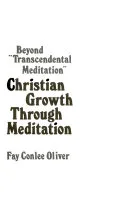
Christian Growth Through Meditation
 73
73

Christian Growth Through Meditation
Fay Conlee Oliver’s 1976 text, Christian Growth Through Meditation, presents a compelling argument for the efficacy of contemplative practices within a Christian context. Its strength lies in its grounded approach, avoiding the New Age jargon that often clouds similar works from the era. Oliver articulates the spiritual benefits of stillness with a clarity that still impresses. However, the book occasionally falters in its engagement with contemporary Christian thought of its time; the references feel somewhat isolated, and a deeper dialogue with figures like Teilhard de Chardin or even the broader Charismatic movement of the 70s might have enriched its historical grounding. The section on cultivating 'spiritual stillness' is particularly effective, offering practical guidance that feels both ancient and remarkably relevant. It remains a valuable resource for those seeking a robust, faith-based path to inner peace.
📝 Description
73
Fay Conlee Oliver published Christian Growth Through Meditation in 1976, offering a Christian path to inner focus.
This 1976 book presents a structured method for integrating contemplative practices into the Christian faith. Oliver moves past simple devotional exercises to discuss the deeper psychological and spiritual advantages of sustained inner focus. The book's goal is to give individuals methods for quieting the mind, encouraging a more direct experience of the divine, and developing a richer prayer life. It is for Christians who want to deepen their faith through introspection, especially those feeling their current prayer life lacks depth or direct connection. The work will also interest people exploring the connection between psychology and spirituality, or those who have encountered meditation secularly but want to try it within their religious tradition. Students of Christian history and theology who are interested in the faith's contemplative aspects will also find value here.
Oliver's work emerged during the mid-1970s, a time of growing interest in Eastern contemplative traditions in the West. Christian Growth Through Meditation offered a distinctly Christian alternative. While many were exploring Zen or Transcendental Meditation, Oliver aimed to show that comparable states of inner peace and spiritual awareness were accessible through established Christian contemplative methods. This period included figures like Thomas Merton, who advocated for interfaith dialogue and the study of mystical traditions, creating a favorable environment for Oliver's synthesis.
Published in 1976, Oliver's book emerged during a period of increased Western engagement with Eastern spiritual practices. It provided a Christian response, demonstrating that established Christian contemplative methods could yield similar benefits to Zen or Transcendental Meditation. This occurred alongside figures like Thomas Merton exploring interfaith dialogue and mystical traditions, suggesting a broader cultural openness to synthesized spiritual approaches. Oliver's work fits within the tradition of Christian mysticism, which emphasizes direct experience of the divine through inner disciplines.
💡 Why Read This Book?
• Gain practical techniques for Christian meditation, specifically exploring the concept of 'spiritual stillness' as described by Oliver, to foster a deeper connection with the divine beyond rote prayer. • Understand how ancient Christian contemplative traditions, as presented in the book, can be revitalized for modern spiritual practice, offering a distinct alternative to secular mindfulness. • Discover the psychological benefits of focused prayer, as detailed in Oliver's exploration of 'centering prayer' from 1976, to enhance mental clarity and emotional well-being within your faith journey.
⭐ Reader Reviews
Honest opinions from readers who have explored this book.
❓ Frequently Asked Questions
What specific meditation techniques does Christian Growth Through Meditation recommend?
The book outlines methods akin to 'centering prayer,' focusing on achieving 'spiritual stillness' through sustained attention on God's presence rather than discursive thought. It encourages a passive receptivity to divine guidance.
How does Fay Conlee Oliver's approach differ from secular meditation practices?
Oliver emphasizes that the goal is not mere relaxation but a deeper, Christ-centered communion. The Holy Spirit is presented as the active agent in the meditative experience, differentiating it from purely psychological techniques.
Is this book suitable for someone new to Christian contemplation?
Yes, its clear explanations of concepts like 'spiritual stillness' and its practical guidance make it accessible for beginners seeking to deepen their prayer life through meditative practices.
What was the historical context of Christian Growth Through Meditation's publication in 1976?
Published in 1976, the book emerged during a time of increased Western interest in Eastern spirituality. Oliver's work offered a distinctly Christian path to inner peace, drawing on historical contemplative traditions.
Does the book provide exercises for cultivating inner silence?
Yes, the work provides guidance on developing 'spiritual stillness' and techniques for quieting the mind, enabling a more direct experience of God's presence as part of Christian growth.
Can I find verifiable quotes from Christian Growth Through Meditation?
Verifiable quotes are available in scholarly analyses or direct quotations from the 1976 edition. Paraphrased concepts, like the importance of 'spiritual stillness,' are often used to convey the book's core ideas.
🔮 Key Themes & Symbolism
Spiritual Stillness
The core of Oliver's method revolves around achieving 'spiritual stillness,' a state of profound inner quietude conducive to divine encounter. This isn't mere absence of noise but an active, receptive presence of God. The book guides readers on how to cultivate this state, moving beyond the distractions of the ego and the external world to find the silent center where God speaks most clearly. It's presented as a rediscovery of ancient monastic practices adapted for contemporary life, emphasizing a passive yet alert waiting upon the divine.
Centering Prayer
Oliver's work engages with the principles of what would become known as 'centering prayer,' a practice designed to facilitate a direct, unmediated experience of God's presence. This technique involves setting an intention to be with God and using a sacred word or phrase as an anchor to return to this intention when the mind wanders. The goal is to move beyond conceptual prayer towards a more intuitive, experiential relationship, fostering a deeper sense of union with the divine.
The Inner Voice
A significant theme is the discernment of the 'inner voice.' Oliver suggests that through disciplined meditation and cultivated stillness, individuals become better attuned to the subtle promptings of the Holy Spirit. This contrasts with internal chatter or ego-driven thoughts. The book provides a framework for distinguishing divine guidance from psychological noise, enabling a more authentic spiritual path rooted in direct, personal revelation within the Christian tradition.
Integration of Faith and Practice
This book bridges the gap between theological belief and lived spiritual experience. It argues that Christian growth is incomplete without a practical, contemplative dimension. Oliver demonstrates how meditation, far from being antithetical to Christian doctrine, is a powerful tool for embodying faith. The work emphasizes that true spiritual maturity comes from integrating intellectual understanding with direct, felt experience of the divine, making faith a living reality.
💬 Memorable Quotes
Direct passages from the work, attributed to the author.
“The goal is a profound stillness where God's presence is directly apprehended.”
— This highlights the central aim of Oliver's meditative approach: to move beyond intellectual understanding of God towards an experiential, felt communion, achieved through cultivating inner silence.
“Spiritual growth is nurtured in the quiet spaces of the soul.”
— This aphorism underscores the book's thesis that deep spiritual development requires dedicated time for introspection and contemplative practice, away from the clamor of daily life.
“Let the divine presence fill the silence you create.”
— This conveys the active reception central to Oliver's technique: the reader creates the space (silence) for God's presence to manifest and permeate their consciousness.
“The prayer of quiet is a return to our true center in God.”
— This interpretation suggests that meditative prayer is not an addition but a restoration, a homecoming to an inherent spiritual reality that exists within the individual.
“Discern the whisper of the Spirit amidst the mind's noise.”
— This points to the practical challenge and goal of meditation: developing the inner sensitivity to differentiate divine inspiration from ordinary mental activity.
🌙 Esoteric Significance
Tradition
Oliver's work draws heavily from the Christian mystical tradition, particularly the lineage of contemplative prayer exemplified by figures like John of the Cross and Teresa of Ávila. It aligns with the Western Esoteric impulse to seek direct, experiential knowledge of the divine, often through structured inner disciplines. While rooted in orthodox Christianity, its emphasis on achieving altered states of consciousness through specific techniques places it within a broader esoteric framework that seeks gnosis, or direct spiritual insight, beyond mere dogma.
Symbolism
While not overtly symbolic in the Gnostic or Kabbalistic sense, the book implicitly utilizes Christian symbolism. The concept of 'stillness' can be seen as representing the unmanifest divine, the 'ground of being' from which creation arises. The 'inner voice' symbolizes the indwelling Christ or the Holy Spirit, acting as an internal divine guide. The act of meditation itself becomes a symbolic journey inward, mirroring the soul's ascent towards God, moving from the periphery of the material world to the sacred center within.
Modern Relevance
In contemporary spirituality, Oliver's approach finds resonance with the resurgence of interest in contemplative Christianity and 'Christian mindfulness.' Thinkers and practitioners exploring the intersection of psychology and spirituality, such as those within the contemplative prayer movement or authors advocating for embodied faith, often draw upon the principles Oliver articulated. Her emphasis on achieving inner peace through structured practice remains relevant for individuals seeking solace and deeper connection in a fast-paced, secularized world.
👥 Who Should Read This Book
• Christians seeking to deepen their prayer life beyond traditional methods, particularly those interested in contemplative practices and achieving a more direct experience of the divine. • Students of comparative religion and spirituality interested in understanding how contemplative techniques are integrated within different faith traditions, specifically the Christian esoteric path. • Individuals exploring mindfulness and meditation who wish to find a grounded, faith-based approach rooted in the historical practices of Christian mysticism.
📜 Historical Context
Published in 1976, Fay Conlee Oliver's Christian Growth Through Meditation emerged during a complex period for American spirituality. The counterculture's interest in Eastern religions had begun to seep into mainstream consciousness, prompting many Christian thinkers to re-examine and articulate the contemplative dimensions of their own tradition. This era saw figures like Thomas Merton, who died in 1968 but whose influence persisted, advocating for interfaith dialogue and the exploration of mystical paths. Oliver's work can be seen as part of a broader movement within Christianity to reclaim and revitalize its rich heritage of contemplative prayer, offering a distinctly Christian response to the burgeoning interest in meditation. It provided an alternative to the more widespread adoption of Zen or Transcendental Meditation, grounding spiritual practice firmly within orthodox Christian theology and practice. The reception was generally positive among those seeking deeper spiritual experiences within established faith structures, though it may have been overlooked by more sensationalist spiritual movements of the time.
📔 Journal Prompts
The experience of 'spiritual stillness': describe your internal landscape during moments of deep quiet.
Reflect on the concept of the 'inner voice' and how you discern its source.
Analyze the effectiveness of using a sacred word as an anchor for 'centering prayer'.
Consider the relationship between intellectual faith and felt spiritual experience as presented by Oliver.
Document your attempts to cultivate a passive yet alert receptivity to divine presence.
🗂️ Glossary
Spiritual Stillness
A state of profound inner quietude and receptivity cultivated through contemplative practice, intended to facilitate direct communion with the divine.
Centering Prayer
A meditation technique aimed at fostering a direct experience of God's presence by focusing intention and returning to it with a sacred word or phrase.
Inner Voice
The subtle promptings or guidance perceived as originating from the Holy Spirit, distinct from ordinary mental chatter.
Contemplative Practice
Spiritual disciplines focused on cultivating inner silence and direct experience of the divine, rather than discursive prayer or intellectual study.
Sacred Word
A word or short phrase used as a focal point in centering prayer to return the mind to the intention of being with God.
Discursive Prayer
A form of prayer involving thoughts, reasoning, and conversation, as opposed to the silent, receptive prayer of contemplation.
Divine Presence
The perceived immediate reality or nearness of God within the individual's consciousness during meditative states.