Chinese Zodiac Signs
 62
62

Chinese Zodiac Signs


Sophia Crane (Associate Editor) — Yi Wah's "Chinese Zodiac Signs" transcends superficial horoscopy, offering a profound exploration into the esoteric heart of this ancient system. The author masterfully deciphers the intricate symbolism, revealing the elemental and philosophical underpinnings that connect each animal sign to the broader cosmic order. This work is a treasure trove for serious students of Eastern mysticism, providing insights into the cyclical nature of time and the energetic signatures that influence human experience. It's a compelling read for those seeking a deeper understanding of destiny and self, presented with clarity and reverence for its profound origins.
📝 Description
62
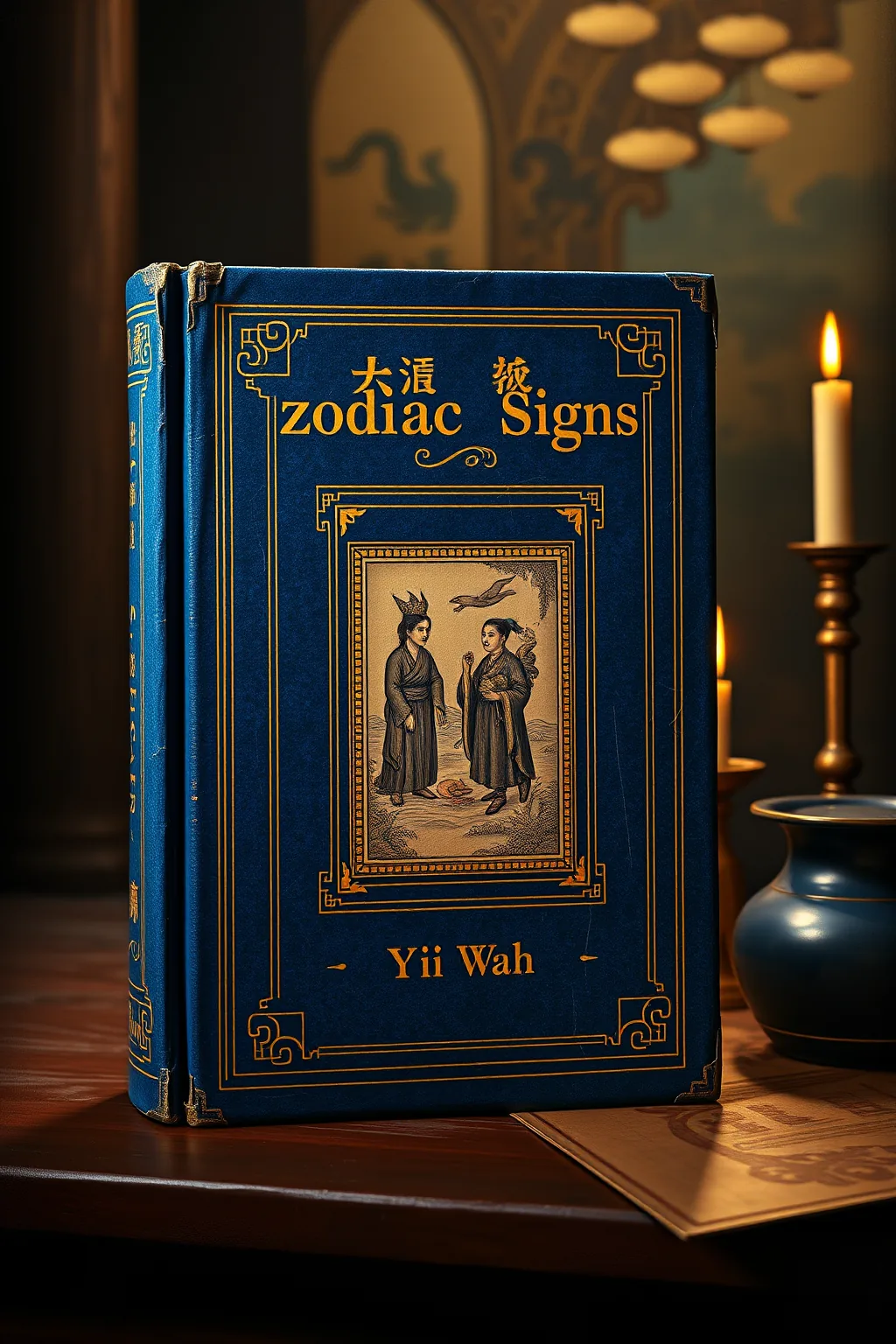
Yi Wah's 1998 book examines the Chinese Zodiac's deeper symbolism beyond personality.
Yi Wah's "Chinese Zodiac Signs" moves past simple astrological classifications to uncover the symbolic depth of the twelve zodiac animals. The author details their elemental associations and the celestial patterns they embody, presenting these not as mere predictions but as forces influencing fate and awareness. The text explains how the traits attributed to animals like the Dragon, Rabbit, and Monkey function as significant energies. This book aims to show readers the underlying patterns in existence and the connection between human life and the cosmos. It guides individuals toward understanding these connections for personal development and spiritual insight.
This work situates the Chinese Zodiac within a broader esoteric framework, moving beyond common astrological interpretations. It connects the zodiacal animals and their associated elements to concepts of karmic cycles and celestial architecture, suggesting a hidden order governing existence. The book implies that understanding these patterns allows for a deeper attunement with universal rhythms, aligning personal growth with cosmic influences. It frames the zodiac as a tool for spiritual understanding rather than a system for fortune telling.
💡 Why Read This Book?
Unearth the hidden spiritual dimensions of the Chinese Zodiac. This book offers a profound journey into the symbolic language of the twelve signs, revealing their connection to elemental forces and cosmic cycles. Ideal for esoteric scholars, spiritual seekers, and practitioners of divination who wish to deepen their understanding of ancient wisdom and its relevance to modern life.
⭐ Reader Reviews
Honest opinions from readers who have explored this book.
❓ Frequently Asked Questions
What is the primary esoteric teaching of the Chinese Zodiac?
The primary esoteric teaching is that the twelve zodiac animals embody specific elemental energies and cosmic archetypes that deeply influence human character, life paths, and the cyclical flow of time, offering a map for spiritual growth and karmic understanding.
How does this book differ from standard Western astrology?
Unlike Western astrology's focus on planetary positions, this work emphasizes the cyclical interplay of Yin and Yang, the Five Elements, and the symbolic resonance of animal archetypes within a framework of Taoist philosophy and ancient Chinese cosmology.
Can I use this knowledge for personal transformation?
Absolutely. By understanding your own zodiac sign's inherent energies and potential challenges, you can consciously work with these forces, fostering self-awareness, harmonizing imbalances, and aligning your life with auspicious cosmic currents.
What are the Five Elements in Chinese Zodiac?
The Five Elements are Wood, Fire, Earth, Metal, and Water. Each zodiac animal is associated with one or more of these elements, influencing its inherent characteristics and interactions with other signs and the environment.
Is this book suitable for beginners in Eastern mysticism?
Yes, Yi Wah's accessible yet profound approach makes it ideal for beginners seeking an introduction to the esoteric principles of the Chinese Zodiac, while also offering depth for seasoned practitioners.
🔮 Key Themes & Symbolism
The Symphony of the Twelve Animals
This theme explores the profound archetypal energies embodied by each of the twelve zodiac creatures. It delves beyond superficial traits to reveal their spiritual significance, elemental affinities, and their roles within the grand cosmic dance. The book elucidates how these animal spirits, imbued with ancient wisdom, serve as powerful symbols for understanding the human psyche, life's journey, and the interconnectedness of all beings within the universal flow. Each animal represents a unique facet of existence, offering lessons and insights for those who seek to harmonize with the celestial order.
Elemental Alchemy and Cosmic Cycles
Yi Wah intricately combines the principles of the Five Elements (Wood, Fire, Earth, Metal, Water) into the fabric of the zodiac, demonstrating their transformative power. This section unveils how the interplay of these elements, combined with Yin and Yang, governs the dynamic cycles of time and influences the destiny of individuals and nations. It's an exploration of how understanding these elemental forces allows one to navigate life's challenges with greater wisdom, predict astrological trends, and harness auspicious energies for personal and collective evolution.
The Taoist Underpinnings of Destiny
This theme illuminates the profound philosophical bedrock of the Chinese Zodiac, rooted in Taoist principles of balance, harmony, and the natural order (Tao). The book reveals how the zodiac serves as a cosmic map, reflecting the Tao's inherent patterns and offering guidance for living in alignment with universal laws. It explores the concept of destiny not as a fixed fate, but as a dynamic interplay of karmic influences and free will, encouraging readers to cultivate self-awareness and wisdom to navigate their path consciously.
💬 Memorable Quotes
Direct passages from the work, attributed to the author.
“In the Rabbit's gentle gaze, the quietude of introspection reveals the universe's subtle grace.”
— This highlights the contemplative and serene nature of the Rabbit sign, emphasizing its connection to inner peace and the discovery of universal harmony through mindful observation.
“The Monkey's dance is the mind's quicksilver, seeking wisdom in every twist and turn.”
— This metaphor captures the intelligence, adaptability, and ceaseless curiosity of the Monkey, portraying its pursuit of knowledge as a dynamic and often playful exploration.
“Each cycle turns, a cosmic breath, combining destiny with threads of ether and earth.”
— This emphasizes the cyclical nature of existence and the intricate connection between the celestial (ether) and the terrestrial (earth) in shaping the unfolding narrative of destiny.
💡 Key Ideas
Editorial paraphrase of the work's core concepts — not direct quotes.
The Dragon's breath ignites the spirit's fire, a celestial harbinger of transformation.
This quote evokes the potent, transformative energy associated with the Dragon, suggesting its power to awaken dormant spiritual potential and catalyze profound change.
The Serpent's coils hold ancient secrets, a whisper from the earth's deep, enduring heart.
This quote associates the Serpent with profound, ancient knowledge and a deep connection to the primal energies of the earth, suggesting hidden wisdom and resilience.
🌙 Esoteric Significance
Tradition
This work is deeply rooted in Taoist and ancient Chinese esoteric traditions, drawing upon principles of Yin and Yang, the Five Elements, and the cyclical understanding of time. It views the zodiac not merely as a predictive tool but as a symbolic language that maps the energetic currents of the universe and their reflection within the human soul, offering pathways to spiritual alignment and self-cultivation.
Symbolism
The twelve animals are potent symbols representing archetypal forces and elemental energies. The Dragon embodies power and transformation, the Tiger courage and authority, the Rabbit gentleness and intuition, and so on. Each creature's characteristics are imbued with philosophical meaning, serving as metaphors for human virtues, challenges, and the cyclical journey of life, guiding practitioners towards understanding their inner landscape and cosmic connections.
Modern Relevance
In an era often characterized by fragmentation and disconnection, the Chinese Zodiac offers a profound framework for understanding our place within larger cosmic and natural rhythms. Its emphasis on balance, harmony, and cyclical change provides timeless wisdom for navigating modern life, fostering self-awareness, enhancing interpersonal relationships, and cultivating a deeper sense of spiritual grounding and purpose.
👥 Who Should Read This Book
This esoteric exploration of the Chinese Zodiac is crafted for a diverse audience. **Beginners** in Eastern mysticism will find a clear and profound introduction to its core principles and symbolic language. **Scholars** of comparative religion and philosophy will appreciate the deep dive into its Taoist underpinnings and historical context. **Spiritual seekers** yearning for a richer understanding of destiny, karma, and cosmic interconnectedness will find invaluable guidance. **Practitioners** of astrology, divination, and energy work will discover new layers of insight to enrich their craft and personal practice.
📜 Historical Context
The Chinese Zodiac, or Shengxiao, emerged from ancient Chinese cosmology and agrarian society, deeply intertwined with calendrical systems and astronomical observations. Its roots trace back to the Han Dynasty (206 BCE – 220 CE), though its origins are likely even older, possibly evolving from early animistic beliefs and shamanic practices. The twelve animals were chosen to represent a cyclical flow of time, each linked to a year, month, day, and even hour, reflecting the profound belief in the interconnectedness of humanity and the cosmos. This system served not only as a method for timekeeping but also as a sophisticated tool for divination, understanding character, and predicting fortune, deeply embedding itself within Chinese culture, philosophy, and spiritual traditions.
📔 Journal Prompts
Reflect on the animal sign ruling your birth year. What are its dominant energies, and how do they manifest in your life's journey?
Consider the Five Elements. How do Wood, Fire, Earth, Metal, and Water influence your personal interactions and decision-making processes?
Explore the concept of cyclical time as presented in the zodiac. How can understanding these cycles help you navigate personal and professional challenges?
If your birth animal represents a quality you struggle with, how can you consciously cultivate its opposite or find balance through other zodiac influences?
Meditate on the symbolic meaning of a specific zodiac animal you feel drawn to. What wisdom or guidance does it offer you at this present moment?
🗂️ Glossary
Shengxiao
The Chinese term for the zodiac, literally meaning 'birth likeness.' It refers to the twelve-year cycle of animal signs, each with distinct characteristics and astrological significance.
Yin and Yang
The fundamental Taoist concept of complementary opposites. Yin represents feminine, passive, dark, and cool energies, while Yang represents masculine, active, light, and warm energies. Their balance is crucial.
Wu Xing (Five Elements)
The five fundamental elements of Wood, Fire, Earth, Metal, and Water. They are believed to interact in cycles of generation and destruction, influencing all aspects of the universe and human life.
Archetype
In this context, a universal, primordial pattern or symbol that represents fundamental human experiences, qualities, or cosmic forces, embodied by each zodiac animal.
Cosmic Cycles
The recurring patterns and rhythms observed in celestial movements and natural phenomena, believed to influence earthly events and human destiny, as mapped by the zodiac's annual progression.
This book appears in 2 collections
🔮 Readers Also Liked
Browse all →







From the “Astrology” Collection
View all →








More Free Astrology & Cosmology Books
View all →