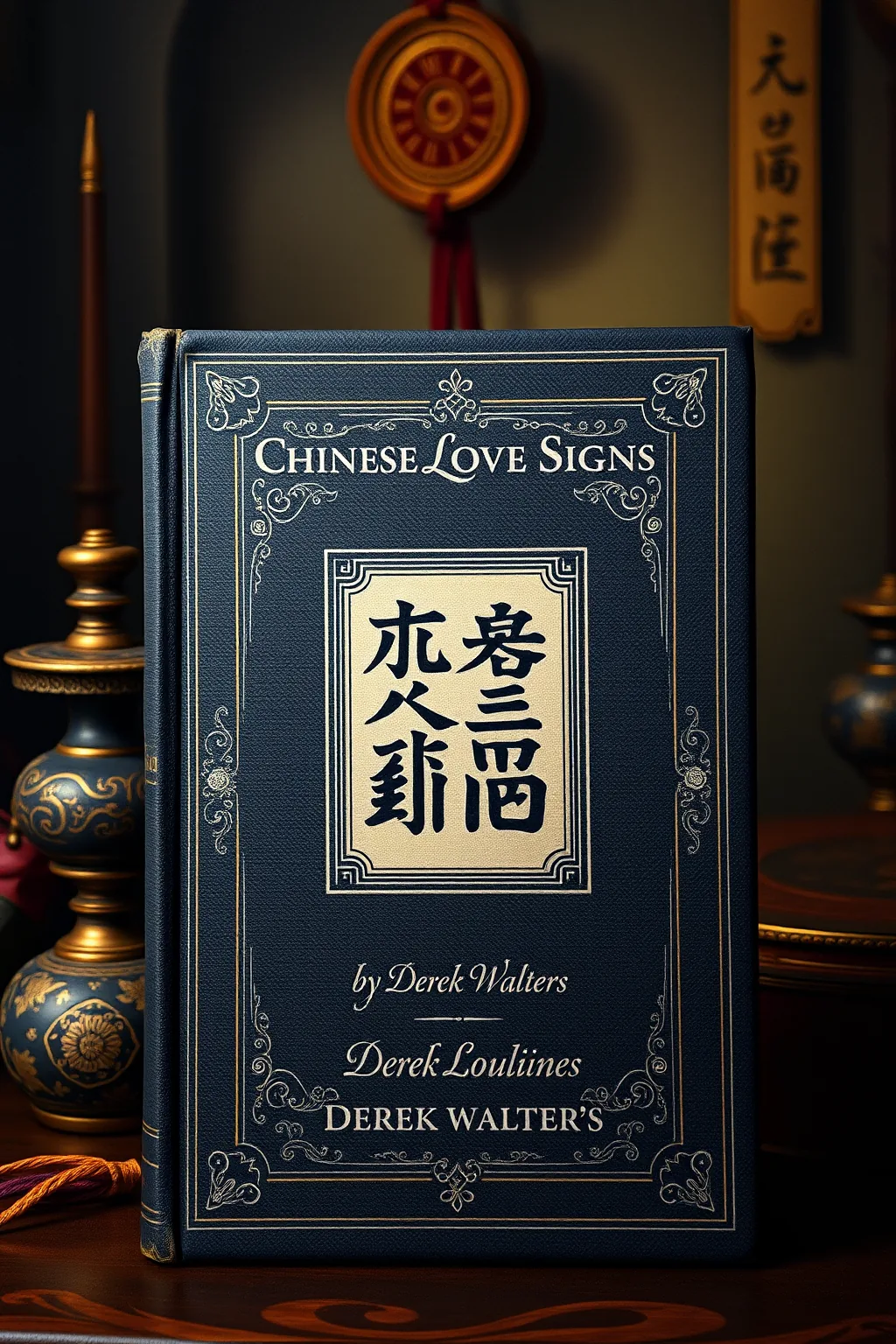
Chinese Love Signs
 75
75

Chinese Love Signs
Derek Walters' "Chinese Love Signs" presents a thorough, if somewhat traditional, take on zodiacal compatibility within the Chinese system. The strength of the book lies in its detailed breakdown of each animal sign's core attributes and its meticulous charting of inter-sign relationships, offering a practical guide for those interested in this specific astrological framework. Walters avoids overly mystical language, grounding his analysis in established principles of Chinese cosmology. However, the book's limitation is its adherence to a somewhat dated approach to relationship advice; it occasionally presents pairings as fixed destinies rather than fluid dynamics. A particularly illuminating section details the inherent conflicts between signs like the Rat and the Horse, explaining the fundamental energetic clashes. "Chinese Love Signs" is a valuable reference for understanding traditional Chinese zodiacal compatibility.
📝 Description
75
Derek Walters' 1994 book connects the 12 Chinese zodiac animals to romantic compatibility.
Published in 1994, Derek Walters' "Chinese Love Signs" examines how the twelve animals of the Chinese zodiac influence romantic relationships. The book goes beyond simple birth year comparisons, looking at the connections between each animal sign. It describes the natural characteristics, strengths, and potential difficulties of every sign. This provides a way to understand how different personalities interact in romantic partnerships.
Walters' work is for anyone interested in Eastern astrology, relationship dynamics, or understanding themselves through older traditions. Readers who want to examine their own romantic tendencies or figure out compatibility with others will find useful direction. The book suits those who prefer a structured view of astrology, moving past surface-level readings to explore the specific ways the Chinese zodiac shapes interactions.
This book draws from the long history of Chinese astrological practice, a system woven into Chinese culture for ages. Unlike Western astrology that often looks at planets, Chinese astrology is grounded in the cycle of time, the five elements (Wu Xing), and animal symbolism. Walters adapted these ancient ideas in 1994 for a Western audience, applying them specifically to modern romance and personal growth.
💡 Why Read This Book?
• Learn how the specific attributes of the twelve Chinese zodiac animals, such as the Dragon's inherent ambition or the Rabbit's gentle nature, directly influence romantic compatibility, offering insights unavailable in Western astrology. • Understand the intricate dynamics of inter-sign relationships, including the specific compatibilities and conflicts outlined by Walters, providing a nuanced perspective on partnership challenges. • Gain practical tools for analyzing relationship potential by applying the principles of the five elements (Wu Xing) to individual zodiac signs, as presented in the book's detailed classifications.
⭐ Reader Reviews
Honest opinions from readers who have explored this book.
❓ Frequently Asked Questions
What is the primary focus of Derek Walters' Chinese Love Signs?
The book's primary focus is on analyzing romantic compatibility using the traditional Chinese zodiac system, detailing the characteristics of each of the twelve animal signs and their interactions.
When was Chinese Love Signs originally published?
Derek Walters' "Chinese Love Signs" was first published in 1994, making it a foundational text for Western readers exploring this specific area of Chinese astrology.
Does the book only consider the year of birth for compatibility?
No, while the year of birth determines the animal sign, the book explores deeper compatibility by examining the inherent characteristics of each sign and their elemental influences.
What are the five elements mentioned in Chinese Love Signs?
The five elements are Wood, Fire, Earth, Metal, and Water, which are integral to the Chinese astrological system and add complexity to the analysis of each zodiac sign and its pairings.
Is this book suitable for beginners in astrology?
Yes, the book provides a clear introduction to the twelve Chinese zodiac signs and their compatibility, making it accessible for beginners interested in Eastern astrological systems.
What kind of insights can I expect regarding relationships?
You can expect insights into why certain pairings might naturally harmonize or clash, based on the traditional attributes and elemental interactions of the Chinese zodiac animals.
🔮 Key Themes & Symbolism
Animal Sign Personalities
Each of the twelve animals—Rat, Ox, Tiger, Rabbit, Dragon, Snake, Horse, Goat, Monkey, Rooster, Dog, Pig—represents a distinct set of personality traits, motivations, and behavioral patterns. Walters meticulously details these characteristics, explaining how they manifest in individuals born under each sign. For instance, the Horse is often associated with freedom and energy, while the Ox signifies steadfastness and diligence. Understanding these core attributes is the first step in deciphering compatibility, as it lays the groundwork for how two individuals are likely to approach life and relationships differently.
Inter-Sign Dynamics
Beyond individual traits, the book focuses on the intricate web of relationships between the twelve signs. Walters categorizes these interactions into harmonious pairings, neutral associations, and conflicting dynamics. This framework allows readers to see how specific signs might naturally complement each other, share common ground, or, conversely, be prone to friction. The concept of 'clashes' and 'combinations' is central, providing a predictive model for relationship challenges and successes rooted in ancient Chinese observations of natural forces and animal behaviors.
Elemental Influences (Wu Xing)
The five elements—Wood, Fire, Earth, Metal, and Water—are a critical layer in Chinese astrology, significantly modifying the nature of each animal sign. Walters explains how the elemental association of one's birth year (in addition to the animal) affects personality and compatibility. For example, a Water Dragon will have different characteristics and compatibility patterns than a Fire Dragon. This introduces a sophisticated dimension to the zodiac, demonstrating that compatibility is not solely determined by the animal but also by its elemental composition and interaction with the elements of another person's sign.
Romantic Compatibility Framework
The ultimate application of these principles in "Chinese Love Signs" is to provide a robust framework for understanding romantic compatibility. Walters offers guidance on which signs are naturally drawn to each other, which might face significant hurdles, and how to navigate these dynamics. The book serves as a practical guide for assessing potential partners, understanding existing relationships, and fostering harmony by acknowledging the inherent astrological predispositions derived from the Chinese zodiac and its elemental underpinnings.
💬 Memorable Quotes
Direct passages from the work, attributed to the author.
“The Rat is intelligent and adaptable, while the Horse is energetic and independent.”
— This highlights the core contrast between two zodiac signs, illustrating how their fundamental characteristics can lead to either complementary dynamics or inherent friction in a relationship.
“Compatibility is not just about attraction, but about enduring harmony and shared goals.”
— This interpretation suggests that successful relationships, according to the book's principles, require more than initial chemistry; they depend on a deeper alignment of fundamental natures and life aspirations.
“The influence of the five elements can either amplify or dampen the traits of an animal sign.”
— This points to the crucial role of the Wu Xing (Wood, Fire, Earth, Metal, Water) in modifying the standard characteristics of the twelve zodiac animals, adding nuance to astrological analysis.
“Understanding potential conflicts between signs allows for proactive relationship management.”
— This emphasizes the practical utility of the book, suggesting that foreknowledge of astrological clashes enables individuals to address challenges more effectively in their romantic partnerships.
“The Dragon and the Dog often find themselves at odds due to their opposing natures.”
— This provides a concrete example of a conflicting pairing, illustrating how the book identifies specific zodiac sign combinations that are traditionally considered challenging.
🌙 Esoteric Significance
Tradition
The work is firmly rooted in the tradition of Chinese Metaphysics, specifically its astrological branch. Unlike Western Hermeticism or Kabbalah, Chinese astrology is deeply intertwined with cosmological principles such as Yin and Yang, the Five Elements (Wu Xing), and the cyclical passage of time as observed through lunar and solar movements. Walters' book translates these ancient concepts into a framework for understanding human relationships, particularly romantic ones, demonstrating how cosmic cycles are believed to influence earthly interactions and destinies.
Symbolism
Central symbols include the twelve animals of the zodiac, each embodying specific archetypal energies and characteristics derived from the natural world. For instance, the Snake symbolizes wisdom and intuition, while the Monkey represents cleverness and playfulness. The secondary layer of symbolism involves the Five Elements (Wood, Fire, Earth, Metal, Water), which interact in generative and destructive cycles, influencing the expression of each animal's traits and their compatibility with other signs. These elements are not merely descriptive but are seen as active forces shaping destiny.
Modern Relevance
Contemporary practitioners of Chinese Metaphysics, including Feng Shui consultants and BaZi (Four Pillars of Destiny) astrologers, continue to draw upon the foundational principles outlined in Walters' work. While modern interpretations might incorporate digital tools or newer psychological frameworks, the core understanding of animal sign attributes and elemental interactions remains consistent. The book's accessible approach makes it relevant for individuals exploring self-help, relationship counseling, or comparative spiritual studies who seek to integrate ancient Eastern wisdom into their modern lives.
👥 Who Should Read This Book
• Individuals curious about Eastern astrology and its application to relationships, seeking an alternative to Western zodiac systems. • Relationship counselors or therapists interested in understanding diverse cultural perspectives on compatibility and interpersonal dynamics. • Students of comparative religion and philosophy looking to explore the cosmological underpinnings of Chinese culture and its influence on daily life.
📜 Historical Context
Published in 1994, Derek Walters' "Chinese Love Signs" arrived at a time when Western interest in Eastern philosophies and esoteric practices was steadily growing. The book tapped into a burgeoning curiosity about non-Western systems of divination and self-understanding, positioning itself as a guide to the intricate world of Chinese astrology for a general audience. This era saw a proliferation of translated texts and popularizations of concepts like the I Ching and Feng Shui. Walters' work offered a specific, relationship-focused lens on the Chinese zodiac, distinguishing it from more generalized astrological guides. It emerged within a landscape where New Age thought was gaining mainstream traction, though it maintained a more scholarly tone than some of its contemporaries. While not directly engaging with figures like Fritjof Capra or Deepak Chopra, who were prominent in broader New Age discourse, Walters' book contributed to the period's intellectual currents by making complex traditional systems accessible, eschewing the more common Western astrological focus on planets and houses for the lunar cycles and animal archetypes central to Chinese tradition.
📔 Journal Prompts
The Rat's adaptability and the Horse's independence: how might these contrasting traits play out in daily interactions?
Reflect on the influence of the Five Elements on your own personality and relationships.
Analyze the potential compatibility challenges between your birth animal and a significant other's.
Consider how the Dragon's ambition might clash or harmonize with the Dog's loyalty.
Explore the core characteristics of your birth animal and how they shape your approach to love.
🗂️ Glossary
Chinese Zodiac
A cyclical system of twelve animals (Rat, Ox, Tiger, Rabbit, Dragon, Snake, Horse, Goat, Monkey, Rooster, Dog, Pig) representing years, each associated with specific personality traits and influences.
Wu Xing
The Five Elements (Wood, Fire, Earth, Metal, Water) in Chinese philosophy, which are believed to interact in cycles and influence the characteristics and compatibility of zodiac signs.
Animal Sign
The specific animal (e.g., Tiger, Rabbit) assigned to an individual based on their birth year within the Chinese lunisolar calendar.
Compatibility
In this context, refers to the degree of harmony or conflict predicted between two individuals based on their respective Chinese zodiac animal signs and elemental influences.
Generative Cycle
A sequence within the Five Elements where each element produces or supports the next (e.g., Wood feeds Fire). This is seen as a harmonious interaction in compatibility analysis.
Destructive Cycle
A sequence within the Five Elements where one element overcomes or destroys another (e.g., Water extinguishes Fire). This is often interpreted as a source of conflict in relationships.
Lunar Calendar
A calendar based on the cycles of the Moon's phases. Chinese astrology primarily uses a lunisolar calendar, which tracks both lunar months and solar years.
🔮 Readers Also Liked
Browse all →









More by Derek Walters
All books →




More Free Astrology & Cosmology Books
View all →