Chinese astrology

 71
71

Chinese astrology
Maria Costantino's "Chinese Astrology" presents the zodiacal system with a clarity that should be commended, particularly in its explanation of the animal-element interactions. The work effectively breaks down a complex calendrical system, making it digestible for newcomers. However, the book sometimes feels more like a descriptive manual than an interpretive guide. While it details the characteristics of each animal and element, it offers fewer practical applications or deeper dives into the philosophical underpinnings that might satisfy seasoned practitioners. A notable strength is its straightforward account of the sixty-year cycle, a concept often glossed over in simpler introductions. The limitation lies in its brevity, leaving one wishing for more nuanced discussions on predictive techniques or the historical evolution of specific astrological schools within China. The work serves as a competent primer but doesn't fully explore the esoteric depths its subject matter suggests. It provides a solid foundation for understanding the basic architecture of Chinese astrology.
📝 Description
71
Maria Costantino's 2007 book introduces the Chinese zodiac system.
Published in 2007, Maria Costantino's Chinese Astrology aims to clarify the principles of the twelve animal signs and their associated elements. The book gives readers a way to understand personality characteristics, relationship compatibility, and life trajectories.
This work is suitable for anyone interested in Eastern philosophical and divinatory practices. It addresses those who want to grasp the basic components of Chinese astrology, whether for personal reflection, comparison with Western astrological systems, or as an entry point into Chinese metaphysics. Explanations are accessible for newcomers. The origins of Chinese astrology are deeply tied to ancient Chinese astronomy and philosophy. Records point to its development over two thousand years ago, linked with the cosmological models of the Han Dynasty. Its cyclical nature, tied to lunar phases and planetary movements, differs from Western solar astrology. The system's lasting presence indicates its cultural importance, changing through various dynasties and affecting art, literature, and societal customs.
Chinese astrology is rooted in ancient Chinese cosmology, astronomy, and philosophy. Its development is linked to the Han Dynasty, over two millennia ago. Unlike Western astrology, which is typically solar-based, the Chinese system is cyclical, following lunar phases and planetary movements. This longevity reflects its deep cultural integration, influencing various aspects of Chinese society, art, and thought over centuries.
💡 Why Read This Book?
• Gain a foundational understanding of the Twelve Animals and their core traits, moving beyond superficial associations to grasp their symbolic meaning within the Chinese cosmology. • Learn about the Five Elements (Wood, Fire, Earth, Metal, Water) and how they interact with the zodiacal animals to create distinct personality profiles and compatibilities, a core concept in Chinese metaphysics. • Explore the concept of the sixty-year cycle, a less commonly discussed aspect of Chinese astrology that reveals the intricate interplay of animals and elements over a longer temporal framework.
⭐ Reader Reviews
Honest opinions from readers who have explored this book.
❓ Frequently Asked Questions
When was Maria Costantino's Chinese Astrology first published?
The book "Chinese Astrology" by Maria Costantino was first published in 2007, making it a relatively modern introduction to this ancient system.
What are the main components of Chinese Astrology?
The system primarily relies on twelve animal signs, each associated with a year in a twelve-year cycle, and the five elements (Wood, Fire, Earth, Metal, Water) which further refine the characteristics.
Does this book discuss compatibility between signs?
Yes, "Chinese Astrology" generally covers the compatibility between different animal signs, a key aspect for understanding relationships and social dynamics within the Chinese astrological framework.
Is this book suitable for beginners to Eastern astrology?
Absolutely. Maria Costantino's approach is designed to be accessible, breaking down complex concepts like the Yin and Yang principles and the sixty-year cycle into understandable terms for those new to the subject.
What historical period influenced the development of Chinese Astrology?
The origins of Chinese Astrology are ancient, with significant development occurring during the Han Dynasty (206 BCE – 220 CE), integrating astronomical observations with philosophical concepts.
How does Chinese Astrology differ from Western Astrology?
Chinese Astrology is primarily based on a lunar calendar and a twelve-year animal cycle, whereas Western Astrology is typically based on the sun's position in relation to constellations on a solar calendar.
🔮 Key Themes & Symbolism
The Twelve Animal Signs
The book details the characteristics, strengths, and weaknesses associated with each of the twelve animals in the Chinese zodiac: Rat, Ox, Tiger, Rabbit, Dragon, Snake, Horse, Goat, Monkey, Rooster, Dog, and Pig. Understanding these archetypes is presented as fundamental to interpreting an individual's personality and destiny within the framework established by ancient Chinese cosmology. The work explores how each animal's innate qualities are believed to manifest in human behavior and life experiences.
The Five Elements and Yin/Yang
Costantino explains the crucial role of the five elements—Wood, Fire, Earth, Metal, and Water—in conjunction with the Yin and Yang principles. These forces are not static but dynamically interact with the animal signs and years, creating a complex matrix of influences. The book illustrates how the elemental balance or imbalance in a person's birth year can significantly impact their temperament, relationships, and fortune, offering a nuanced layer to the zodiacal interpretations.
Compatibility and Relationships
A significant focus is placed on understanding compatibility between the twelve zodiac animals. The work explores which animal pairings are considered harmonious, which are challenging, and why, based on their elemental and energetic relationships. This aspect provides practical insights for navigating personal and professional relationships, offering guidance on potential alliances and conflicts predicted by the astrological system.
The Sixty-Year Cycle
Beyond the familiar twelve-year animal cycle, the book introduces the more complex sixty-year cycle, a result of combining the twelve animals with the five elements (each appearing twice in a cycle). This deeper temporal structure allows for a more granular understanding of astrological influences, as each year possesses a unique combination of animal and elemental energies. The work highlights how this cycle offers a more refined perspective on destiny and life phases.
💬 Memorable Quotes
Direct passages from the work, attributed to the author.
“The Rat is known for its quick wit and adaptability.”
— This highlights the core characteristics of a zodiac sign, emphasizing intelligence and flexibility as defining traits that influence behavior and decision-making.
“Wood years foster growth and creativity.”
— This interprets the influence of an element, suggesting that the Wood element is associated with expansion, artistic expression, and the development of new ideas.
“Each year is influenced by both an animal and an element.”
— This points to the fundamental principle of Chinese astrology where the year's energy is a composite of the twelve-year animal cycle and the five-element cycle, creating a sixty-year sequence.
“Fire years can bring passion but also potential conflict.”
— This explains the dual nature of an elemental influence, suggesting that the Fire element can manifest as intense enthusiasm and drive, but also as volatility and discord.
💡 Key Ideas
Editorial paraphrase of the work's core concepts — not direct quotes.
The Ox and the Rat share a generally harmonious relationship.
This paraphrases a concept of astrological compatibility, indicating that certain animal pairings are believed to naturally complement each other, leading to smoother interactions.
🌙 Esoteric Significance
Tradition
This work engages with a tradition deeply rooted in ancient Chinese cosmology, Taoism, and traditional Chinese medicine. It is distinct from Western Hermetic or Kabbalistic lineages, focusing instead on cyclical time, elemental balance, and the energetic principles of Yin and Yang as understood through a Chinese lens. Costantino's approach positions Chinese astrology as a practical system for understanding human nature and the natural world's rhythms.
Symbolism
Key symbols include the twelve animals, each representing archetypal energies and personality types derived from their perceived characteristics (e.g., the Dragon symbolizing power and good fortune, the Rabbit representing gentleness and vigilance). The Five Elements (Wood, Fire, Earth, Metal, Water) are also potent symbols, representing fundamental forces and phases of transformation within the cosmos and human life, dictating interactions and cycles.
Modern Relevance
Contemporary interest in Chinese astrology, as facilitated by works like Costantino's, often intersects with mindfulness practices, holistic wellness, and personal development trends. Practitioners of modern Feng Shui and Traditional Chinese Medicine may draw upon its principles for understanding energetic influences. It continues to be relevant for individuals seeking alternative frameworks for self-understanding and life path interpretation in a globalized spiritual landscape.
👥 Who Should Read This Book
• Individuals new to Eastern esoteric systems seeking a clear introduction to the Chinese zodiac, its animal signs, and elemental influences. • Students of comparative divination practices interested in understanding the foundational principles of Chinese astrology alongside Western astrological systems. • Those looking for a framework to understand personality traits and relationship dynamics through the lens of ancient Chinese cosmology.
📜 Historical Context
Maria Costantino's "Chinese Astrology" emerged in 2007, a period where global interest in comparative esoteric traditions was high. The work engages with a system that has roots stretching back over two millennia, significantly developing during the Han Dynasty (206 BCE – 220 CE) alongside advancements in Chinese astronomy and philosophy. Its cyclical model, based on lunar observations and planetary cycles, offered a distinct cosmological framework compared to the solar-centric Western astrology. While not directly engaging with specific contemporaries in this introductory text, Costantino’s work participates in a broader scholarly and popular fascination with Eastern philosophies that had been cultivated by figures like Lin Yutang and earlier translators of Chinese classics. The reception of such works typically involves integrating them into existing New Age or comparative spirituality movements, valuing their potential for personal insight and cross-cultural understanding, rather than facing overt censorship or academic debate.
📔 Journal Prompts
The Rat's adaptability and the Ox's steadfastness: how do these traits manifest in your own approach to challenges?
Reflect on the interaction between the Wood element and your personal creative pursuits.
Consider the compatibility dynamics between your birth animal and those of close friends or family.
How does the concept of the sixty-year cycle offer a different perspective on personal growth compared to a yearly outlook?
Analyze a recent challenge through the lens of elemental influences: was it a year of Fire's passion or Water's introspection?
🗂️ Glossary
Animal Signs
The twelve zodiac animals (Rat, Ox, Tiger, etc.) that govern years in a twelve-year cycle, each imparting distinct characteristics and influences.
Five Elements
The fundamental forces of Wood, Fire, Earth, Metal, and Water, which interact with the animal signs and influence the energies of specific years.
Yin and Yang
Complementary and opposing forces that form the basis of Chinese philosophy, representing duality and balance within the cosmos and human experience.
Sixty-Year Cycle
An advanced cycle combining the twelve animal signs with the ten Heavenly Stems (derived from the five elements and Yin/Yang), creating a more detailed temporal system.
Heavenly Stems
A system of ten cyclical signs (often associated with the five elements in their Yin and Yang forms) used in traditional Chinese calendars and astrology.
Earthly Branches
The twelve cyclical signs, which correspond to the twelve animals of the Chinese zodiac and the twelve months of the year.
Compatibility
The study of harmonious or conflicting relationships between different animal signs, based on their inherent characteristics and elemental interactions.
🔮 Readers Also Liked
Browse all →








More by Maria Costantino
All books →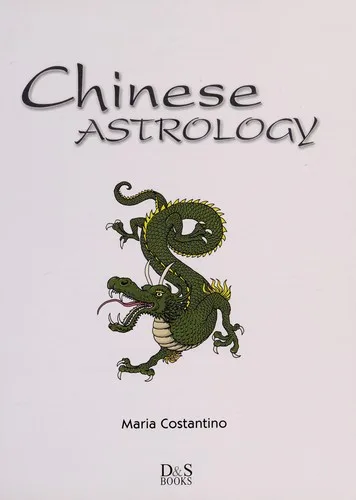
More Free Astrology & Cosmology Books
View all →