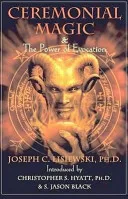
Ceremonial Magic and Power of Evocation
 76
76

Ceremonial Magic and Power of Evocation
Joseph C. Lisiewski's *Ceremonial Magic and Power of Evocation* tackles a subject often relegated to the shadowy fringes of occult literature. The work's strength lies in its systematic approach, moving beyond sensationalism to present evocation as a complex, structured discipline. Lisiewski meticulously unpacks the historical context, referencing seminal grimoires like the *Sworn Book of Honorius* and the *Lemegeton*, thereby grounding the practice in its literary lineage. A particularly compelling section details the necessary preparations and tools, offering a sober perspective on what the practice entails. However, the book's dense, scholarly tone, while commendable for its rigor, may prove challenging for novice practitioners seeking immediate, actionable spellcraft. The exploration of the specific nature of the entities themselves could also benefit from more varied interpretations beyond the purely hierarchical model. Despite this, for the dedicated student of ceremonial magic, Lisiewski provides a valuable, if demanding, resource that clarifies a frequently obscured aspect of Western esotericism.
📝 Description
76
Joseph C. Lisiewski's 2008 book examines the systematic invocation and command of spiritual entities.
This book details a specific, often misunderstood, branch of occult practice: the systematic invocation and command of spiritual entities. It moves beyond theoretical discussions to provide practical guidance on structuring and executing these rites. The work draws upon historical texts and contemporary understanding to illuminate the subject.
It is intended for serious students of Western esotericism, especially those interested in ceremonial magic and the historical development of grimoires. Practitioners seeking a deeper understanding of evocation, beyond sensationalist portrayals, will find it valuable. Researchers of occult history and comparative religion may also appreciate its scholarly approach to a complex subject.
The core principles involve understanding the nature of invoked entities, the magician's will and preparation, and the correct use of ritual tools and linguistic formulas. Concepts such as the magical circle, divine names, angelic hierarchies, and ethical considerations are demystified.
The practice of evocation detailed in this work has a lineage stretching back centuries, deeply embedded in the grimoire tradition. This tradition, which proliferated from the late medieval period onwards, includes significant texts like the Sworn Book of Honorius the Magician, the Greater Key of Solomon, and the Lemegeton. These works offer codified instructions for interacting with spiritual hierarchies, forming the historical backdrop for the methods discussed.
💡 Why Read This Book?
• Gain a structured understanding of evocation, moving beyond sensationalism to its historical and theoretical underpinnings, as explored in the discussion of grimoires like the *Greater Key of Solomon*. • Learn about the practical elements of ceremonial evocation, including the significance of the magical circle and divine names, as presented in the book's detailed methodology. • Appreciate the historical trajectory of evocation practices through its connection to foundational texts like the *Lemegeton*, offering a grounded perspective on its development since its early appearances.
⭐ Reader Reviews
Honest opinions from readers who have explored this book.
❓ Frequently Asked Questions
What is the primary focus of 'Ceremonial Magic and Power of Evocation'?
The book focuses on the systematic invocation and command of spiritual entities within ceremonial magic. It delves into the historical grimoires that document these practices and outlines the methodologies involved in performing such rites.
Which historical magical texts are referenced in Joseph C. Lisiewski's book?
The work references several key grimoires, including the *Sworn Book of Honorius the Magician*, the *Greater Key of Solomon*, the *Goetia*, the *Grand Grimoire*, and the *Lemegeton*.
Is this book suitable for beginners in occult studies?
While it provides foundational context, the book's detailed and scholarly approach makes it more suitable for serious students of ceremonial magic and esoteric history who are looking for in-depth understanding rather than introductory concepts.
What does the book say about the magician's preparation for evocation?
It emphasizes the importance of the magician's mental, spiritual, and physical preparation, alongside the correct use of ritual tools, symbolic gestures, and specific linguistic formulas as crucial components of successful evocation.
When was 'Ceremonial Magic and Power of Evocation' first published?
The book was first published on October 1, 2008, making it a relatively modern examination of ancient magical practices.
Does the book explain the nature of the spiritual beings that can be evoked?
Yes, the work explores the hierarchical structures and perceived natures of the spiritual entities involved in evocation, drawing from historical grimoire traditions.
🔮 Key Themes & Symbolism
The Grimoire Tradition
This theme examines the foundational texts of ceremonial magic, particularly those dealing with evocation. Lisiewski traces the lineage from ancient magical papyri to more codified medieval and Renaissance grimoires such as the *Sworn Book of Honorius* and the *Greater Key of Solomon*. The book analyzes how these texts function as 'grammars of magic,' providing structured methodologies for interacting with spiritual entities, outlining specific rituals, tools, and incantations deemed necessary for the magician's success.
Methodology of Evocation
The core of the book lies in its detailed exposition of the practical steps involved in ceremonial evocation. This includes the construction and consecration of the magical circle, the preparation of the magician's mind and body, the correct use of divine names and sigils, and the precise formulation of conjurations and banishings. It presents these elements not as arbitrary rituals but as integral components of a coherent system designed to establish control and communication with invoked intelligences.
Spiritual Hierarchy and Entity Nature
Lisiewski examines the concepts of spiritual hierarchies as presented in the grimoires. The work explores the classification of spirits—often categorized into angels, demons, and other classes—and the perceived nature of these entities. Understanding these classifications is presented as crucial for the magician to properly address, command, or petition them, ensuring the operation is conducted within a framework of spiritual order and intent.
The Magician's Will and Authority
A critical aspect discussed is the magician's role and the power of their will. The book emphasizes that effective evocation relies heavily on the magician's focused intent, inner authority, and spiritual preparation. It suggests that the magician draws power not only from external divine names or seals but also from their own cultivated will and spiritual connection, which enables them to direct and command the evoked entities.
💬 Memorable Quotes
Direct passages from the work, attributed to the author.
“For centuries, the ceremonial evocation of spiritual beings has been Magic's darkest corner.”
— This statement highlights the often-secretive and misunderstood nature of evocation within the broader field of magic, suggesting it has been a subject of both fascination and fear due to its perceived power and potential dangers.
“Reputed to fulfil the Magician's material desires, evocation has been the topic of the most famous Grimoires.”
— This points to a primary motivation historically attributed to practitioners of evocation: the acquisition of worldly benefits. It links this desire directly to the content and focus of significant magical texts, the grimoires.
“From the Sworn Book of Honorius the Magician, to the Greater Key of Solomon and the Goetia; from the Grand Grimoire, to the complete treatise of the Lemegeton, all give direct, yet difficult, directions...”
— This highlights the specific historical sources that Lisiewski engages with, emphasizing their importance as canonical texts for understanding evocation and noting the challenging nature of the instructions they contain.
“...to the individual desiring to have the 'good life' in the here-and-now.”
— This phrase captures the ultimate goal often associated with the practice of evocation as described in historical magical literature: the attainment of prosperity and well-being in the current material existence.
“The Grammars of Magic.”
— This evocative description of grimoires suggests they are not merely collections of spells but fundamental instructional texts that teach the underlying principles and structures of magical operations, akin to how grammar teaches the structure of language.
🌙 Esoteric Significance
Tradition
This work sits squarely within the Western Esoteric Tradition, specifically focusing on the ceremonial magic lineage that draws heavily from Hermeticism, Kabbalah, and Renaissance magical philosophy. It engages directly with the grimoire tradition, a significant subset of ceremonial magic that systematized the invocation and command of spiritual entities. Lisiewski's approach attempts to clarify and structure these practices, departing from purely historical or anecdotal accounts to offer a more systematic interpretation of their underlying principles.
Symbolism
Key symbols explored include the magical circle, which represents a consecrated space, a microcosm of the universe, and a protective boundary between the magician and the evoked entity. Divine names, such as those of God or angels, are treated as potent keys to authority and communication, acting as spiritual signatures that compel obedience. The use of specific tools like the wand, sword, and pentacle also carries symbolic weight, representing aspects of the magician's will, power, and connection to different spiritual forces.
Modern Relevance
Contemporary practitioners of ceremonial magic, particularly those interested in the Goetia or Solomonic magic, find Lisiewski's work a valuable resource for understanding the historical framework and theoretical underpinnings of their practice. Thinkers within the burgeoning field of modern occult scholarship also draw upon such detailed analyses to contextualize the evolution of esoteric thought and practice, bridging the gap between historical texts and contemporary magical theory.
👥 Who Should Read This Book
• Students of Western Esotericism: Those seeking to understand the historical development and practical application of ceremonial magic, with a specific interest in the grimoire tradition. • Occult Historians and Researchers: Individuals studying the evolution of magical beliefs and practices, who require detailed analysis of primary texts like the *Lemegeton* and the *Greater Key of Solomon*. • Advanced Magical Practitioners: Magicians who have moved beyond introductory texts and wish to deepen their knowledge of evocation, its theoretical basis, and its historical methodologies.
📜 Historical Context
Published in 2008, Joseph C. Lisiewski's *Ceremonial Magic and Power of Evocation* arrives in an era of renewed interest in esoteric traditions, yet it grounds itself firmly in historical scholarship. The work's subject matter, evocation, has a lineage stretching back to antiquity, but its codified form is most strongly associated with the proliferation of grimoires from the late medieval period through the Renaissance and beyond. Lisiewski engages with canonical texts such as the *Sworn Book of Honorius the Magician* (likely compiled in the 15th century) and the *Lemegeton* (parts of which date to the 17th century, with influences much older). These texts emerged during periods of intense intellectual and religious ferment, where magical and alchemical thought often coexisted with scholasticism and emerging scientific inquiry. While figures like Agrippa were formalizing Hermeticism, grimoire authors were developing practical systems for spiritual interaction. The reception of such works has historically been fraught, often suppressed by religious authorities or dismissed as mere superstition, yet they have persisted as vital sources for practitioners.
📔 Journal Prompts
The concept of the 'Grammars of Magic' as applied to grimoires.
The specific preparation required for the magician before undertaking an evocation.
The role of divine names in the structure of ceremonial evocation.
Historical differences between the *Goetia* and other grimoires discussed.
Personal reflections on the concept of 'difficult directions' in magical texts.
🗂️ Glossary
Evocation
A branch of ceremonial magic focused on the summoning and commanding of spiritual entities, typically within a defined ritual space, with the aim of communication or instruction.
Grimoire
A textbook of magic, typically containing instructions on how to create magical objects, perform rituals, cast spells, and summon spirits. Key examples include the *Greater Key of Solomon* and the *Lemegeton*.
Magical Circle
A consecrated space created through ritual, used in ceremonial magic as a locus of power, protection, and a boundary between the magician and the external world or evoked entities.
Lemegeton
A 17th-century grimoire, also known as the Lesser Key of Solomon, famous for its five books, the first of which, *Ars Goetia*, details 72 demons and their seals.
Goetia
The first book of the Lemegeton, focusing on the evocation of 72 demons, detailing their names, ranks, appearances, and the seals used to compel them.
Conjuration
A formal invocation or summoning, typically a magical formula used to call forth a spirit or deity, often with an element of command or entreaty.
Divine Names
Specific names attributed to God, angels, or other spiritual powers, used in ceremonial magic for their perceived inherent power to influence or command spiritual beings.