Centering
 83
83

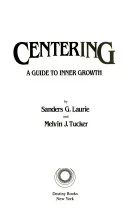
Centering
Laurie and Tucker's 'Centering' offers a refreshingly direct manual for achieving mental quietude, a welcome departure from the often-verbose spiritual literature of its time. The strength lies in its no-nonsense, almost therapeutic approach, presenting techniques with a clarity that feels both practical and profound. For instance, their explication of 'energetic hygiene' provides a tangible framework for understanding and managing psychic residue, a concept often left nebulous. However, the work occasionally leans towards a somewhat prescriptive tone, which, while effective for instruction, might feel limiting to readers accustomed to more open-ended philosophical inquiry. The 1983 publication date is evident in its framing, yet the core message remains potent. It is a solid guide for those seeking to anchor themselves amidst chaos.
📝 Description
83
Published in 1983, 'Centering' by Laurie and Tucker offers a method for inner stillness.
Sanders G. Laurie and Melvin J. Tucker wrote 'Centering' in 1983, presenting a structured method for achieving mental quiet and inner balance. The book aims to help readers filter out the distractions of modern life and find a connection to their essential selves. It is for people looking for concrete ways to reduce stress, increase self-understanding, and build a more balanced life. Those interested in meditation, mental health, and using less common philosophical ideas in their daily routines will find value here.
The book emerged during the early 1980s, a time when interest in self-improvement and complete well-being grew, aligning with a rising New Age movement. It gave readers simple techniques that were different from strict, older spiritual paths. Instead, it concentrated on inner feelings that anyone could access through practice. The authors' goal was to provide tools for personal stability, independent of outside events.
This work fits within the broader Western esoteric tradition, particularly its modern expressions focused on individual consciousness and psychological integration. While not tied to a specific historical lineage like Kabbalah or Hermeticism, it shares the esoteric aim of direct experience and internal transformation. Its focus on 'energetic hygiene' and the 'observer self' echoes themes found in various mind-body disciplines and consciousness studies that gained traction in the late 20th century, seeking practical methods for personal growth outside mainstream religious or psychological frameworks.
💡 Why Read This Book?
• Gain practical, repeatable methods for achieving mental stillness, as outlined in the book's specific exercises for cultivating the 'observer self.' • Develop a tangible understanding of 'energetic hygiene' to actively manage your psychological environment, a concept detailed through practical applications. • Learn to identify and strengthen your 'inner locus of control,' a core principle discussed throughout the text, to foster resilience against external pressures.
⭐ Reader Reviews
Honest opinions from readers who have explored this book.
❓ Frequently Asked Questions
When was 'Centering' by Sanders G. Laurie and Melvin J. Tucker first published?
'Centering' was first published in 1983, placing it within the early wave of popular esoteric and self-help literature focusing on inner development.
What is the primary goal of the techniques presented in 'Centering'?
The primary goal is to help readers achieve a state of inner equilibrium and mental stillness, fostering greater self-awareness and reducing the impact of external stressors.
Does 'Centering' require adherence to a specific spiritual or religious belief system?
No, 'Centering' emphasizes universal psychological principles and contemplative techniques, making it accessible regardless of one's specific religious or spiritual background.
What is meant by 'energetic hygiene' in the context of 'Centering'?
'Energetic hygiene' refers to practices designed to clear away negative psychic influences and maintain a balanced, clear inner state, akin to personal cleanliness.
Is 'Centering' suitable for beginners in esoteric studies?
Yes, its clear, systematic approach and focus on practical application make it highly suitable for beginners seeking to understand foundational concepts of inner work.
How does 'Centering' differ from other mindfulness or meditation guides?
While sharing common ground, 'Centering' integrates esoteric concepts and focuses on cultivating an 'observer self' as a distinct psychological tool for stability.
🔮 Key Themes & Symbolism
Cultivating the Observer Self
A central theme is the development of the 'observer self,' an aspect of consciousness capable of witnessing thoughts and emotions without identification. This disidentification is presented as the key to transcending reactive patterns and achieving stable inner peace. The book guides readers to differentiate between the active, egoic mind and the passive, witnessing awareness, fostering a more detached and objective perspective on personal experiences.
Inner Locus of Control
The work strongly advocates for an 'inner locus of control,' positing that true stability and well-being stem from internal resources rather than external validation or circumstances. It challenges the common tendency to attribute success or failure to outside factors, encouraging readers to recognize their agency in shaping their internal world. This concept is explored through exercises designed to build self-reliance and internal resilience.
Energetic Hygiene
Laurie and Tucker introduce 'energetic hygiene' as a method for maintaining one's psychic and emotional equilibrium. This involves practices to cleanse oneself of residual energies from interactions or environments, preventing psychic 'clutter' that can lead to unease or distraction. The book provides actionable steps for this daily practice, framing it as essential for clear thinking and emotional stability.
The Practice of Stillness
Fundamentally, , 'Centering' is a guide to the practice of stillness, not merely as a passive state but as an active cultivation of inner quiet. It details methods to systematically reduce mental chatter and achieve a state of profound calm. This stillness is presented as the fertile ground from which clarity, insight, and a true sense of self can emerge.
💬 Memorable Quotes
Direct passages from the work, attributed to the author.
“True stability is found not in changing the world, but in anchoring the self.”
— This highlights the book's core philosophy: that external circumstances are volatile and unreliable sources of peace. Lasting equilibrium is achieved by developing internal resilience and self-possession.
“Observe the thought, do not become the thought.”
— This captures the practice of cultivating the 'observer self.' It's an instruction to recognize thoughts as transient mental events rather than absolute truths or personal identities.
“The mind's noise is often a defense against deeper silence.”
— This suggests that constant mental activity can be an unconscious avoidance mechanism. True centering involves confronting and moving through this internal noise to access a more profound state of being.
“Seek your center, for it is the only true constant.”
— This speaks to the search for an unchanging core within oneself, independent of fluctuating external conditions or internal emotional states. It's a call to discover and rely on one's essential self.
💡 Key Ideas
Editorial paraphrase of the work's core concepts — not direct quotes.
Daily psychic cleansing is as vital as physical hygiene.
This paraphrase emphasizes the concept of 'energetic hygiene,' equating the importance of maintaining a clear, unburdened psychic space with the necessity of physical cleanliness for overall health.
🌙 Esoteric Significance
Tradition
While not strictly adhering to a single named tradition like Kabbalah or Gnosticism, 'Centering' draws heavily from perennialist philosophies and psychological introspection common in Western esotericism. It echoes principles found in practical contemplative disciplines and modern psychological approaches to self-awareness, bridging the gap between ancient wisdom on mind control and contemporary self-help. Its emphasis on internal states aligns with traditions focused on the transformation of consciousness through disciplined practice.
Symbolism
The concept of the 'center' itself functions as a primary symbol, representing an unshakeable core of being or consciousness. The 'observer self' can be seen as a symbolic representation of the higher self or pure awareness, distinct from the transient personality. 'Energetic hygiene' uses the metaphor of cleansing and protection to denote the maintenance of psychic boundaries and internal purity, essential for spiritual progress.
Modern Relevance
Contemporary practices in mindfulness, cognitive behavioral therapy (CBT), and even certain fields of positive psychology show traces of 'Centering's' principles. The emphasis on observer awareness and managing internal states is highly relevant to modern stress-reduction techniques and mental wellness strategies. Thinkers and practitioners focusing on applied consciousness, energy psychology, and secularized contemplative practices often find the book's systematic approach to inner quietude prescient.
👥 Who Should Read This Book
• Individuals seeking practical, non-dogmatic methods for managing stress and anxiety, particularly those interested in psychological grounding techniques. • Students of comparative spirituality and consciousness studies looking to understand the evolution of self-help and esoteric thought in the late 20th century. • Practitioners of meditation or mindfulness who wish to deepen their practice by integrating concepts like the 'observer self' and 'energetic hygiene.'
📜 Historical Context
Published in 1983, 'Centering' emerged during a period of burgeoning interest in human potential and self-improvement, a counterpoint to the more rigid, institutionalized spiritual paths prevalent in earlier decades. The New Age movement was gaining momentum, and books offering practical, accessible techniques for inner peace and psychological well-being found a receptive audience. This era saw a diversification of spiritual inquiry, with individuals seeking methods that could be integrated into secular life. While figures like Werner Erhard with EST were popularizing group psychological experiences, Sanders G. Laurie and Melvin J. Tucker offered a more introspective, technique-driven approach. The book's focus on cultivating an 'inner locus of control' and 'energetic hygiene' reflected a growing awareness of psychological dynamics and subtle energy concepts, distinct from the more overtly mystical traditions. Its reception was generally positive among those seeking practical tools for personal development, fitting into a landscape where authors like Shakti Gawain and Elisabeth Kübler-Ross were also exploring consciousness and healing.
📔 Journal Prompts
Reflect on the concept of the 'observer self' and identify one recurring thought pattern you observed without judgment.
Analyze your current 'inner locus of control': to what extent do you attribute outcomes to internal versus external factors?
Describe a recent instance where practicing 'energetic hygiene' could have benefited your emotional state.
Explore the nature of mental 'noise' in your own experience; what does it seem to be defending against?
Consider what 'centering' means to you personally, beyond the book's definitions, and how you might cultivate it.
🗂️ Glossary
Observer Self
A state of consciousness that witnesses thoughts, emotions, and sensations without identifying with them, allowing for detachment and clarity.
Inner Locus of Control
The belief that one's own actions and internal states are the primary determinants of life events and outcomes, rather than external forces.
Energetic Hygiene
Practices aimed at maintaining psychic and emotional clarity by clearing away residual or intrusive energies from the personal environment and mind.
Centering
The process of achieving a stable, balanced, and quiet inner state, connecting with one's core essence or true self.
Psychic Residue
Lingering emotional or mental impressions left behind by intense experiences, interactions, or environments.
Mental Noise
The constant stream of distracting thoughts, worries, and internal chatter that prevents mental stillness and clarity.
Equilibrium
A state of inner balance and stability, particularly in response to internal or external disturbances.
This book appears in 1 collection
🔮 Readers Also Liked
Browse all →









From the “Aura Cleansing” Collection
View all →







More Free Occult Philosophy Books
View all →