Camera
 80
80

Camera
Liffner's "Camera" presents a compelling, if sometimes elusive, exploration of how perception shapes reality. The strength of the novel lies in its atmospheric prose and its ability to evoke a sense of underlying mystery without resorting to overt supernaturalism. A particular passage where a character's intense scrutiny of an object seems to imbue it with a new, unsettling significance is a standout, illustrating the book's central thesis effectively. However, the narrative's deliberate ambiguity, while often effective, can also leave the reader feeling adrift, searching for a firmer narrative anchor. The characters, while serving their thematic purpose, occasionally feel more like conduits for ideas than fully realized individuals. Despite these reservations, "Camera" offers a unique literary meditation on the power of the focused gaze. It is a work that rewards patient readers with its subtle, introspective depth.
📝 Description
80
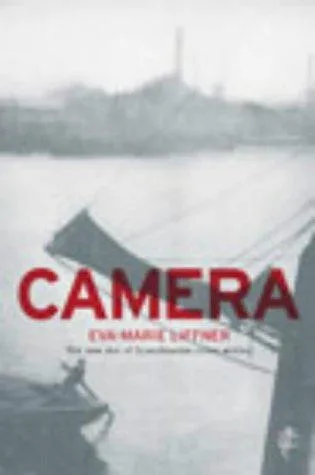
Eva-Marie Liffner's 2011 novel Camera questions the nature of observation itself.
Eva-Marie Liffner's "Camera," published in 2011, is a novel that uses fiction to examine esoteric ideas. It does not instruct readers on occult practices, but rather tells a story. The book looks at how perception and reality might be affected by unseen forces. Through its characters and plot, Liffner makes abstract concepts more concrete. The narrative encourages readers to think about what it means to observe something and how that act can change our experiences.
This book is for readers who enjoy literature that includes philosophical and mystical questions. It appeals to those interested in using stories to explore complex or intangible subjects. People who like to contemplate consciousness, the nature of reality, and hidden aspects of existence will find "Camera" to be a good fit. It does not offer simple answers, but instead prompts further thought on these topics.
Published in 2011, "Camera" fits within a period where philosophical fiction and the connection between literature and spirituality saw increased attention. While not tied to a specific historical esoteric group, the novel reflects a contemporary trend in speculative fiction that challenges conventional views. This era included authors who wove the strange into everyday life, similar to Liffner's approach. The book's release occurred when the literary world was becoming more open to genre-bending works.
💡 Why Read This Book?
• Gain insight into the concept of the observer effect as a philosophical and narrative tool, as explored through specific character interactions in "Camera." • Experience how literary fiction can engage with esoteric ideas of intentionality and reality-shaping, particularly concerning the act of focusing attention as depicted in the book. • Discover a narrative that challenges conventional notions of sight and subjectivity, offering a unique perspective on how we construct our understanding of the world around us.
⭐ Reader Reviews
Honest opinions from readers who have explored this book.
❓ Frequently Asked Questions
When was Eva-Marie Liffner's 'Camera' first published?
Eva-Marie Liffner's 'Camera' was first published in 2011, placing it within the contemporary literary landscape of speculative and philosophical fiction.
What is the primary theme explored in 'Camera'?
The primary theme is the power of observation and perception in shaping reality, exploring how the act of focusing attention can influence what is observed.
Does 'Camera' offer practical esoteric guidance?
No, 'Camera' is a fictional work. It explores esoteric concepts through narrative and character rather than providing direct instruction or practical techniques.
What kind of literary style does 'Camera' employ?
The novel employs an atmospheric and subtly philosophical literary style, using narrative to evoke a sense of mystery and contemplation on abstract themes.
Who might appreciate 'Camera'?
Readers who enjoy literary fiction that integrates philosophical inquiry, speculative elements, and a contemplative tone, particularly those interested in the nature of consciousness and perception.
Is 'Camera' part of a specific esoteric tradition?
While engaging with esoteric themes, 'Camera' is not explicitly tied to a single tradition but rather draws on broader philosophical ideas about perception and consciousness.
🔮 Key Themes & Symbolism
The Observer Effect
The work looks at the philosophical implications of the observer effect, extending it beyond quantum physics into the field of everyday perception. It suggests that the intensity and nature of one's gaze can actively alter or imbue the observed subject with a distinct quality, whether that subject is an object, a person, or even an abstract concept. This theme questions the objectivity of reality, proposing that our focused attention plays a central role in manifesting or understanding existence. The narrative uses specific instances to illustrate how prolonged observation can lead to a perceived transformation or revelation.
Subjectivity of Reality
Central to 'Camera' is the exploration of how individual consciousness and subjective experience construct our understanding of the world. Liffner's narrative implies that there is no singular, objective reality, but rather a multitude of realities shaped by the perceiver. The act of viewing, particularly through a literal or metaphorical camera lens, becomes a powerful metaphor for this subjective filtering process. The book encourages readers to question their own perceptions and consider how their internal states might be projecting onto their external environment, blurring the lines between the internal and external worlds.
Intentionality and Manifestation
The novel touches upon the idea that focused intention, channeled through observation, can have a tangible effect on outcomes. It hints at a subtle form of manifestation, where the act of deeply engaging with something, of 'seeing' it with purpose, can influence its nature or trajectory. This is not presented as magic in a conventional sense, but as a consequence of concentrated consciousness. The characters' desires and obsessions, when focused, seem to exert an influence, suggesting that what we truly direct our attention towards can, in subtle ways, come into being or become more potent.
The Nature of Seeing
Beyond mere visual perception, 'Camera' examines the deeper act of 'seeing' – understanding, comprehending, and recognizing. The narrative explores the difference between superficial observation and profound engagement. It suggests that true seeing involves a transference, a connection, and potentially a transformation for both the seer and the seen. The book uses the metaphor of the camera to explore the limits and possibilities of human sight, questioning what remains unseen or unacknowledged when we look without truly perceiving. This theme invites introspection on how we engage with the world.
💬 Memorable Quotes
Direct passages from the work, attributed to the author.
“The lens does not just capture; it imbues.”
— This concise statement expresses a core idea: that the act of observation, particularly mediated by a tool like a camera, is not passive. It suggests that the focused attention and intention behind the lens actively contribute to the essence or perceived reality of the subject.
“The stillness of the subject was a reflection of the stillness of the observer.”
— This concept suggests a profound interconnectedness between the observer and the observed. It posits that the state of the subject being perceived is not independent but can be a direct mirror of the observer's own inner condition or state of focus.
“What is captured is not the thing itself, but the moment of its capture.”
— This interpretation underscores the ephemeral and subjective nature of recorded experience. It argues that a photograph or any act of observation freezes not an objective truth, but the specific, transient context and perspective of the act of recording itself.
💡 Key Ideas
Editorial paraphrase of the work's core concepts — not direct quotes.
We see what we are prepared to see.
This paraphrase highlights the theme of subjective reality. It implies that our existing beliefs, experiences, and internal states act as filters, predisposing us to perceive certain aspects of the world while remaining blind to others, thus shaping our personal reality.
Reality bends to the shape of sustained attention.
This paraphrased idea speaks to the power of focused intention and consciousness. It suggests that prolonged and concentrated mental energy, directed towards a specific aspect of existence, can subtly influence or alter the nature of that reality.
🌙 Esoteric Significance
Tradition
While not explicitly adhering to a single esoteric lineage, "Camera" draws upon themes prevalent in Hermetic philosophy and Gnosticism, particularly concerning the nature of perception and the construction of reality. The idea that the material world is shaped by consciousness and that true knowledge comes from internal insight aligns with Gnostic principles of escaping illusion. The Hermetic emphasis on 'As Above, So Below' can be seen reflected in the interconnectedness between the observer and the observed. Liffner's work departs from rigid doctrine, instead using narrative to explore these concepts in a contemporary, secularized context, focusing on the psychological and philosophical dimensions.
Symbolism
The central symbol is, unsurprisingly, the camera itself, representing not just a tool for recording images but a metaphor for focused attention, the act of observation, and the subjective framing of reality. Another recurring motif is the 'gaze' or 'look,' symbolizing intentionality and the power of consciousness to influence or perceive deeply. The concept of 'reflection' also appears, hinting at the mirroring between the internal world of the observer and the external world being observed, suggesting a feedback loop where perception shapes reality and vice-versa.
Modern Relevance
Contemporary practitioners of mindfulness and contemplative practices might find resonance in "Camera's" exploration of focused attention and its potential effects. Thinkers in consciousness studies and those exploring the philosophical implications of quantum mechanics' observer effect could see literary parallels to their research. Furthermore, the novel's engagement with subjective reality and the construction of personal experience speaks to current discourse in psychology and philosophy of mind, making it relevant to anyone questioning the nature of objective truth in an increasingly mediated world.
👥 Who Should Read This Book
• Readers interested in literary fiction that engages with philosophical concepts of perception and consciousness, seeking a narrative that prompts introspection rather than providing definitive answers. • Students and enthusiasts of comparative literature and philosophy, particularly those exploring how abstract ideas like the observer effect and subjective reality are translated into fictional forms. • Individuals drawn to works that subtly question the nature of objective truth and explore the power of focused attention, offering a contemplative reading experience beyond conventional genre boundaries.
📜 Historical Context
Published in 2011, Eva-Marie Liffner's "Camera" emerged in a literary climate increasingly open to fiction that blurred genre lines and explored philosophical or spiritual underpinnings. While not directly a product of a specific historical esoteric movement, it appeals to a broader contemporary interest in consciousness studies and the subjective nature of reality, themes explored by thinkers and artists globally. This period saw a continued influence of postmodernist thought, which questioned objective truth, and a growing public engagement with topics previously confined to niche circles. In the literary world, authors like Haruki Murakami were achieving widespread acclaim for narratives that integrated surrealism and introspection, creating a receptive audience for works like "Camera" that similarly probed the edges of perception. The novel's focus on the power of observation aligns with philosophical discussions that have roots stretching back to thinkers like Henri Bergson, though Liffner applies these ideas through a modern, fictional lens, engaging with the implications of media and focused attention in the 21st century.
📔 Journal Prompts
The camera's lens as a metaphor for intentional focus.
Instances where the observer's state seemed to influence the observed.
Reflecting on a time when your perception significantly altered your experience of a situation.
The distinction between seeing and truly perceiving a subject.
How sustained attention might shape your personal reality.
🗂️ Glossary
Observer Effect (Philosophical)
In the context of 'Camera,' this refers to the idea that the act of observing or paying focused attention to something can influence its nature, state, or perceived reality, extending beyond quantum physics to everyday experience.
Subjective Reality
The concept that reality is not a fixed, objective entity but is personally constructed and experienced through individual consciousness, beliefs, and perceptions.
Intentionality
The quality of consciousness by which it is directed towards or related to a particular object or state of affairs; in the book, the power of focused mental direction.
Gaze
A prolonged and fixed look. In the novel, it symbolizes intense focus, scrutiny, and the potential power inherent in directed observation.
Perception
The ability to see, hear, or become aware of something through the senses; in 'Camera,' this is explored as an active, interpretive process rather than passive reception.
Reflection
The imaging of an object in a mirror or on a shiny surface; metaphorically, it signifies the mirroring or interplay between an observer's inner state and the external world.
Framing
The way in which something is presented or described; in 'Camera,' this relates to how observation, like a photograph, selects and organizes reality according to a particular perspective.
🔮 Readers Also Liked
Browse all →









More Free Occult Philosophy Books
View all →