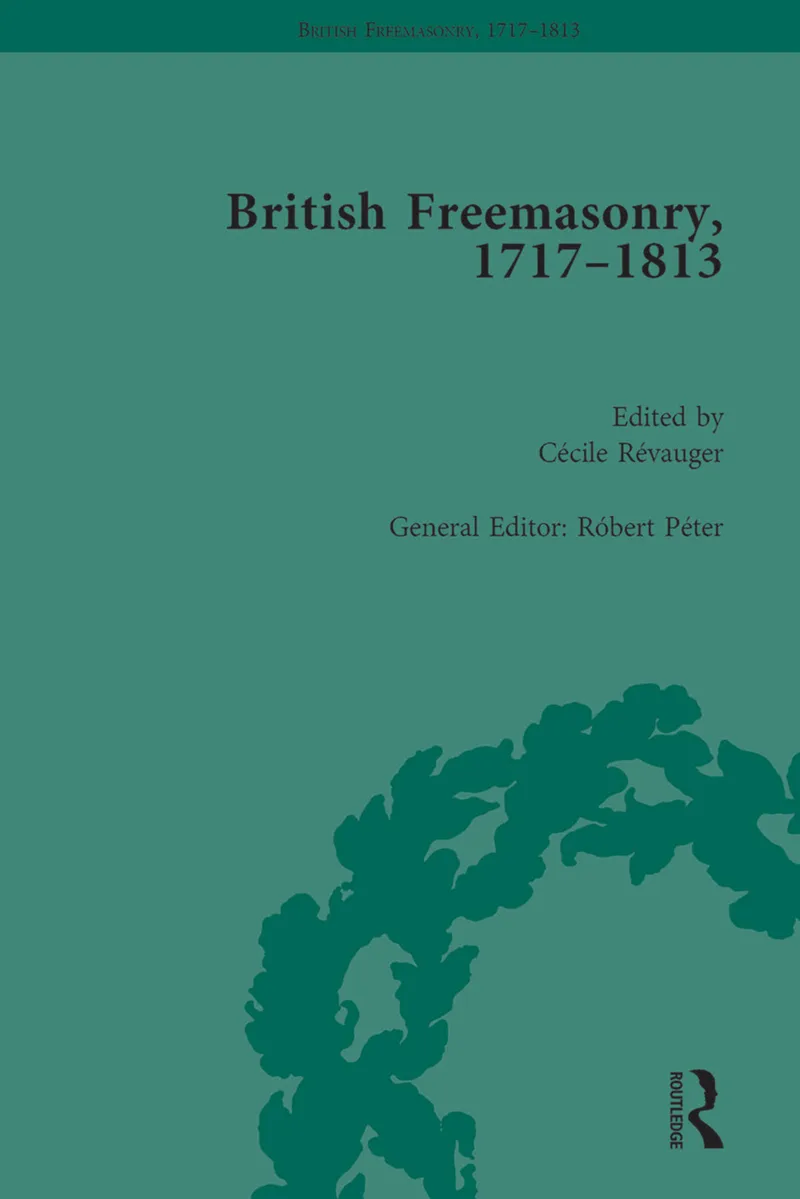
British Freemasonry, 1717-1813
 71
71

British Freemasonry, 1717-1813
Robert Peter's compilation, British Freemasonry, 1717-1813, offers an indispensable, albeit dense, primary resource for understanding the institutional and philosophical genesis of modern Freemasonry. The strength lies in its unadulterated presentation of documents, allowing direct engagement with the material that shaped the Craft's early decades. Particularly illuminating is the progression of various charges and regulations, demonstrating the move towards standardization. However, the work's reliance on raw documentation means it lacks interpretive guidance, which can be a barrier for those unfamiliar with the historical milieu. A significant passage detailing the debates surrounding the 1717 formation of the Grand Lodge highlights the internal discussions that set the stage for future developments. For dedicated researchers, this collection is invaluable; for the casual inquirer, it demands considerable prior knowledge.
This collection serves as a critical bedrock for understanding early modern Masonic development.
📝 Description
71
Robert Peter's collection presents primary sources from English Freemasonry's formative years, 1717-1813.
This volume gathers key documents from the period when Freemasonry in England coalesced into a structured institution. It begins with the establishment of the first Grand Lodge in 1717 and concludes with the 1813 union that formed the United Grand Lodge of England. Readers gain direct access to the rituals, rules, and letters that defined Masonic practice and thought during the Enlightenment. This is a valuable resource for anyone studying Western esotericism, secret societies, or the social role of fraternal groups. The collection is particularly useful for those interested in Enlightenment ideas, the development of Masonic ritual, and the societal functions of lodges during a time of significant change in Britain and its colonies.
The years covered were crucial for Freemasonry's growth from local assemblies to an internationally recognized organization. This era saw Enlightenment principles of reason, brotherhood, and personal growth integrated into Masonic teachings. The documents included allow for an understanding of how Masonic organizations both reflected and influenced the broader social and political shifts of the time. The book details the formalization of Masonic rites, the creation of lodge hierarchies, and the philosophical roots drawn from traditions like Hermeticism and Renaissance natural magic.
This collection situates English Freemasonry within the broader currents of Western esotericism during the Enlightenment. It highlights how Masonic practices absorbed and adapted elements from older esoteric traditions, such as Hermeticism and natural magic, blending them with the era's emphasis on reason and rational inquiry. The documents reveal how Masonic symbolism served as a means for moral and spiritual development, operating at the intersection of secret society traditions and the intellectual climate of the 18th century.
💡 Why Read This Book?
• Gain direct access to the foundational documents shaping organized Freemasonry between 1717 and 1813, allowing for an unmediated understanding of its early regulations and rituals. • Understand the Enlightenment's influence on fraternal organizations by examining primary sources that reveal how concepts of reason and fraternity were integrated into Masonic philosophy and practice. • Trace the evolution of Masonic structure leading to the formation of the United Grand Lodge of England in 1813, providing specific historical context for its institutional development.
⭐ Reader Reviews
Honest opinions from readers who have explored this book.
❓ Frequently Asked Questions
What primary source documents are included in British Freemasonry, 1717-1813?
The collection features early Masonic constitutions, rituals, regulations, minutes, and correspondence from the period, offering direct insight into the organization's formative years.
How does this book illuminate the Enlightenment's impact on Freemasonry?
It showcases how Masonic tenets absorbed Enlightenment ideals of reason, fraternity, and moral self-improvement, as evidenced in the philosophical underpinnings of early Masonic texts.
What is the significance of the United Grand Lodge of England's formation in 1813?
The 1813 union marked the culmination of a long process of consolidation detailed in the book, creating a unified governing body that solidified Freemasonry's structure.
Who would benefit most from reading British Freemasonry, 1717-1813?
Historians of secret societies, scholars of Western Esotericism, and researchers interested in the social and intellectual history of the 18th century would find this collection invaluable.
Does the book explain Masonic symbolism?
While primarily a collection of documents, the work implicitly reveals the symbolic language used for moral and philosophical instruction during Freemasonry's early development.
Is this book suitable for someone new to Freemasonry studies?
It is best suited for those with some existing knowledge of Masonic history or the Enlightenment, as it presents primary sources rather than introductory explanations.
🔮 Key Themes & Symbolism
Codification of Ritual
This collection meticulously documents the transition of Freemasonry from informal gatherings to a structured institution. It presents early versions of Masonic rituals and regulations, illustrating the careful work undertaken to standardize practices and ensure uniformity across lodges. The texts reveal a deliberate effort to codify ceremonies and teachings, reflecting a desire for order and clarity during a period of rapid organizational growth and philosophical development.
Enlightenment Influence
The influence of Enlightenment thought is palpable throughout these documents. The emphasis on reason, morality, and self-improvement, central to the era's intellectual currents, is woven into the fabric of early Masonic discourse. The collection provides evidence of how Masonic lodges served as spaces for the dissemination and practice of these ideals, contributing to the social and philosophical range of 18th-century Britain.
Formation of Grand Lodge
Central to this period is the institutional evolution culminating in the formation of the United Grand Lodge of England in 1813. The documents trace the steps, debates, and foundational moments leading to this significant unification. It charts the challenges and resolutions involved in consolidating disparate Masonic bodies into a single, coherent organization, highlighting the political and social dynamics at play.
Esoteric Underpinnings
Beneath the surface of social fraternity and moral instruction, the collection hints at the deeper esoteric currents informing early Freemasonry. While not explicitly occult in all presented texts, the symbolism and allegorical frameworks draw from older traditions, including Hermeticism and natural philosophy. The work offers glimpses into how these traditions were adapted and transmitted within the evolving Masonic structure.
💬 Memorable Quotes
Direct passages from the work, attributed to the author.
“Masonic regulations evolved to standardize practices across lodges.”
— This concept underscores the deliberate process of creating rules and guidelines that ensured consistency in rituals and operations, a key factor in Freemasonry's growth and influence.
“The period saw the integration of Enlightenment ideals into Masonic teachings.”
— This captures the intellectual fusion, illustrating how the rational and moral philosophies of the Enlightenment era became embedded within the symbolic and instructional framework of Freemasonry.
“The union forming the United Grand Lodge of England occurred in 1813.”
— This factual statement pinpoints the year of a major consolidation event, representing the culmination of the organizational developments chronicled throughout the book's timeframe.
“Early Masonic documents reveal a tension between esoteric traditions and rationalism.”
— This interpretation points to the complex intellectual landscape within early Freemasonry, showing how older mystical or symbolic systems interacted with the emerging emphasis on logic and empirical observation.
💡 Key Ideas
Editorial paraphrase of the work's core concepts — not direct quotes.
The 1717 formation of the Grand Lodge marked a significant step towards organized fraternity.
This paraphrase highlights the key year of 1717, emphasizing the organizational shift from scattered groups to a more formalized structure that would define Freemasonry's future trajectory.
🌙 Esoteric Significance
Tradition
This work is central to the study of Western Esotericism, specifically tracing the development of modern Freemasonry within the broader Hermetic and Renaissance magical lineage. It demonstrates how these older esoteric traditions were adapted, secularized, and reinterpreted through the lens of Enlightenment rationalism. The collection shows Freemasonry acting as a conduit, preserving and transmitting symbolic knowledge while simultaneously engaging with contemporary philosophical currents.
Symbolism
The collection implicitly explores symbols such as the square and compasses, which represent moral rectitude and the limits of human understanding, respectively. The concept of the 'temple' itself functions symbolically, representing the ideal spiritual or moral structure being built by the individual Mason. The hierarchical degrees also symbolize stages of spiritual progression and the unfolding of hidden knowledge, drawing on ancient mystery traditions.
Modern Relevance
Contemporary practitioners of esoteric traditions, particularly those involved in various Masonic Rites and Hermetic orders, continue to draw upon the historical and philosophical foundations documented in this period. Scholars researching the origins of occult revival movements in the 19th century and modern comparative religion studies find crucial context here for understanding how esoteric ideas were institutionalized and disseminated.
👥 Who Should Read This Book
• Students of Western Esotericism and Hermeticism seeking to understand the historical roots of modern Masonic ritual and philosophy. • Historians of 18th-century Britain interested in the social and cultural impact of fraternal organizations during the Enlightenment. • Researchers of secret societies and comparative religion looking for primary source material on the development of organized lodge systems.
📜 Historical Context
The period between 1717 and 1813 was transformative for Freemasonry, moving it from a collection of disparate guilds to a structured, influential social institution. This era coincided with the height of the Enlightenment, a movement emphasizing reason, empirical observation, and individual liberty. Masonic lodges became key sites where these Enlightenment ideals, alongside older Hermetic and Kabbalistic traditions, were debated and integrated into a unique system of moral and philosophical instruction. The establishment of the first Grand Lodge in London in 1717 was a critical step towards standardization. Contemporary thinkers like Jean-Jacques Rousseau, while not Masons, explored similar themes of social contract and natural rights, reflecting the broader intellectual ferment. Reception of Freemasonry was varied, often met with suspicion by religious authorities who viewed its secrecy and rituals as potentially subversive, leading to papal bulls and condemnations, yet it also gained significant traction among the aristocracy and burgeoning middle classes.
📔 Journal Prompts
The codification of Masonic ritual during this era.
The integration of Enlightenment ideals into Masonic teachings.
The significance of the United Grand Lodge of England's formation in 1813.
The tension between esoteric traditions and rationalism in early Freemasonry.
The role of symbolism in early Masonic moral instruction.
🗂️ Glossary
Grand Lodge
The governing body of Freemasonry, established to oversee lodges, standardize rituals, and regulate the Craft within a specific jurisdiction. The formation of the premier Grand Lodge in 1717 was a key organizational step.
Enlightenment
An 18th-century intellectual and cultural movement emphasizing reason, individualism, skepticism, and science. Its influence is seen in Masonic ideals of moral progress and rational inquiry.
Hermeticism
A philosophical and religious tradition based on writings attributed to Hermes Trismegistus, emphasizing esoteric knowledge, alchemy, and divine wisdom. It influenced early Masonic symbolism and cosmology.
Ritual
The prescribed form or order of ceremonies used in Masonic lodges, designed to convey moral lessons and symbolic meanings through dramatic representation and allegory.
United Grand Lodge of England
The modern governing Masonic body formed in 1813 by the union of two older rival Grand Lodges, representing a significant consolidation in British Freemasonry.
Primary Source
Original documents or artifacts from the period under study, offering direct evidence of historical events, thoughts, or conditions, such as the constitutions and minutes included in this collection.
Fraternity
A brotherhood or association of men, particularly concerning Freemasonry's emphasis on fellowship, mutual support, and shared moral principles.