Beast Behaving Badly

 72
72

Beast Behaving Badly
Laurenston's "Beast Behaving Badly" offers a solid entry into the shifter subgenre, presenting a world where the animalistic side is a source of both power and profound internal struggle. The strength of the novel lies in its commitment to exploring the psychological toll of this duality; the characters don't just transform, they wrestle with the implications of their primal urges on their relationships and sense of self. A particular passage, describing the involuntary twitch of a tail under stress, effectively grounds the fantastical element in a tangible, visceral reaction that speaks volumes about suppressed instinct. However, the plot occasionally feels secondary to the character work, leading to pacing issues in the middle sections. While the exploration of pack dynamics and loyalty is well-executed, the central conflict resolution felt somewhat abrupt. Despite this, the novel succeeds in its character-focused approach, making the internal battles as significant as any external threat.
📝 Description
72
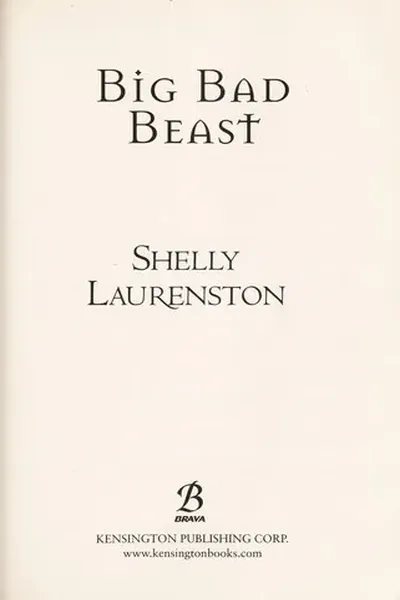
Shelly Laurenston's 2010 novel, Beast Behaving Badly, examines the struggle of shapeshifters with their animalistic natures.
Beast Behaving Badly, published in 2010, centers on characters who wrestle with their animal instincts. This narrative, common in urban fantasy, emphasizes the internal conflict and external pressures these beings face. Laurenston's work addresses the difficulties of maintaining control over primal urges while managing relationships and outside dangers. The book considers that identity is not purely human but a combination of instinct and conscious choice.
This novel appeals to readers who enjoy shifter stories that look at the more difficult sides of transformation. Those who like character-focused paranormal romance will find Laurenston's examination of inner conflict engaging. It is especially suited for readers interested in the psychological effects of being a supernatural creature, rather than just action or romance. Readers looking for a thoughtful look at the beast within and how it fits into a person's identity will likely connect with its core ideas.
Published in 2010, Beast Behaving Badly arrived during a fertile period for paranormal romance and urban fantasy. Authors like Charlaine Harris and Patricia Briggs had already shaped popular approaches to shifter narratives. Laurenston's novel adds to this tradition by concentrating on the inherent difficulties of possessing a dual nature. The appeal of such books often lay in their exploration of otherness and belonging, using supernatural metaphors to question societal norms.
💡 Why Read This Book?
• Gain insight into the psychological weight of dual identity, specifically how the 'beast' within is explored as an integral part of self, not just an external threat. • Understand the societal pressures and internal conflicts faced by shifter communities as depicted in the book, offering a nuanced perspective beyond simple romance. • Appreciate the detailed portrayal of pack dynamics and the concept of inherited traits, as seen through the specific challenges faced by characters in "Beast Behaving Badly."
⭐ Reader Reviews
Honest opinions from readers who have explored this book.
❓ Frequently Asked Questions
What is the main theme of "Beast Behaving Badly"?
The primary theme is the internal conflict and integration of one's primal, "beastly" nature with their human identity, and the societal implications of this duality for shifter communities.
Who is the author of "Beast Behaving Badly"?
The author is Shelly Laurenston, known for her work in paranormal romance and urban fantasy, with this book first published in 2010.
What genre does "Beast Behaving Badly" belong to?
It falls under the paranormal romance and urban fantasy genres, with a strong focus on shifter lore and the psychological aspects of transformation.
Are there specific shifter types mentioned in the book?
While the book focuses on the general concept of shifters and their inherent struggles, specific animal types are often detailed within the narrative of their respective characters.
Does the book explore pack dynamics?
Yes, "Beast Behaving Badly" extensively explores pack dynamics, loyalty, and the social structures that govern shifter communities, making it a key element of the plot.
When was "Beast Behaving Badly" originally published?
The book was first published in 2010, placing it within a significant period of growth for the paranormal romance genre.
🔮 Key Themes & Symbolism
The Beast Within
This theme centers on the inherent animalistic nature of shifters, presenting it not just as a physical transformation but as a core component of their identity. The work explores the constant tension between human consciousness and primal instinct, detailing the internal battles characters face to maintain control and self-awareness. It examines how this duality impacts their relationships, societal integration, and personal sense of self, suggesting that true strength lies in acknowledging and integrating, rather than suppressing, this primal aspect.
Pack Dynamics and Loyalty
The book studies the complex social structures of shifter packs, emphasizing loyalty, hierarchy, and the rules that govern their communities. It showcases how pack affiliation provides a sense of belonging and protection but also imposes significant obligations and restrictions. The narrative explores instances where personal desires clash with pack duties, and how betrayal or adherence to tradition shapes individual destinies. This theme highlights the critical role of community in the lives of supernatural beings.
Identity and Otherness
"Beast Behaving Badly" scrutinizes the concept of identity when one is fundamentally different from the majority human population. Characters grapple with feeling like 'other,' struggling to find acceptance both within their own kind and from the human world. The work questions what constitutes true identity – is it defined by one's lineage, one's actions, or one's ability to bridge the gap between disparate natures? It suggests that embracing one's complex identity is key to self-realization.
Inherited Traits and Lineage
The influence of ancestry and inherited characteristics plays a significant role. Characters often bear the weight of their family's history, with certain traits, reputations, or destinies being passed down through generations. This theme explores the burden and sometimes the unexpected advantages of lineage, and whether individuals are bound by their bloodline or capable of forging their own path. It examines how past actions of ancestors can directly impact the present-day lives of their descendants.
💬 Memorable Quotes
Direct passages from the work, attributed to the author.
“The pack rules were clear, etched into generations of survival.”
— This highlights the deep-seated traditions and societal structures that govern shifter communities, emphasizing the long history and importance of their established laws for continuity.
“She felt the shift begin not in her bones, but in her very thoughts.”
— This interpretation suggests that the transformation is not solely a physical event but also a profound mental and emotional one, indicating the deep integration of the 'beast' into the character's psyche.
“He tasted the fear on the air, a primal signal he couldn't ignore.”
— This illustrates the heightened senses and instinctual awareness of shifters, where environmental cues like fear are perceived as potent, almost physical, stimuli.
“To be known was to be vulnerable, especially for those with a beast inside.”
— This reflects the societal prejudice and inherent danger faced by shifters, where revealing their true nature makes them targets, underscoring the theme of otherness and the need for protection.
💡 Key Ideas
Editorial paraphrase of the work's core concepts — not direct quotes.
A snarl was already building in his chest, a sound he fought to keep contained.
This quote expresses the core struggle of the shifter's duality – the immediate, involuntary animal reaction that must be consciously suppressed to maintain human decorum and control.
🌙 Esoteric Significance
Tradition
While not strictly adhering to a single esoteric lineage, "Beast Behaving Badly" draws upon archetypal themes found in nature-based spiritualities and shamanic traditions that acknowledge the interconnectedness of humanity and the animal kingdom. It echoes Gnostic ideas of a fallen or dual nature, where the physical or instinctual self is in conflict with a higher consciousness, though here the "beast" is presented as an intrinsic, not necessarily evil, part of the whole. The work engages with the concept of the "shadow self" prevalent in Jungian psychology, which has strong cross-currents with esoteric thought.
Symbolism
The primary symbol is the "beast" itself, representing primal instinct, raw power, and the untamed aspects of the psyche. The "pack" functions as a symbol of tribal belonging, shared consciousness, and the collective unconscious, dictating social order and individual responsibility. The act of "transformation" symbolizes the potential for profound change, the integration of disparate parts of the self, and the shedding of old identities to embrace a more complete, albeit often challenging, reality.
Modern Relevance
Contemporary thinkers and practitioners in areas like ecopsychology and animism find resonance in "Beast Behaving Badly's" exploration of the human-animal connection. The book's examination of identity, particularly for those who feel marginalized or possess a "dual nature," speaks to current discussions on identity politics and self-acceptance. Furthermore, the narrative's focus on inherent instincts and the struggle for control can be seen as relevant to modern therapeutic approaches that emphasize understanding and integrating rather than eradicating one's less-desirable impulses.
👥 Who Should Read This Book
• Readers interested in the psychological exploration of identity, particularly those drawn to the concept of integrating primal instincts with human consciousness. • Fans of paranormal romance and urban fantasy seeking nuanced character development and detailed world-building within shifter communities. • Individuals exploring themes of "otherness," belonging, and the challenges of societal integration for those with distinct or hidden natures.
📜 Historical Context
Published in 2010, "Beast Behaving Badly" arrived amidst a booming paranormal romance and urban fantasy landscape, a period heavily influenced by authors like Charlaine Harris and Patricia Briggs, whose works had already popularized shifter lore. Laurenston's contribution fit within this trend by focusing on the intricate psychological struggles of characters managing their dual natures. The early 2010s were characterized by reader engagement with themes of "otherness" and supernatural beings navigating human society, often serving as metaphors for real-world prejudices and social dynamics. While not a subject of widespread academic controversy, books of this nature often received critical attention for their contributions to modern mythology and their exploration of identity politics through a fantastical lens. The genre was rapidly expanding, with many authors, including Laurenston, carving out distinct niches within the established tropes.
📔 Journal Prompts
The involuntary twitch of a tail under stress, as a symbol of suppressed instinct.
The weight of inherited traits and pack traditions on individual choice.
Moments of feeling like an 'other' within a group or society.
The balance between human reason and primal urges in decision-making.
Defining one's identity when it encompasses seemingly contradictory elements.
🗂️ Glossary
Shifter
An individual possessing the ability to transform between human and animal forms, or who carries animalistic traits that influence their behavior and identity.
The Beast
Refers to the primal, instinctual, animalistic part of a shifter's nature, often a source of internal conflict and power.
Pack
A social unit or community of shifters, typically bound by loyalty, hierarchy, and shared traditions, providing protection and a sense of belonging.
Primal Instinct
The fundamental, instinctual drives and behaviors associated with an animal's nature, which shifters must often contend with.
Duality
The state of having two distinct natures or aspects, specifically the human and animal sides of a shifter's existence.
Lineage
Refers to ancestry and the inherited characteristics, traits, or destinies passed down through generations within a shifter family or pack.
Otherness
The state or condition of being perceived as different or alien from the dominant group, a common experience for shifters in human society.
🔮 Readers Also Liked
Browse all →









More by Shelly Laurenston
All books →




More Free Occult Philosophy Books
View all →