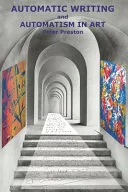
Automatic Writing and Automatism in Art
 73
73

Automatic Writing and Automatism in Art
Peter Preston's "Automatic Writing and Automatism in Art" offers a refreshingly direct account of a subject often shrouded in vagueness. Preston avoids inflated claims, instead grounding his exploration in his own experiences and a diligent survey of historical figures. The strength lies in his meticulous tracing of automatism's lineage, from obscure ancient practices to its influence on prominent 20th-century artists like Max Ernst. However, the book occasionally struggles to fully articulate the *why* behind the phenomenon, leaving some theoretical aspects underdeveloped. A particularly compelling section details the trance states of Pearl Curran, showcasing the tangible output of such practices. The work serves as a solid, if sometimes reserved, introduction to a complex field.
📝 Description
73
Peter Preston's 2014 book examines automatic writing from its historical roots to modern esoteric use.
Peter Preston's study focuses on automatic writing, a process where text is produced without conscious thought. He investigates the belief that a guiding intelligence or subconscious mind dictates the words, drawing on historical accounts and personal experiences. The book traces the practice from its earliest documented instances through its current place in esoteric communities.
This work is for anyone interested in the connection between consciousness, creativity, and the paranormal. It will appeal to spiritualists, psychical researchers, artists seeking new methods, and those curious about the subconscious mind's potential for external expression. Students of art history and comparative religion will also find relevant material.
Preston places automatic writing within the larger history of automatism, a concept that appeared across different fields. The book notes its presence in ancient Chinese divination and its later forms in the late 19th and 20th centuries. It discusses individuals who used these practices, providing a chronological view of their development and acceptance.
This book fits within the tradition of spiritualism and psychical research, particularly concerning phenomena related to altered states of consciousness and communication beyond the physical. It examines how practices like automatic writing, believed by some to involve spirit communication or subconscious dictation, were adopted and adapted by esoteric practitioners. The work connects these methods to broader movements interested in tapping into non-rational or supernormal sources of knowledge and creativity.
💡 Why Read This Book?
• Gain an understanding of the historical arc of automatic writing, from ancient China to its adoption by Surrealists, providing context not found in generalized occult surveys. • Discover concrete examples of how figures like Geraldine Cummins channeled specific literary works, illustrating the practical application of these methods. • Explore the connection between psychic phenomena and artistic innovation, specifically how techniques like automatic drawing influenced movements such as Surrealism.
⭐ Reader Reviews
Honest opinions from readers who have explored this book.
❓ Frequently Asked Questions
What is the earliest historical mention of automatic writing?
Peter Preston's book references early documented instances of automatic writing dating back to ancient China, suggesting a long human history of seeking external guidance through written communication.
Which art movements were significantly influenced by automatism?
The work highlights the Surrealist movement's adoption of automatism, including automatic drawing and painting, as a method to access the subconscious and bypass rational control in art creation.
Who are some key historical figures associated with automatic writing discussed in the book?
Prominent figures examined include Pearl Curran, known for her channeled novel 'The Lamplighter', and Geraldine Cummins, an influential medium and author who produced significant automatic writings.
Does the book offer practical guidance for practicing automatic writing?
While it provides historical context and explores the phenomenon deeply, the primary focus is on examination and history rather than a step-by-step guide to practicing automatic writing.
How does automatic writing relate to artistic techniques?
The book connects automatic writing to automatic drawing and painting, demonstrating how these techniques were used by artists like Max Ernst to tap into subconscious imagery and generate novel artistic forms.
When was "Automatic Writing and Automatism in Art" first published?
Peter Preston's "Automatic Writing and Automatism in Art" was first published on January 25, 2022.
🔮 Key Themes & Symbolism
The Subconscious as Conduit
Preston investigates automatic writing as a direct line to the subconscious mind, bypassing the ego's censorship. The work posits that this non-volitional writing can reveal deeper truths, archetypal patterns, and creative impulses that conscious thought might suppress. It examines how this phenomenon is understood across spiritualist, psychological, and artistic frameworks, suggesting a universal mechanism for accessing hidden knowledge and fostering spontaneous creation.
Automatism in Visual Arts
This theme explores the parallel development of automatism in visual art, particularly through automatic drawing and painting. Preston details how artists, influenced by psychic research and a desire for unmediated expression, employed techniques to allow subconscious imagery to emerge. The book links these practices to the genesis of significant 20th-century art movements, demonstrating how they served as a catalyst for radical stylistic and conceptual shifts in artistic practice.
Historical Channels of Communication
The book traces the historical lineage of automatic writing, highlighting its presence in various cultures and eras. Preston examines documented cases and influential figures who utilized this method for communication, prophecy, or creative output. By mapping this history, the work underscores the enduring human fascination with channeling external or subconscious intelligences and the evolving societal reception of such phenomena.
Spirit, Psyche, and Artistry
This theme studies the interplay between spiritualist beliefs, psychological theories of the subconscious, and artistic creation. Preston scrutinizes how automatic writing and its artistic counterparts serve as bridges between these domains. The exploration considers whether the source is purely internal psychological processes or external discarnate entities, analyzing the implications for understanding consciousness and creativity.
💬 Memorable Quotes
Direct passages from the work, attributed to the author.
“Ancient China to the present day”
— This phrase highlights the extensive historical scope Preston covers, suggesting that the phenomenon of automatic writing is not a modern invention but has roots stretching back millennia across different cultures.
“Pearl Curran and Geraldine Cummins”
— Mentioning these specific figures situates the book within the history of documented mediumship and automatic writing, pointing to individuals whose work had a tangible impact on literature and spiritualist thought.
“Max Ernst and Jackson Pollock”
— These artists' inclusion signifies the book's exploration of how automatic techniques translated into influential visual art, connecting esoteric practices to major developments in 20th-century art history.
“personal experience”
— This indicates that the author integrates his own journey with automatic writing, offering a subjective and lived perspective alongside historical and theoretical analysis.
“relation to various art movements”
— This points to the book's analytical approach, examining how the principles of automatism were adopted and adapted by different artistic schools and individual practitioners to achieve specific creative outcomes.
🌙 Esoteric Significance
Tradition
This work engages with the Hermetic and Theosophical traditions, which often explore direct communion with higher intelligences or the subconscious. It fits within a lineage of esoteric thought that seeks knowledge beyond empirical observation, viewing phenomena like automatic writing as potential methods for spiritual or psychological revelation. Preston's approach leans towards a practical exploration of these traditions' manifestations.
Symbolism
While not heavily focused on overt symbolism, the act of automatic writing itself can be seen as symbolic of surrender and trust in unseen forces, whether internal or external. The 'messages' received can be imbued with symbolic meaning by the recipient, reflecting archetypal content or personal subconscious imagery, acting as a mirror to the user's inner landscape.
Modern Relevance
Contemporary practitioners of stream-of-consciousness writing, intuitive art, and certain forms of modern channeling can find conceptual grounding in Preston's work. Thinkers exploring the creative subconscious, digital mediums for altered states, and transpersonal psychology may also draw parallels and inspiration from the historical and practical examples presented.
👥 Who Should Read This Book
• Aspiring writers and artists seeking to bypass creative blocks and tap into subconscious inspiration, by examining historical methods used by figures like Pearl Curran. • Students of parapsychology and esoteric history interested in documented cases of mediumship and automatic writing, understanding its place in spiritualist movements. • Researchers of 20th-century art, particularly Surrealism, looking for connections between psychic phenomena and artistic innovation as seen in the work of Max Ernst.
📜 Historical Context
Published in 2022, Peter Preston's work arrives at a time of renewed interest in consciousness studies and alternative creative processes. The book's historical survey places automatic writing within the broader context of psychical research that flourished in the late 19th and early 20th centuries, a period marked by figures like Helena Blavatsky and the rise of Spiritualism. Preston's examination of its influence on Surrealism, a movement that explicitly sought to liberate the unconscious, highlights a key intellectual current of the early 20th century. While the book acknowledges these connections, it largely operates outside the discourse of academic art history or parapsychology, focusing instead on the phenomenon itself and its practitioners. Its reception is likely to be within esoteric and independent publishing circles, rather than mainstream academic review.
📔 Journal Prompts
Automatic writing's historical trajectory from ancient China.
The influence of automatic drawing on Max Ernst's oeuvre.
Personal interpretation of the subconscious dictating written text.
Parallels between Pearl Curran's channeled narratives and modern storytelling techniques.
The role of automatism in accessing unmediated creative impulses.
🗂️ Glossary
Automatism
A technique or process in art or literature characterized by the uninhibited expression of the subconscious mind, often through spontaneous writing or drawing without conscious control.
Channeling
The practice of receiving information or messages from a source believed to be outside the conscious self, such as spirits, guides, or the subconscious mind, often through automatic writing or speech.
Psychical research
An interdisciplinary field dedicated to the study of alleged psychic phenomena and other paranormal claims, including extrasensory perception and psychokinesis.
Surrealism
A 20th-century avant-garde movement in art and literature that sought to release the creative potential of the unconscious mind, for example by the irrational juxtaposition of images.
Subconscious mind
The part of the mind of which one is not aware but which influences one's behavior and feelings; the repository of repressed memories and desires.
Mediumship
The practice of acting as a intermediary through whom the living can communicate with the dead or other spiritual entities, often involving phenomena like automatic writing.
Trance state
A state of consciousness characterized by reduced awareness of the external environment and heightened focus on internal experiences, often associated with spiritual or psychic phenomena.