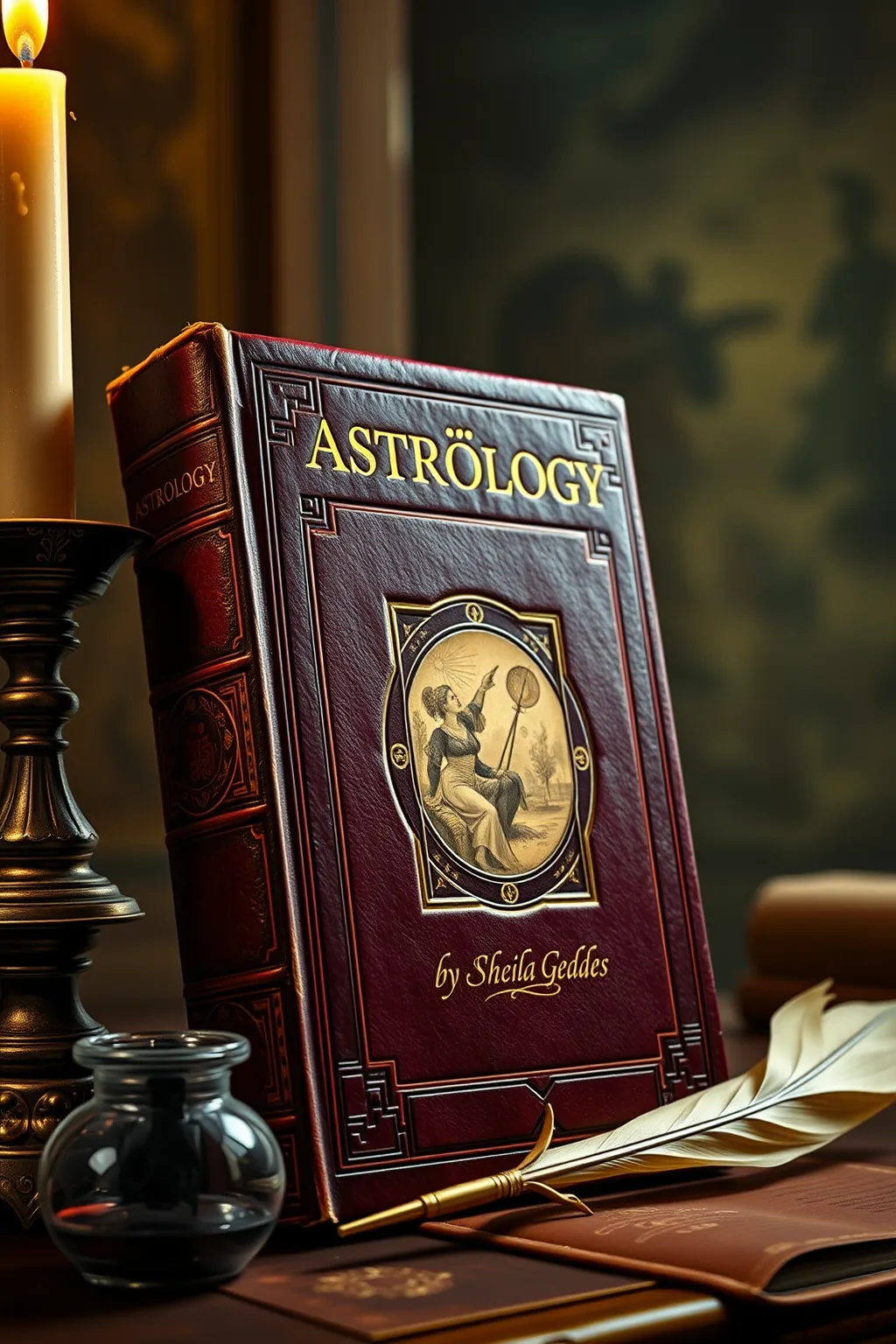
Astrology
 83
83

Astrology
Sheila Geddes's "Astrology" presents a meticulously organized, albeit somewhat dry, exposition of astrological principles. Published in 1976, its strength lies in its systematic breakdown of core components: signs, planets, houses, and aspects. The clarity with which these are delineated offers a solid scaffolding for novice practitioners. However, the work lacks the psychological depth or spiritual nuance found in later astrological literature, such as the writings of Dane Rudhyar, who was also active during this period. While Geddes explains *how* to interpret chart elements, the *why* often feels underdeveloped. A particular passage detailing the interaction of Mars and Saturn in a challenging aspect, for instance, clearly outlines the potential conflict but offers less on the inherent transformative potential of such a configuration. For those seeking a purely technical primer, it succeeds; for those desiring a more integrated understanding of astrology as a symbolic language for the psyche, it may feel incomplete. It is a functional guide, built on the foundations of earlier astrological systems.
📝 Description
83
Sheila Geddes's Astrology, first published in 1976, breaks down celestial mechanics and their purported influence on human affairs.
This 1976 volume systematically details the components of astrological interpretation. Geddes explains the zodiacal signs, planetary archetypes, houses, and aspects, aiming to give readers a structured understanding of how these elements form a cohesive astrological chart. The book offers a comprehensive overview for those beginning their study of astrology, especially those interested in its historical roots and traditional interpretations. It moves beyond simple horoscopes to provide a methodical introduction to chart interpretation. Researchers interested in the evolution of astrological thought in the late 20th century will also find it relevant.
Geddes's work emerged during a period of renewed interest in Western esotericism following the counterculture movements of the 1960s. This era saw a significant resurgence in occult studies, with astrology drawing from earlier revivalist movements like Theosophy. Astrologers such as Dane Rudhyar and Liz Greene were also publishing influential works at this time, contributing to a broader dialogue about psychological astrology. Geddes's book stands as a more traditional, systematized approach compared to some of the spiritually or psychologically focused interpretations that were gaining traction.
Published in 1976, Sheila Geddes's Astrology appeared during a significant revival of Western esotericism. This period saw renewed interest in occult studies, including astrology, which often connected to earlier movements like Theosophy. While other contemporary astrologers like Dane Rudhyar and Liz Greene focused on psychological or spiritually oriented interpretations, Geddes's book offered a more traditional and systematized framework. It provides a clear introduction to the foundational elements of astrological practice, serving as a guide for those engaging with the historical and symbolic underpinnings of the tradition.
💡 Why Read This Book?
• Gain a structured understanding of the twelve houses, as detailed in Chapter 4, which clarifies how specific life areas are symbolically represented in a birth chart. • Learn the traditional meanings of the seven classical planets (Sun through Saturn), as presented in Chapter 3, providing a foundational vocabulary for astrological interpretation. • Grasp the concept of astrological aspects, as explained in Chapter 5, enabling you to understand the dynamic interplay and potential challenges or harmonies between celestial bodies.
⭐ Reader Reviews
Honest opinions from readers who have explored this book.
❓ Frequently Asked Questions
When was Sheila Geddes's "Astrology" first published?
Sheila Geddes's "Astrology" was first published in 1976, positioning it within the late 20th-century resurgence of esoteric studies.
What are the main components of an astrological chart discussed in the book?
The book systematically covers the twelve zodiacal signs, the seven traditional planets, the twelve houses, and astrological aspects, providing a comprehensive framework for interpretation.
Is this book suitable for absolute beginners in astrology?
Yes, its structured approach and clear explanations of fundamental concepts make it highly suitable for individuals new to astrological study.
Does the book cover modern astrological concepts or only traditional ones?
The book primarily focuses on traditional astrological components and their interpretations, reflecting the state of astrological thought in the mid-1970s.
Where does this book fit within the history of astrological literature?
Published in 1976, it emerged during a period of revived interest in esotericism, offering a systematic, foundational text amidst evolving psychological and spiritual interpretations of astrology.
What is the significance of the year 1976 in relation to this book?
1976 marks the original publication date, placing the book within a specific cultural and intellectual milieu of renewed interest in occult and metaphysical studies.
🔮 Key Themes & Symbolism
The Twelve Zodiacal Signs
Geddes meticulously details each of the twelve zodiacal signs, moving beyond simplistic sun-sign astrology. The work explores their elemental (Fire, Earth, Air, Water) and modal (Cardinal, Fixed, Mutable) classifications, offering insights into the inherent energies and archetypal patterns associated with each. Understanding these classifications is presented as crucial for interpreting their influence within a complete astrological chart, forming the bedrock of personalized celestial readings.
Planetary Archetypes
The book examines the seven classical planets – Sun, Moon, Mercury, Venus, Mars, Jupiter, and Saturn – as distinct archetypal forces. Each planet is presented with its corresponding mythological associations and its symbolic role in human psychology and experience. Geddes outlines how these planetary energies interact, forming the dynamic core of an individual's natal chart and influencing their inherent drives and potentials.
The Houses of Experience
Central to the book's structure is the concept of the twelve astrological houses. These divisions of the celestial sphere are explained as representing different arenas of life, from self-identity and personal resources to relationships, career, and spiritual pursuits. Geddes provides a systematic interpretation of each house, illustrating how the planets and signs manifest within these specific life domains, offering a practical map for self-understanding.
Astrological Aspects
The work examines the significance of astrological aspects, which are the angular relationships between planets in a chart. Geddes explains the primary aspects – conjunction, opposition, square, trine, and sextile – and their implications for how planetary energies blend, clash, or harmonize. This section is vital for understanding the dynamic interplay and potential psychological tensions or synergies that shape an individual's life experiences.
💬 Memorable Quotes
Direct passages from the work, attributed to the author.
“The planets are the active agents; the signs are the modifiers of their expression.”
— This statement highlights a core principle of astrological interpretation: planets represent fundamental drives and energies, while the zodiacal signs color and define *how* those energies are likely to manifest in an individual's life.
“Each house represents a specific field of activity or a fundamental life area.”
— This emphasizes the functional role of the houses in astrology, serving as symbolic locations within the birth chart that correspond to different spheres of human experience and development.
“Aspects reveal the dynamic relationships between different parts of the psyche.”
— This interpretation focuses on the psychological dimension of astrological aspects, viewing them not just as geometric patterns but as indicators of internal dialogues, conflicts, and consonances within the individual's mind.
“The Ascendant marks the point of initiation into the material world.”
— This defines the Ascendant (Rising Sign) as a crucial point in the chart, representing the initial persona adopted upon entering physical existence and the outward presentation to the world.
“The Moon reflects the subconscious needs and emotional responses.”
— This succinctly captures the symbolic meaning of the Moon in astrology, linking it to our innermost emotional landscape, unconscious patterns, and habitual reactions.
🌙 Esoteric Significance
Tradition
This work firmly sits within the Western Esoteric tradition, specifically drawing from the Hellenistic and Renaissance astrological lineages. It adheres to a system that views celestial bodies as symbolic correspondences influencing earthly events and human psychology. While it doesn't explicitly align with Kabbalistic or Gnostic systems, its emphasis on archetypal symbolism and cosmic order speaks to Hermetic principles of correspondence and macrocosm-microcosm relationships.
Symbolism
The book prominently features the symbolism of the twelve zodiacal signs, each representing a distinct archetypal energy or stage of development. The seven classical planets (Sun, Moon, Mercury, Venus, Mars, Jupiter, Saturn) function as potent symbols of divine or psychological forces. The twelve houses further symbolize different domains of human experience, creating a comprehensive symbolic map of life's potentials and challenges within the cosmic order.
Modern Relevance
Contemporary astrologers, particularly those focused on foundational knowledge and traditional techniques, still reference works like Geddes's for their clarity. The resurgence of interest in Hellenistic astrology and the ongoing practice of psychological astrology can find value in its systematic approach. Modern practitioners looking to understand the historical development of astrological concepts, or seeking a less psychologically dense interpretation than some contemporary works, may turn to this text.
👥 Who Should Read This Book
• Beginning students of Western astrology seeking a clear, structured introduction to the fundamental components of a birth chart. • Individuals interested in the historical development of astrological thought in the late 20th century, particularly its systematic approaches. • Esoteric practitioners who wish to understand the astrological underpinnings common in various mystical traditions, presented in a methodical format.
📜 Historical Context
Sheila Geddes's "Astrology," published in 1976, emerged during a significant period of esoteric revival in the Western world. The preceding decade had seen a cultural shift that opened many to alternative spiritualities and belief systems, including astrology. This era was marked by prominent figures and movements that either embraced or critically engaged with astrology. For instance, Dane Rudhyar was popularizing psychological astrology, offering interpretations that focused on individual growth and self-realization, a contrast to more deterministic systems. Theosophy, with its own complex astrological framework, had laid groundwork decades prior, influencing many contemporary esotericists. Geddes's work, with its systematic, almost textbook-like approach, provided a clear entry point for a generation increasingly curious about the stars. While not a radical departure, it served as a foundational text for many, offering a structured understanding of core astrological principles at a time when interest was surging, and the field was diversifying.
📔 Journal Prompts
The function of the twelve houses as arenas of life experience.
The archetypal roles of the seven classical planets in natal interpretation.
The interplay between planetary energies and zodiacal sign modifiers.
The symbolic language of astrological aspects in chart analysis.
How the Ascendant signifies an individual's initial approach to the world.
🗂️ Glossary
Zodiacal Sign
One of the twelve divisions of the celestial ecliptic, each associated with a specific constellation and archetypal energies (e.g., Aries, Taurus, Gemini).
Planet
In astrology, celestial bodies (Sun, Moon, Mercury, Venus, Mars, Jupiter, Saturn, Uranus, Neptune, Pluto) used as symbolic indicators of energy, drives, and psychological functions.
House
One of the twelve divisions of the celestial sphere, representing specific areas of life experience where planetary energies manifest.
Aspect
The angular relationship between two or more planets in an astrological chart, indicating how their energies interact and influence each other.
Ascendant
The zodiacal sign and degree rising on the eastern horizon at the exact moment of birth; often called the Rising Sign.
Natal Chart
A map of the heavens at the precise moment and location of an individual's birth, used for astrological interpretation.
Conjunction
An astrological aspect occurring when two planets are in very close proximity (0 degrees), often intensifying their combined energies.
🔮 Readers Also Liked
Browse all →









More by Sheila Geddes
All books →


More Free Astrology & Cosmology Books
View all →