Astrology in India
 74
74

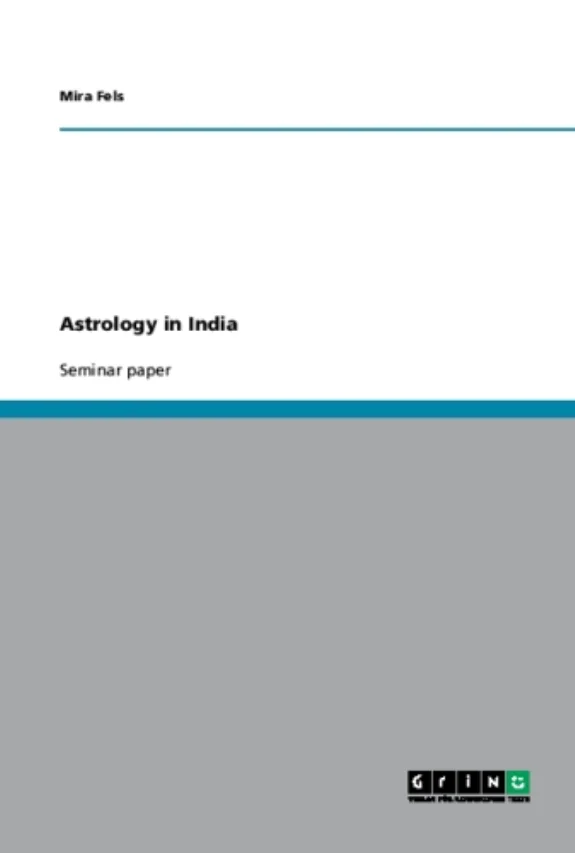
Astrology in India
Mira Fels' "Astrology in India" offers a commendable, albeit brief, academic introduction to Jyotisha. Its strength lies in its clear differentiation from Western astrology, a crucial distinction often glossed over. The paper effectively explains the calculation of the birth chart and the significance of planetary periods, providing a solid elementary foundation. However, its brevity, stemming from its seminar paper origins, leaves the reader wanting more depth. For instance, the discussion on the Nakshatras, while present, feels somewhat superficial. A notable passage details the concept of karma as intrinsically linked to astrological interpretation, highlighting Jyotisha's philosophical depth. While valuable for its introductory clarity, it lacks the nuanced exploration found in more comprehensive works. It serves best as a stepping stone.
📝 Description
74
Mira Fels' 2001 seminar paper examines Jyotisha, the traditional Hindu system of astrology.
This academic work, originally presented at the University of Hamburg in 2001, offers a focused introduction to Jyotisha, the traditional Hindu system of astrology. Fels meticulously distinguishes its fundamental principles from Western astrological traditions. The paper clarifies the core concepts and practices of Jyotisha for readers unfamiliar with its complexities, aiming to build a foundation for understanding its place in Indian culture.
The book is primarily intended for students and scholars of comparative religion, theology, and Indology. It also serves as a starting point for those beginning to study Hindu astrology who want a clear, academically sound overview. Individuals interested in the cultural and religious significance of astrological practices within India will find this paper particularly valuable. The focus is on the intellectual and spiritual underpinnings of Jyotisha, not on predictive techniques.
Fels situates Hindu astrology within the broader context of Indian religious thought. Jyotisha, as one of the six Vedangas, has long been an integral part of Indian intellectual history. The paper highlights how Jyotisha is deeply connected to concepts of karma, dharma, and the pursuit of moksha, contrasting this holistic approach with more individualized or psychological interpretations found in Western astrology.
Jyotisha, or Hindu astrology, is a distinct tradition within the broader spectrum of esoteric cosmology. Unlike Western astrology, which often emphasizes psychological profiling or future prediction, Jyotisha is presented as intrinsically linked to the Vedic corpus and the pursuit of spiritual liberation (moksha). Its framework is built upon concepts like karma and dharma, positioning astrological calculations not merely as predictive tools but as a means to understand one's cosmic responsibilities and spiritual path. This integration into the larger philosophical and religious landscape of India distinguishes it significantly.
⭐ Reader Reviews
Honest opinions from readers who have explored this book.
❓ Frequently Asked Questions
What is the primary difference between Western and Hindu astrology according to Mira Fels?
Mira Fels' paper highlights that Western astrology often focuses on psychological profiling and future prediction, while Hindu astrology (Jyotisha) is deeply integrated with karma, dharma, and spiritual liberation (moksha), serving as a map of karmic predispositions.
What is a Janma Kundali?
A Janma Kundali, or birth chart, is central to Jyotisha. It is calculated based on the precise time and place of birth and serves as a map of an individual's karmic inheritance and spiritual path, used for understanding life patterns.
What are Grahas and Nakshatras in Hindu astrology?
Grahas are the planets, which exert influence according to Jyotisha principles. Nakshatras are lunar mansions, providing a more detailed division of the zodiac, offering nuanced interpretations of celestial positions and their effects.
Is this book suitable for beginners in astrology?
Yes, the work is designed as an elementary introduction to Hindu astrology, making it suitable for beginners who want an academically grounded overview of Jyotisha's principles and its cultural significance in India.
When was this seminar paper originally published?
Mira Fels' seminar paper, "Astrology in India," was first published in 2001, reflecting academic discourse at the University of Hamburg during that period.
What is the academic context of this paper?
The paper originated as a seminar assignment in the subject of Theology - Comparative Religion Studies at the University of Hamburg in 2001, focusing on an introduction to Hinduism.
🔮 Key Themes & Symbolism
Jyotisha vs. Western Astrology
This work meticulously distinguishes Jyotisha from its Western counterpart. It emphasizes that while Western astrology often leans towards psychological interpretation and personality mapping, Jyotisha is intrinsically linked to Vedic philosophy. The paper clarifies how Hindu astrology serves as a tool for understanding karma, dharma, and the soul's journey towards moksha, offering a spiritual and ethical framework rather than solely predictive techniques. This contrast is central to appreciating the unique worldview embedded within the Indian astrological tradition.
The Karmic Blueprint
A core theme is the understanding of the birth chart (Janma Kundali) not merely as a predictive device but as a karmic blueprint. Fels explains how the positions of planets (Grahas) and lunar mansions (Nakshatras) at the time of birth are seen as reflections of past actions and predispositions. The paper suggests that Jyotisha provides a roadmap for navigating these karmic influences, offering guidance on fulfilling one's dharma and progressing spiritually. This perspective highlights the ethical and philosophical dimensions of Hindu astrology.
Jyotisha as a Vedanga
The paper situates Jyotisha within its historical and religious context as one of the six Vedangas, auxiliary disciplines of Vedic study. This framing underscores its ancient origins and its integral role in the broader Vedic intellectual tradition. Unlike standalone divinatory systems, Jyotisha is presented as an essential component for understanding the cosmos, time, and rituals, deeply connected to the spiritual and philosophical aims of Hinduism. Its inclusion as a Vedanga signifies its profound importance in ancient Indian scholarship.
Planetary Periods and Life Cycles
Fels touches upon the concept of planetary periods, known as Dashas, which are crucial in Jyotisha for understanding the unfolding of life events and karmic influences over time. These periods offer a dynamic perspective, showing how the impact of various planets changes throughout an individual's life. This cyclical understanding contrasts with a static astrological interpretation and is presented as a sophisticated method for mapping life's progression and the ebb and flow of karmic energies.
💬 Memorable Quotes
Direct passages from the work, attributed to the author.
“The paper outlines the differences between Western and Eastern Astrology.”
— This fundamental distinction is the paper's starting point, setting the stage for understanding the unique philosophical and religious underpinnings of Jyotisha, which are often overlooked in comparative studies.
“Determination of the Janma Kundali is explained.”
— This refers to the process of calculating the Hindu birth chart, a central element in Jyotisha, which is presented not just for prediction but as a map of karmic inheritance.
“Jyotisha's significance in India today is discussed.”
— This highlights the contemporary relevance of Hindu astrology, emphasizing its continued integration into daily life, religious practices, and personal decision-making within Indian culture.
“The work provides an elementary introduction into Hindu Astrology.”
— This statement defines the paper's scope, indicating that it serves as a foundational text for newcomers, clarifying core concepts without studying advanced interpretive techniques.
“Nine entries in the bibliography are cited.”
— This factual detail underscores the academic rigor of the paper, pointing to the scholarly sources consulted in its preparation and its grounding in academic research.
🌙 Esoteric Significance
Tradition
While not strictly an esoteric text in the Western occult sense, "Astrology in India" engages with Jyotisha, a system deeply embedded within the esoteric philosophical traditions of India. Jyotisha is considered a Vedanga, an auxiliary Vedic science, linking it to ancient Brahmanical knowledge systems that aim for spiritual liberation. It departs from Western esoteric traditions by its explicit integration with Hindu dharma and karma philosophy, viewing astrological charts as maps of soul evolution rather than solely personal destiny or psychological archetypes.
Symbolism
Key symbols include the Grahas (planets), which are not merely celestial bodies but personified divine energies influencing destiny and consciousness. The Rashis (zodiac signs) and Nakshatras (lunar mansions) represent specific energetic qualities and karmic potentials. The Janma Kundali (birth chart) itself is a potent mandala, a cosmic diagram reflecting the individual's unique karmic inheritance and spiritual trajectory, serving as a guide for navigating life's challenges and opportunities.
Modern Relevance
Contemporary thinkers and practitioners in fields like consciousness studies, comparative mythology, and depth psychology often draw parallels between Jyotisha and Western psychological models. Modern yoga and Vedic studies programs frequently incorporate Jyotisha as a tool for self-understanding and spiritual guidance, reflecting its enduring relevance. Practitioners of Vedic ritual and philosophy continue to utilize Jyotisha for life planning and understanding cosmic influences, demonstrating its persistent role in contemporary Indian spiritual life.
👥 Who Should Read This Book
['• Students of comparative religion and theology: To gain a clear, academic understanding of a significant aspect of Hindu religious practice and its philosophical underpinnings.', '• Beginners in Vedic studies: To grasp the foundational principles of Jyotisha and its historical context as a Vedanga, separate from Western astrological systems.', '• Researchers of Indian culture and philosophy: To understand the role of astrology in shaping societal norms, personal beliefs, and spiritual aspirations within India.']
📜 Historical Context
Mira Fels' paper emerged from the academic milieu of 2001, a period where the study of Eastern religions in Western universities was increasingly sophisticated. The work addresses the growing Western interest in Vedic traditions, offering a scholarly counterpoint to popular, often superficial, engagements with astrology. While Western occultism had its own revival, particularly in Hermetic and Theosophical circles, Fels' approach is rooted in comparative religion and theology, positioning Jyotisha within its indigenous Indian religious framework. The paper implicitly engages with the academic discourse surrounding Hinduism, seeking to explain its astrological component accurately. It contrasts with the often syncretic or New Age interpretations of astrology prevalent outside academic circles, emphasizing Jyotisha's integration with concepts like karma and moksha, which were subjects of study for scholars like Wendy Doniger O'Flaherty during the late 20th century.
📔 Journal Prompts
The concept of the Janma Kundali as a karmic blueprint.
Jyotisha's distinction from Western astrological approaches.
The role of Grahas and Nakshatras in understanding cosmic influences.
The significance of Jyotisha as a Vedanga.
Reflecting on the integration of astrology with dharma and moksha.
🗂️ Glossary
Jyotisha
The traditional Hindu system of astrology, also known as Hindu astrology or Vedic astrology. It is considered one of the six Vedangas (auxiliary disciplines of Vedic study).
Vedanga
Literally 'limb of the Veda.' One of six auxiliary disciplines of Vedic study in Hinduism, including phonetics, ritual, grammar, etymology, metrics, and astronomy/astrology (Jyotisha).
Graha
In Jyotisha, the term refers to celestial bodies, particularly the Sun, Moon, planets, and the lunar nodes (Rahu and Ketu), which are considered to exert influence on earthly affairs and human lives.
Rashi
The zodiac signs in Hindu astrology, similar to the Western zodiac but calculated using the sidereal zodiac. There are twelve Rashis, each with distinct characteristics.
Nakshatra
Lunar mansions; a division of the ecliptic into 27 (or sometimes 28) segments, each associated with specific deities, characteristics, and astrological interpretations in Jyotisha.
Janma Kundali
The birth chart in Hindu astrology, a diagram representing the positions of celestial bodies at the exact moment and place of a person's birth, used for astrological interpretation.
Dharma
In Hinduism, a complex concept encompassing duty, righteousness, moral law, ethics, and the natural order of the universe. It is a central tenet influencing astrological interpretation.
This book appears in 1 collection
🔮 Readers Also Liked
Browse all →








From the “Vedic Astrology” Collection
View all →




More Free Astrology & Cosmology Books
View all →

![[Medical and astrological texts : in English].](/img/thumb/medical-and-astrological-texts-in-english.webp)