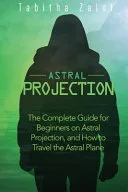
Astral Projection
 73
73

Astral Projection
Tabitha Zalot's *Astral Projection* attempts to serve as a straightforward entry point into the practice. The author’s direct, no-nonsense prose is a welcome departure from overly flowery language often found in this genre. Zalot clearly positions the book for absolute beginners, prioritizing accessibility over complex theoretical discussions. The section detailing methods for inducing a relaxed state before attempting projection is particularly well-explained, offering concrete steps that avoid unnecessary jargon. However, the book’s primary limitation lies in its brevity and the somewhat repetitive nature of its advice. While it covers the 'how-to' adequately for a novice, it offers little on the deeper philosophical implications or potential challenges of prolonged astral engagement. The original blurb's aggressive sales pitch, promising it's the 'BEST Book,' unfortunately colors the initial impression, though the content itself is more measured. The work is a functional primer but lacks the depth to satisfy a reader seeking extensive context or advanced techniques.
📝 Description
73
Tabitha Zalot's Astral Projection makes the out-of-body experience an accessible practice.
Astral Projection, or the out-of-body experience (OBE), describes consciousness separating from the physical body to travel elsewhere. This book treats the phenomenon not as an obscure mystery but as a learnable skill. Zalot aims to clarify the process, giving basic information for anyone interested in non-physical realities. The work suggests OBEs are a natural human ability, often dormant, and connects them to ideas of the afterlife and reincarnation.
This guide is mainly for people new to astral projection. It is written for those who have had spontaneous out-of-body feelings or are simply curious about consciousness existing outside the body. It also appeals to readers thinking about larger metaphysical questions, like what happens to consciousness after death or the cycle of existence, suggesting these questions relate to astral travel.
The idea of astral projection has roots in ancient traditions across many cultures. In the early 20th century, movements like Theosophy, associated with Helena Blavatsky, re-examined concepts of subtle bodies and other planes of existence. These ideas influenced many later writers on esoteric subjects. While Zalot's book concentrates on practical methods, it follows a line of thought that has long considered consciousness moving beyond physical limits, a topic discussed in occult circles for centuries.
💡 Why Read This Book?
• Gain practical, step-by-step instructions for initiating an Out-of-Body Experience, focusing on relaxation and visualization techniques that Tabitha Zalot outlines. • Understand the connection between astral projection and concepts like the afterlife and reincarnation, as presented in the book's core framework. • Explore the foundational ideas of subtle bodies and astral planes, concepts central to the practice as described by Zalot, providing a basic conceptual map for your explorations.
⭐ Reader Reviews
Honest opinions from readers who have explored this book.
❓ Frequently Asked Questions
What is the primary difference between astral projection and dreaming?
Astral projection, as described in the book, involves a conscious awareness and deliberate separation of the astral body from the physical form, often perceived as more vivid and real than a typical dream state. Dreaming can be passive, while projection is presented as an active, intentional experience.
Is astral projection dangerous?
The book suggests that astral projection is a natural process and not inherently dangerous. It emphasizes maintaining a connection to the physical body and returning when desired, framing it as a safe exploration of consciousness.
How long does it take to learn astral projection?
The book implies that learning astral projection varies from person to person. While it aims to provide a guide for beginners, mastery may require consistent practice and patience, with some individuals potentially achieving it sooner than others.
Can astral projection be linked to reincarnation?
Yes, the book suggests a connection between astral projection and reincarnation. It posits that experiences on the astral plane can offer insights into the processes of death, the afterlife, and subsequent rebirths.
What are astral planes?
Astral planes are conceptualized in the book as distinct realms or dimensions of existence that the astral body can travel to. These are understood as non-physical environments that can be explored during an out-of-body experience.
Does this book explain how to travel to specific locations?
While the book focuses on the fundamental principles and initial steps of astral projection, it provides the groundwork for navigating and exploring various experiences on the astral plane, which can include perceived locations.
🔮 Key Themes & Symbolism
Consciousness Beyond the Body
The central theme is the separation of consciousness from the physical form, allowing for experiences outside the limitations of the body. The book presents this as an achievable phenomenon, distinct from mere dreaming. It explores how the 'astral body' acts as a vehicle for these journeys, suggesting that awareness can persist and interact in non-physical environments. This concept challenges materialistic views of consciousness, proposing that it is not solely a product of brain activity but can exist and operate independently, even exploring other dimensions or planes of existence.
The Astral Plane
This theme addresses the nature and accessibility of the 'astral plane.' Zalot describes it as a realm or dimension that can be visited during an Out-of-Body Experience (OBE). It's presented as a space where perceptions differ from the physical world, offering unique insights and experiences. The book aims to explain this plane, making it seem less abstract and more like a navigable territory for the projected consciousness. Understanding the astral plane is key to comprehending the potential scope and purpose of astral projection as a practice.
Practical OBE Techniques
A significant focus is placed on the practical application of astral projection. This theme covers the methods and exercises intended to induce the state necessary for separating the astral body. It emphasizes techniques such as deep relaxation, visualization, and specific mental triggers designed to facilitate the transition. The book acts as a procedural manual, guiding the reader through preparatory steps and offering advice on how to achieve and maintain an OBE, making the esoteric concept actionable for the aspiring practitioner.
Connection to Metaphysical Concepts
The book links astral projection to broader metaphysical inquiries, particularly concerning the afterlife and reincarnation. It suggests that OBEs can provide personal evidence or understanding of these phenomena, bridging the gap between abstract beliefs and direct experience. By framing projection as a means to explore these profound questions, Zalot integrates the practice into a larger spiritual or philosophical framework. This connection aims to give the practice a deeper purpose beyond mere curiosity, positioning it as a tool for existential exploration.
💬 Memorable Quotes
Direct passages from the work, attributed to the author.
“The BEST Book on Astral Projection”
— This hyperbolic claim from the original blurb, while certainly attention-grabbing, sets an unrealistic expectation for the book's content. It suggests an authoritative and exceptional resource, which the practical, introductory nature of the book doesn't fully support.
“Have you ever dreamt about leaving your body and having an OBE, Out-of-Body-Experience, a.k.a. Astral Projection?”
— This question directly engages the reader, tapping into common subconscious experiences or fantasies. It serves as an effective hook, inviting those who may have had fleeting sensations of detachment to explore the possibility of intentional astral projection.
“They are both actually connected with Astral Projection!”
— This statement, referring to the afterlife and incarnation, highlights the book's attempt to contextualize astral projection within larger spiritual and existential questions. It suggests the practice offers a unique vantage point for understanding life, death, and rebirth.
“Or do you sometimes think about the afterlife or incarnation?”
— This rhetorical question broadens the appeal of the book beyond those solely interested in OBEs. It connects the practice to fundamental human curiosities about existence and what lies beyond physical life, suggesting the book offers potential answers or perspectives.
“Or perhaps you are just up for an exciting journey?”
— This phrase frames astral projection as an adventure, appealing to a sense of exploration and novelty. It positions the practice as an exciting, potentially thrilling experience, making it attractive to readers seeking new forms of personal discovery.
🌙 Esoteric Significance
Tradition
This work draws implicitly from the broader Western Esoteric Tradition, particularly currents influenced by Theosophy and New Age thought, which popularized concepts of subtle bodies and non-physical planes. It departs from more structured traditions like Hermeticism or Kabbalah by focusing less on a codified system of correspondences and more on direct experiential techniques. Its lineage is one of accessible, practical guides aimed at clarifying esoteric practices for a wider audience, emphasizing personal experience over adherence to established dogma.
Symbolism
While the book is primarily instructional, the concept of the 'astral body' itself functions as a key symbol, representing the soul's capacity for independent travel beyond the physical form. The 'astral plane' serves as a symbolic landscape, representing domains of consciousness or experience that are not bound by physical laws. These elements symbolize the potential for spiritual freedom, expanded awareness, and direct exploration of realities beyond the mundane, acting as conceptual anchors for the practice.
Modern Relevance
Zalot's approach appeals to contemporary interest in consciousness exploration, lucid dreaming, and out-of-body experiences, often discussed in online forums and modern spiritual communities. While perhaps not directly cited by contemporary academic researchers in parapsychology, the book's accessible format aligns with practices explored by modern practitioners of lucid dreaming and those interested in non-dual awareness, reflecting a continued popular engagement with subjective states of consciousness.
👥 Who Should Read This Book
• Individuals curious about out-of-body experiences (OBEs) who seek a straightforward, practical introduction without complex theoretical frameworks. • Aspiring practitioners interested in learning basic techniques for astral projection, focusing on relaxation and visualization methods. • Readers exploring metaphysical concepts like the nature of consciousness, the afterlife, and reincarnation who are open to experiential approaches.
📜 Historical Context
Published in December 2015, Tabitha Zalot's *Astral Projection* arrived at a time when interest in consciousness studies and esoteric practices continued to grow, partly fueled by online communities and readily available information. This period saw a resurgence of interest in classic occult texts, yet also a proliferation of self-published guides. Zalot's work sits within this latter category, aiming for accessibility. While not directly engaging with academic discourse, it echoes themes explored by earlier figures in Western esotericism, such as Sylvan Muldoon, whose work on the 'astral body' was influential in the early 20th century. Unlike more academically rigorous explorations or deeply traditional lineages, Zalot's book prioritizes practical instruction for a contemporary audience, sidestepping the more complex philosophical debates or historical analyses found in works from the Theosophical Society or earlier Hermetic traditions.
📔 Journal Prompts
The concept of the astral body and its separation from the physical form.
Techniques for achieving a relaxed state conducive to astral projection.
Personal reflections on experiences of detachment or unusual consciousness states.
The perceived nature and potential exploration of the astral plane.
Connections between potential astral experiences and beliefs about the afterlife.
🗂️ Glossary
Astral Projection
The intentional separation of consciousness or the 'astral body' from the physical body, allowing for travel and experience in non-physical realms.
Out-of-Body Experience (OBE)
A subjective experience in which an individual feels their consciousness is located outside their physical body, often perceived as a distinct phenomenon from dreaming.
Astral Body
A subtle or non-physical body, often described as an energetic counterpart to the physical body, believed to be the vehicle for astral projection.
Astral Plane
A non-physical realm or dimension of existence accessible through astral projection, characterized by different laws and perceptions than the physical world.
Physical Body
The tangible, biological form of an individual, which is the anchor point from which the astral body is believed to separate during projection.
Consciousness
The state of being aware of and responsive to one's surroundings; in the context of astral projection, it refers to the aspect of self that can exist independently of the physical brain.
Reincarnation
The philosophical or religious concept that the non-physical essence of a living being starts a new life in a different physical form or body after biological death.