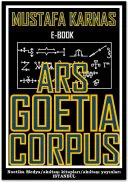
ARS GOETIA CORPUS
 71
71

ARS GOETIA CORPUS
Mustafa Karnas' ARS GOETIA CORPUS offers a meticulously researched deep dive into one of ceremonial magic's most notoriously debated texts. The author's strength lies in his unflinching academic gaze, presenting the 72 spirits and their associated rituals with a clarity that dispels much of the sensationalism. Karnas provides a commendable analysis of the text's structure and the historical milieu from which it emerged, particularly its late 17th-century compilation. A limitation, however, is the occasionally dry prose, which, while precise, might test the patience of readers seeking purely practical grimoire instruction. The section detailing the 'Hierarchy and Attributes' of the Goetic entities, for instance, is exhaustive but could benefit from more interpretive synthesis. Nevertheless, Karnas grounds the often-fantastical claims of the Ars Goetia in a scholarly framework, making it an essential reference for serious students of occult lore.
📝 Description
71
Mustafa Karnas's ARS GOETIA CORPUS examines the 72 demons of the Ars Goetia in detail.
This book provides a detailed analysis of the Ars Goetia, a significant text within the grimoire tradition. It goes beyond simple description to investigate the demonic hierarchy and the rituals for invoking them. The work is suited for those studying Western esotericism, occult history, and comparative religion, especially individuals interested in academic approaches to historical magical texts. Researchers, ceremonial magic practitioners, and scholars of ancient lore will find its analytical perspective valuable.
The Ars Goetia, part of the larger Lemegeton, became prominent in occult circles during the 19th century's magical revival. Its origins, however, can be traced to earlier manuscripts, suggesting a lineage predating its 17th-century compilation. The text's influence spread with a wider European interest in demonology and ceremonial magic, often studied alongside philosophical branches of Hermeticism.
The book meticulously covers the 72 demons attributed to King Solomon, including their sigils, ranks, and purported abilities. It details the ritual preparations, conjuration, and binding methods described for their manifestation and control. Furthermore, it touches on the theological and philosophical ideas that supported these practices under the guise of Solomonic authority.
The Ars Goetia is a key component of the Lemegeton, a grimoire that gained popularity during the 19th-century occult revival. Its historical roots extend to earlier magical traditions, linking it to a long lineage of Western ceremonial magic. The text's focus on demonology and specific ritual practices places it firmly within the realm of ceremonial magic, often studied in contrast to more philosophical or mystical Hermetic systems.
💡 Why Read This Book?
• Gain a rigorous understanding of the 72 demons and their attributed powers as meticulously cataloged in the Ars Goetia, moving beyond folklore to scholarly presentation. • Explore the specific historical context of the grimoire's compilation in the late 17th century and its place within Western esoteric traditions. • Understand the intricate ritualistic framework for evocation and binding described in the text, offering a foundational grasp of ceremonial magic practices.
⭐ Reader Reviews
Honest opinions from readers who have explored this book.
❓ Frequently Asked Questions
What is the historical origin of the Ars Goetia?
The Ars Goetia, as published in the Lemegeton, likely saw its primary compilation in the late 17th century, though its content draws upon earlier magical traditions and lore attributed to King Solomon.
Who were the key figures associated with popularizing the Ars Goetia?
Figures like Samuel Liddell MacGregor Mathers and Aleister Crowley were instrumental in translating and disseminating versions of the Ars Goetia in the late 19th and early 20th centuries, bringing it to wider occult attention.
Does this book offer practical instructions for summoning demons?
While ARS GOETIA CORPUS analyzes the ritualistic instructions within the Ars Goetia, its primary focus is scholarly and historical rather than a direct 'how-to' manual for practitioners.
What is the relationship between the Ars Goetia and King Solomon?
The Ars Goetia is traditionally attributed to King Solomon, claiming he commanded these spirits. However, scholarly consensus places its compilation much later, with the attribution serving a legitimizing purpose.
How does this study differ from other books on the Ars Goetia?
This work distinguishes itself through its comprehensive scholarly approach, examining the entirety of the Ars Goetia corpus with detailed analysis and historical contextualization, rather than focusing on isolated aspects.
What are the '72 demons' mentioned in the Ars Goetia?
The Ars Goetia lists 72 distinct demonic entities, each with a specific rank, sigil, and purported abilities, which the text claims were controlled by King Solomon.
🔮 Key Themes & Symbolism
Solomonic Grimoire Tradition
The work situates the Ars Goetia within the broader spectrum of Solomonic grimoires, texts purportedly containing the magical knowledge and authority of King Solomon. It examines how this attribution functions, both historically and within occult practice, to legitimize the complex system of spirit evocation and control detailed within the 72 demons' descriptions and associated rituals.
The 72 Goetic Entities
Central to the corpus is an exhaustive presentation of the 72 spirits, detailing their assigned ranks (King, Duke, President, etc.), unique sigils, and diverse faculties, ranging from bestowing knowledge and love to causing destruction or revealing secrets. The study analyzes the consistent patterns and variations in these descriptions, offering insight into the symbolic language of demonology.
Ceremonial Ritual and Binding
ARS GOETIA CORPUS dissects the intricate ceremonial procedures required for the evocation and binding of these entities. This includes the preparation of magical tools, the use of divine names and seals, and the specific conjurations and threats intended to compel obedience, providing a scholarly look at the practical mechanics of the grimoire.
Esoteric Hierarchy and Cosmology
The text explores the hierarchical structure presented within the Ars Goetia, not only among the demons but also in relation to divine authority. It looks at the cosmological assumptions that underpin this system, where the manipulation of spiritual forces is framed within a theological or philosophical order, however unorthodox.
💬 Memorable Quotes
Direct passages from the work, attributed to the author.
“The work covers the entire ARS GOETIA CORPUS.”
— This statement emphasizes the book's comprehensive scope, promising an exhaustive treatment of the grimoire's contents, from its constituent spirits to its ritualistic instructions.
“We will do this through King Solomon's mouth. But we will also include quantum science.”
— This intriguing juxtaposition suggests an approach that bridges ancient occult lore, attributed to Solomon, with modern scientific concepts, hinting at a unique theoretical framework for understanding the Goetia.
“I take the wisdom of my words from god.”
— Framed as Solomon's words, this highlights the theological justification often employed in grimoires, asserting divine provenance for the magical knowledge being transmitted.
“Let's talk a little bit about it.”
— This simple, direct phrasing indicates an accessible, conversational tone intended to explain the complex subject matter of the Ars Goetia for the reader.
“I called God's mo”
— This fragmented quote implies a deeper theological or mystical connection being explored, possibly related to divine invocation or the source of spiritual power within the Solomonic tradition.
🌙 Esoteric Significance
Tradition
The ARS GOETIA CORPUS falls squarely within the Western Esoteric tradition, specifically its grimoire branch often associated with ceremonial magic. While drawing on lore attributed to the biblical King Solomon, its practical form solidifies in the late medieval and Renaissance periods, influencing later magical orders like the Hermetic Order of the Golden Dawn. It represents a distinct lineage from more philosophical or mystical paths like Gnosticism or purely Kabbalistic study, focusing on direct manipulation of spiritual entities.
Symbolism
Key symbols include the Pentagram and Hexagram, used for protection and invocation, representing cosmic order and the control of elemental and planetary forces. The Sigils of the 72 demons are paramount; each unique emblem is a symbolic key intended to represent the entity's essence and facilitate its recognition and binding. The 'Solomonic Circle' also serves as a potent symbol of divine protection and the magician's consecrated space.
Modern Relevance
Contemporary practitioners of ceremonial magic, particularly those within traditions influenced by the Golden Dawn or thelema, continue to engage with the Ars Goetia. Modern occult scholarship also frequently references its structure and content when analyzing the evolution of magical practices and demonological concepts. Thinkers exploring the psychology of archetypes and the nature of consciousness sometimes draw parallels between the Goetic entities and internal psychic phenomena.
👥 Who Should Read This Book
['• Students of Western Esotericism: Those seeking a scholarly examination of foundational grimoires, moving beyond popular myth to understand the historical and textual underpinnings of ceremonial magic.', '• Occult Historians and Researchers: Individuals interested in the evolution of magical texts, demonology, and the cultural impact of grimoires from the late 17th century onwards.', '• Aspiring Ceremonial Magicians: Practitioners who wish to understand the theoretical framework and historical context of the spirits and rituals described in the Ars Goetia before or alongside practical application.']
📜 Historical Context
The Ars Goetia, as a key component of the Lemegeton, emerged into wider public consciousness during the late 19th and early 20th centuries, a period marked by a fervent revival of occultism in Europe. Influential figures like Eliphas Lévi, Samuel Liddell MacGregor Mathers, and Aleister Crowley were central in translating, interpreting, and publishing versions of these grimoires, embedding them within the Western Hermetic tradition. This occurred against a backdrop of increasing interest in comparative mythology, religious studies, and spiritualism, which provided fertile ground for esoteric texts. While often discussed alongside Neoplatonism and Kabbalah, the Ars Goetia's direct lineage is more complex, with scholars tracing its manuscript history primarily to the 17th century. Its reception was varied, often met with fascination by occultists and skepticism or condemnation by mainstream religious and academic institutions, a dynamic typical for such texts during that era.
📔 Journal Prompts
Reflect on the concept of 'divine wisdom' as Solomon's source, considering its role in legitimizing magical authority.
Analyze the specific attributes and ranks of three Goetic demons, noting any patterns or symbolic significance.
Consider the ritualistic preparations described, such as the use of specific tools or divine names.
Explore the perceived relationship between the 72 demons and the broader cosmology presented in the text.
How does the text's inclusion of 'quantum science' (as mentioned in the blurb) alter your perception of its interpretive approach?
🗂️ Glossary
Ars Goetia
The first book of the Lemegeton, a 17th-century grimoire detailing the purported characteristics and rituals for summoning the 72 demons.
Lemegeton
Also known as The Lesser Key of Solomon, a composite grimoire compiled in the mid-17th century, consisting of five distinct books, the first being the Ars Goetia.
Sigil
A symbolic representation or magical sign, often unique to a specific spirit or entity, used in ceremonial magic for invocation or identification.
Evocation
The act of calling forth or summoning a spirit or entity, typically from a place of separation, into a visible or perceptible manifestation.
Grimoire
A textbook of magic, typically containing instructions on how to create magical tools, perform rituals, and invoke spirits.
Demonology
The study of demons or beliefs about demons, often involving their classification, history, and perceived attributes within various religious or magical systems.
Roboam
In the provided blurb, Roboam is identified as the son of King Solomon, to whom the wisdom of the Ars Goetia is purportedly bequeathed.