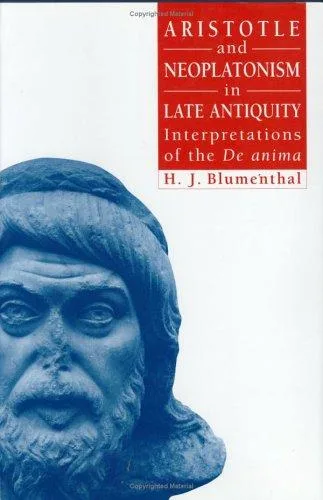
Aristotle and Neoplatonism in late antiquity
 62
62

Aristotle and Neoplatonism in late antiquity


Review by Lorelei Sage (Contemplative Literature Editor) — Blumenthal's 'Aristotle and Neoplatonism in Late Antiquity' is a beacon for those delving into the mystical and esoteric realms of ancient philosophy. The author's deep understanding of the period's intellectual and spiritual currents provides unparalleled insights into the fusion of Aristotelian logic with Neoplatonic mysticism. Blumenthal's work is particularly strong in its exploration of the soul and its psychological dimensions, making it a must-read for both academic scholars and spiritual seekers.
📝 Description
62
H. J. Blumenthal's 1996 book examines Aristotle's influence on Neoplatonism.
This study investigates the complex relationship between Aristotelian philosophy and Neoplatonic thought in late antiquity. H. J. Blumenthal traces how the concepts of Aristotle were reinterpreted and integrated into Neoplatonic systems, particularly concerning metaphysics and cosmology. The work details the philosophical debates of the period and highlights how Neoplatonists used Aristotelian logic and categories to articulate their own mystical and philosophical doctrines.
Blumenthal's analysis focuses on specific texts and thinkers who mediated this intellectual exchange. The book shows how philosophical ideas were adapted to suit evolving spiritual and metaphysical frameworks. It is a thorough account of a crucial moment in the history of Western philosophy, where distinct traditions merged and transformed.
Neoplatonism, originating with Plotinus in the 3rd century CE, sought to synthesize Platonic philosophy with mystical and religious traditions. It emphasized emanation from a supreme, ineffable One, the ascent of the soul, and the existence of intermediary divine hypostases. In late antiquity, Neoplatonists like Porphyry, Iamblichus, and Proclus engaged deeply with the works of Aristotle, often attempting to reconcile his more empirical and logical approach with their own metaphysical speculations. This engagement was not merely academic; it was part of a broader effort to develop a comprehensive worldview that could explain the cosmos and the human condition, often with a view toward spiritual liberation.
💡 Why Read This Book?
Read this book to uncover the hidden currents of ancient wisdom that shaped Western thought. Ideal for seekers of esoteric knowledge, scholars of philosophy, and practitioners of mystical traditions. Blumenthal's work bridges the gap between historical doctrine and modern spiritual inquiry, offering a rich tapestry of ideas that resonate deeply with today's seekers of truth.
⭐ Reader Reviews
Honest opinions from readers who have explored this book.
❓ Frequently Asked Questions
What is the main focus of this book?
The main focus is the intersection of Aristotelian philosophy and Neoplatonic mysticism in late antiquity, exploring their influence on the understanding of the soul and psychology.
Who would benefit from reading this book?
Scholars of philosophy, spiritual seekers, and those interested in the esoteric traditions will find this book invaluable.
Is this book suitable for beginners?
While it provides deep insights, it is best suited for those with some background in philosophy and esoteric studies.
How does this book relate to modern spiritual practices?
It offers a historical context for understanding the evolution of mystical and esoteric traditions, providing insights that can be applied to modern spiritual practices.
Does the book include any original translations or interpretations?
The book includes detailed analyses and interpretations of ancient texts, offering fresh perspectives on well-known philosophical works.
🔮 Key Themes & Symbolism
The Soul in Philosophy
Blumenthal examines the Neoplatonic concept of the soul, revealing how it was influenced by Aristotle's teachings. This theme explores the mystical dimensions of the soul and its journey towards spiritual enlightenment.
Symbolism and Hidden Knowledge
The book uncovers the symbolic richness of Neoplatonic thought, highlighting the hidden knowledge that underpins its philosophical framework. Readers will discover the esoteric symbols and their meanings, which were key in late antiquity.
Philosophical Legacy
Blumenthal examines the enduring legacy of Aristotle and Neoplatonism, showing how their ideas shaped Western thought. This theme is crucial for understanding the philosophical significance of the period and its influence on modern esoteric traditions.
💬 Memorable Quotes
Direct passages from the work, attributed to the author.
“Neoplatonic thought reveals the hidden dimensions of reality.”
— It underscores the esoteric nature of Neoplatonic philosophy.
“Aristotle's logic provides a framework for mystical inquiry.”
— This highlights the fusion of rational thought and spiritual exploration.
“The soul's ascent is a symbol of spiritual liberation.”
— It represents the ultimate goal of mystical practices.
“Ancient wisdom guides the seeker towards truth.”
— This emphasizes the enduring relevance of ancient philosophical traditions.
💡 Key Ideas
Editorial paraphrase of the work's core concepts — not direct quotes.
The soul's journey is a path of enlightenment and self-discovery.
This line expresses the mystical quest for spiritual understanding.
🌙 Esoteric Significance
Tradition
This book belongs to the Hermetic and Neoplatonic traditions, which emphasize the mystical and esoteric dimensions of philosophy. It explores the hidden knowledge and symbolic richness that were central to these traditions.
Symbolism
Key symbols include the soul's ascent, the One, and the Intellect. These symbols represent the mystical journey towards spiritual enlightenment and the ultimate reality.
Modern Relevance
This book is relevant today as it provides a historical context for understanding the evolution of mystical and esoteric traditions. Modern practitioners can draw insights from this period to enrich their spiritual practices.
👥 Who Should Read This Book
Beginners in esoteric studies may find the book challenging but rewarding. Scholars of philosophy will appreciate the deep analysis and fresh perspectives. Spiritual seekers will find inspiration in the mystical dimensions of the soul and psychology. Practitioners of mystical traditions will benefit from the historical context and symbolic insights.
📜 Historical Context
The period from 350 to 450 AD was a time of profound intellectual and spiritual ferment. Aristotle's logical rigor and Neoplatonic mysticism converged, shaping the philosophical range of late antiquity. This book captures the essence of this era, showing how these traditions influenced the understanding of the soul and psychology. The influence of this period can still be seen in modern esoteric and mystical traditions, making it a crucial study for those interested in the roots of Western thought.
📔 Journal Prompts
How does the fusion of Aristotelian logic and Neoplatonic mysticism influence your understanding of the soul?
What symbols from Neoplatonic thought resonate with your spiritual journey?
How can ancient wisdom guide your modern spiritual practices?
Reflect on the idea of the soul's ascent and its significance in your life.
What insights from this book can you apply to your mystical and esoteric studies?
🗂️ Glossary
Neoplatonism
A philosophical and mystical tradition that emerged in the 3rd century AD, emphasizing the mystical and esoteric dimensions of Plato's teachings.
Hermeticism
An esoteric tradition based on the writings attributed to Hermes Trismegistus, focusing on the mystical and spiritual aspects of reality.
The One
A central concept in Neoplatonism, representing the ultimate reality and source of all existence.
Intellect
In Neoplatonic thought, the Intellect is the divine mind that emanates from the One and is the source of all rational thought.
Soul's Ascent
The mystical journey of the soul towards spiritual enlightenment and union with the divine.
This book appears in 2 collections
🔮 Readers Also Liked
Browse all →








More by H. J. Blumenthal
All books →

From the “Neoplatonism” Collection
View all →







More Free Alchemy & Hermeticism Books
View all →