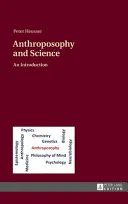
Anthroposophy and Science
 78
78

Anthroposophy and Science
Peter Heusser's *Anthroposophy and Science* is a commendable effort to bring Rudolf Steiner's complex ideas into direct dialogue with contemporary scientific disciplines. The book's strength lies in its methodical approach, dissecting anthroposophy through the rigorous frameworks of physics, biology, and epistemology. Heusser's attempt to justify a non-reductionist anthropology is particularly noteworthy, offering a sophisticated counterpoint to prevailing materialistic worldviews. However, the text can become dense, occasionally feeling more like a scientific treatise than an accessible introduction. The section on neurobiology, while detailed, might challenge readers not deeply versed in the subject. A passage that particularly stands out is the careful examination of how the concept of 'life' in anthroposophy can be understood in relation to modern biological concepts. Ultimately, *Anthroposophy and Science* provides a valuable, albeit demanding, bridge between esoteric thought and scientific inquiry for dedicated students.
📝 Description
78
Peter Heusser's 2003 book, Anthroposophy and Science, connects Rudolf Steiner's ideas to modern scientific fields.
Anthroposophy and Science offers a systematic academic study of Rudolf Steiner's anthroposophy, with a specific focus on its medical dimensions. Peter Heusser grounds his analysis in established scientific disciplines, moving beyond purely philosophical discussion. The book examines anthroposophy through the lenses of epistemology, physics, chemistry, molecular biology, neurobiology, psychology, philosophy of mind, history of science, and evidence-based medicine.
Heusser seeks to build a framework for a non-reductionist view of human beings and medical practice. This perspective acknowledges the connections between body, life, soul, and spirit. The work is aimed at intellectually curious individuals interested in the relationship between spiritual science and empirical research. It is particularly relevant for students and practitioners of anthroposophical medicine, as well as academics in philosophy of science, biology, medicine, and psychology open to investigating alternative frameworks. A background in scientific methodology and a willingness to engage with complex theoretical concepts are recommended.
This book places anthroposophy within the late 19th and early 20th-century European intellectual milieu. It acknowledges influences from thinkers like Goethe and Nietzsche, while implicitly responding to the scientific materialism that became dominant following the Enlightenment. Heusser engages with contemporary scientific fields to update the dialogue between Steiner's spiritual science and modern research. This effort occurs in a period when figures like Albert Einstein were developing their own theories, highlighting a broader intellectual ferment concerning the nature of reality and knowledge.
💡 Why Read This Book?
• Learn how anthroposophy, as presented in Heusser's work, offers a non-reductionist framework for understanding human beings that integrates body, life, soul, and spirit, a perspective distinct from purely materialistic scientific models. • Gain insight into the historical context of anthroposophy's engagement with science, understanding its development alongside major scientific shifts since the late 19th century. • Discover a methodological approach that grounds spiritual science in epistemology and specific scientific fields like physics and molecular biology, as detailed in chapters exploring these connections.
⭐ Reader Reviews
Honest opinions from readers who have explored this book.
❓ Frequently Asked Questions
What is the primary goal of Peter Heusser's book *Anthroposophy and Science*?
The primary goal is to provide an academically rigorous introduction to anthroposophy and its medical applications, grounding them in established scientific disciplines like physics, biology, and epistemology.
How does *Anthroposophy and Science* approach the concept of human constitution?
It advocates for a non-reductionist anthropology, accounting for the human being as a composite of body, life, soul, and spirit, viewed as an integrated whole rather than separate parts.
Which scientific fields are explored in relation to anthroposophy in this book?
The book examines anthroposophy through the lenses of epistemology, physics, chemistry, molecular biology, neurobiology, psychology, philosophy of mind, history of science, and evidence-based medicine.
Is *Anthroposophy and Science* suitable for beginners in anthroposophy?
Yes, it serves as an introduction, but it assumes a strong interest in scientific methodology and a willingness to engage with complex theoretical concepts and academic discourse.
What is the publication year of Peter Heusser's *Anthroposophy and Science*?
The book was first published in 2016.
Does the book discuss evidence-based medicine in relation to anthroposophy?
Yes, it explicitly includes evidence-based medicine as one of the scientific frameworks through which anthroposophy and its medical practices are examined.
🔮 Key Themes & Symbolism
Non-Reductionist Anthropology
This theme addresses the core anthroposophical view of the human being as a many-sided entity encompassing physical, vital, soul, and spiritual dimensions. Heusser argues for the scientific validity of this holistic model, contrasting it with materialistic approaches that reduce human existence solely to biological and chemical processes. The work seeks to demonstrate how concepts like 'life force' or 'spirit' can be understood and investigated within a scientifically informed, albeit expanded, framework, moving beyond simplistic reductionism and offering a more complete picture of human nature and consciousness.
Epistemology and Scientific Method
Heusser critically examines the foundations of scientific knowledge itself, exploring how we come to know what we know. This involves a deep dive into epistemology, questioning the limits of purely empirical or materialistic methods. The book proposes that anthroposophy offers complementary ways of knowing, particularly through intuitive and spiritual perception, which can be harmonized with sensory experience and intellectual reasoning. This theme is crucial for justifying anthroposophical insights within an academic and scientific context, suggesting that a broader epistemological scope is necessary to fully grasp reality.
Anthroposophical Medicine
A significant focus of the book is the application of anthroposophical principles to medicine. Heusser outlines how this approach views illness and health not just at the physical level but also in relation to the life forces, soul processes, and spiritual organization of the individual. The work discusses the development of specific remedies and therapeutic approaches derived from anthroposophy, aiming to demonstrate their coherence with scientific understandings of physiology and pathology, and advocating for their integration within evidence-based medical practice by acknowledging the full spectrum of human being.
Bridging Spiritual Science and Modern Science
This theme addresses the central challenge of reconciling Rudolf Steiner's spiritual scientific worldview with the findings and methods of contemporary science. Heusser meticulously maps out areas of potential dialogue and conflict, using disciplines like physics, chemistry, and biology as reference points. The book's aim is to show that anthroposophy is not antithetical to science but offers a complementary perspective that can enrich scientific understanding. It explores how concepts from spiritual science can inform scientific research and how scientific discoveries can, in turn, be understood within a larger, more comprehensive worldview.
💬 Memorable Quotes
Direct passages from the work, attributed to the author.
“Justification of a non-reductionist, academic anthropology and medical practice accounting for body, life, soul, and spirit.”
— This statement captures the book's core mission: to provide a scientifically grounded basis for understanding humans holistically, moving beyond purely material explanations and validating a spiritual dimension in both anthropology and medicine.
“This book is the first introduction into anthroposophy and anthroposophical medicine on the basis of epistemology, physics, chemistry, molecular biology, neurobiology, psychology, philosophy of mind, history of science, and evidence based medicine.”
— This highlights the book's unique methodological approach, emphasizing its comprehensive integration of traditional scientific disciplines with the study of spiritual science, aiming for a novel synthesis.
“Accounting for body, life, soul, and spirit.”
— This phrase concisely represents the fourfold constitution of the human being central to anthroposophy, signifying the book's commitment to exploring the full spectrum of human existence.
“Non-reductionist academic anthropology.”
— This points to the book's critical stance against purely materialistic or biological explanations of human nature, advocating for a broader, more inclusive understanding that acknowledges non-physical aspects.
“The work explores anthroposophy through the lenses of epistemology, physics, chemistry, molecular biology, neurobiology, psychology, philosophy of mind, history of science, and evidence based medicine.”
— This emphasizes the book's rigorous, interdisciplinary methodology, demonstrating how anthroposophical concepts can be examined and discussed using the established frameworks and tools of modern science.
🌙 Esoteric Significance
Tradition
The work is firmly rooted in the esoteric tradition of Anthroposophy, founded by Rudolf Steiner in the early 20th century. Anthroposophy itself draws from a broad spectrum of Western esoteric thought, including Hermeticism, Gnosticism, Kabbalah, and Rosicrucianism, but synthesizes these into a distinct spiritual-scientific methodology. Heusser's contribution lies in attempting to articulate this methodology and its medical applications using the language and frameworks of modern empirical science, departing from purely philosophical or devotional approaches and seeking to establish its relevance within academic discourse.
Symbolism
While not overtly focused on symbolic interpretation, the book engages with fundamental concepts that carry symbolic weight within esoteric traditions. The 'fourfold human constitution' (body, life, soul, spirit) can be seen as a symbolic representation of integrated cosmic and human principles. The concept of 'life force' or 'etheric forces' symbolizes the dynamic, vital principle that animates the physical body, often depicted in esoteric literature as a luminous or energetic field. The 'spirit' represents the higher, individualizing aspect of the human being, symbolizing eternal potential and cosmic connection.
Modern Relevance
Heusser's work is highly relevant to contemporary thinkers and practitioners grappling with the limitations of purely materialistic science. It speaks to the growing interest in consciousness studies, holistic health, and integrative medicine. Modern proponents of biodynamic agriculture, anthroposophical art therapy, and Waldorf education, all stemming from Steiner's work, can find in Heusser's rigorous approach a means to articulate and defend their practices within a scientifically informed context. It also appeals to philosophers of mind and science seeking alternatives to reductionism.
👥 Who Should Read This Book
• Students and practitioners of anthroposophical medicine seeking a robust academic foundation for their work and a deeper understanding of its scientific underpinnings. • Academics and researchers in fields such as philosophy of science, biology, neurobiology, and psychology interested in exploring non-reductionist models of human consciousness and life. • Individuals curious about the intersection of spirituality and science who desire a methodical, evidence-informed introduction to Rudolf Steiner's comprehensive worldview.
📜 Historical Context
Published in 2016, *Anthroposophy and Science* emerges in an era where the dialogue between consciousness studies, neuroscience, and philosophical inquiry into the nature of reality is highly active. It follows a long lineage of attempts to bridge spiritual and scientific thought, notably from the Theosophical Society movement and Rudolf Steiner's own extensive lectures beginning in the early 20th century. Steiner himself was active during a period of intense scientific discovery, with figures like Albert Einstein revolutionizing physics. The book implicitly responds to the persistent challenge posed by scientific materialism, a dominant intellectual current since the Enlightenment, which often dismisses non-material or vitalistic explanations. While contemporary figures like Rupert Sheldrake continue to explore morphic fields and consciousness beyond reductionism, Heusser's work specifically grounds anthroposophical medicine within established scientific disciplines, seeking academic legitimacy and addressing practitioners and researchers who might be skeptical of purely esoteric claims.
📔 Journal Prompts
The concept of a non-reductionist anthropology: how does it challenge your current understanding of human nature?
Reflecting on epistemology: what are the limits of purely empirical knowledge in understanding the human being?
Anthroposophical medicine’s accounting for body, life, soul, and spirit: which aspect feels most novel or challenging to integrate?
The historical context of anthroposophy: how has the relationship between spiritual and scientific thought evolved since the early 20th century?
Consider the fourfold human constitution: how might understanding the interplay of body, life, soul, and spirit inform your daily life or well-being?
🗂️ Glossary
Anthroposophy
A spiritual philosophy and practice founded by Rudolf Steiner, aiming to investigate the spiritual worlds through methods of thinking, feeling, and willing, and to apply this knowledge to human life and society.
Non-reductionist
An approach that avoids reducing complex phenomena, such as human consciousness or life, to simpler or more basic components, advocating instead for a holistic understanding.
Epistemology
The branch of philosophy concerned with the theory of knowledge, investigating its nature, scope, and justification.
Body, Life, Soul, Spirit
The four fundamental aspects of the human being in anthroposophical understanding: the physical body (material form), the life forces (etheric or vital body), the soul (sentience, emotions, intellect), and the spirit (individual consciousness, higher self).
Evidence-based medicine
A medical approach that uses current best evidence in making decisions about the care of individual patients, integrating clinical expertise and patient values.
Spiritual Science
A term used by Rudolf Steiner to describe the systematic study of spiritual realities and processes, approached with scientific rigor and objective methods.
Vital forces
In anthroposophy, the formative, animating energies that organize and sustain the physical body, often referred to as etheric forces or the life body.