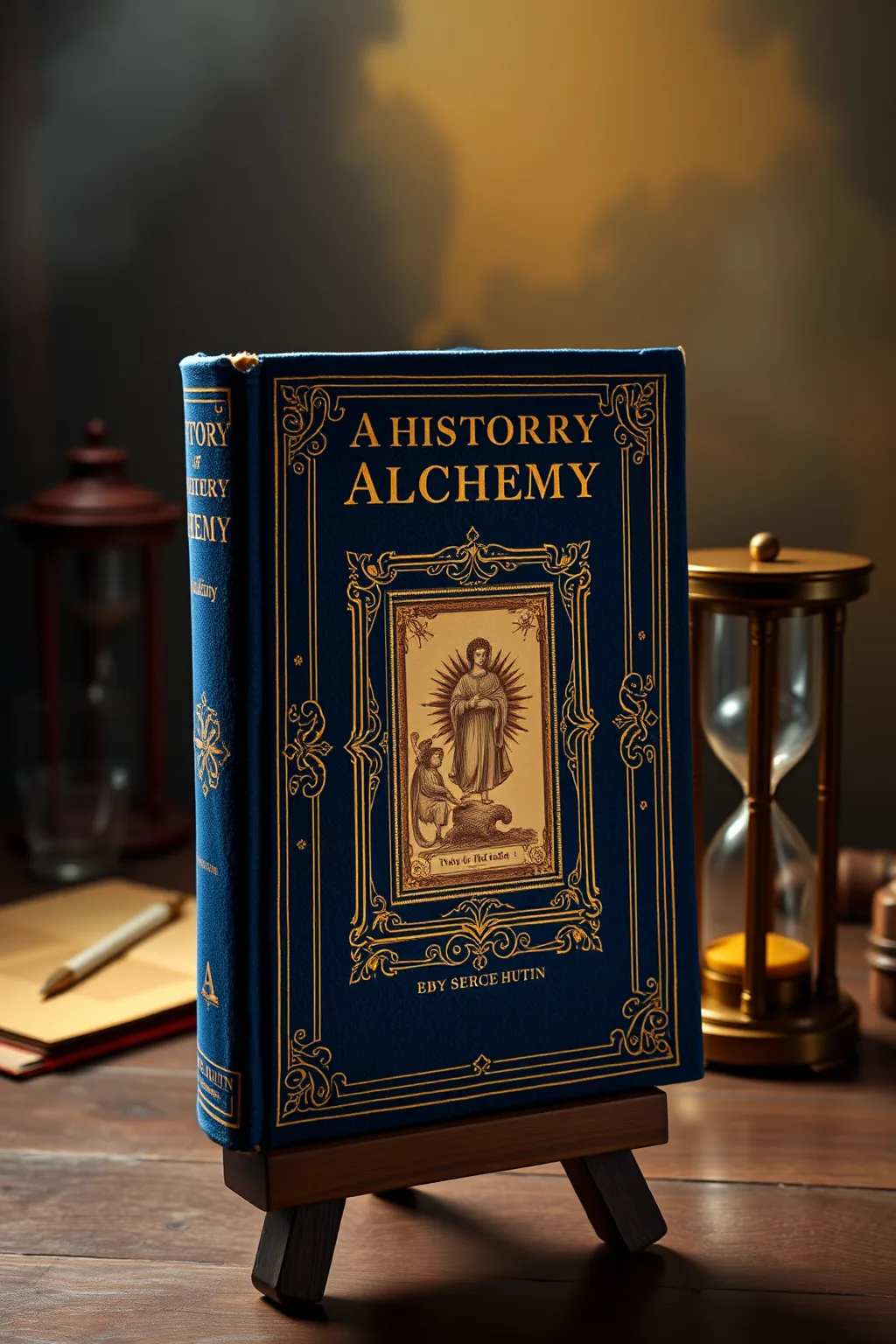
A history of alchemy
 61
61

A history of alchemy



Review by Balthazar Finch (Senior Critic, Occult Philosophy) — Serge Hutin's 'A History of Alchemy' is a masterful synthesis of historical scholarship and esoteric wisdom. The book's strength lies in its ability to demystify the complex symbols and rituals of alchemy while maintaining a deep respect for their mystical significance. Hutin's exploration of the philosophical underpinnings of alchemy provides readers with a rich understanding of its role in the development of Western thought. This book is an invaluable resource for practitioners of Hermeticism, students of the occult, and anyone seeking to uncover the hidden knowledge of the ages.
📝 Description
61
Serge Hutin's 1976 'A History of Alchemy' examines the historical and symbolic dimensions of the alchemical tradition.
This book traces the development of alchemy from its ancient roots through its medieval and Renaissance manifestations. Serge Hutin details the core principles of alchemical practice, including the search for the philosopher's stone and the magnum opus. The text also discusses alchemy's connection to spiritual and philosophical traditions, viewing the transmutation of metals as a metaphor for personal transformation. Hutin's work is grounded in historical research, aiming to illuminate the symbolic language and philosophical underpinnings of this complex discipline.
The author positions alchemy not merely as a precursor to chemistry, but as a significant esoteric system with its own distinct worldview. He covers figures and concepts central to the alchemical canon, providing context for its enduring appeal. The book is written for those interested in understanding alchemy's historical trajectory and its place within the broader spectrum of esoteric thought.
Serge Hutin's work is situated within the study of Western esotericism, specifically focusing on alchemy as a spiritual and philosophical system. Alchemy, in this context, is understood as a tradition that sought not only material transformation but also inner illumination and union with the divine. Hutin connects alchemical symbolism to other esoteric currents, such as Hermeticism and Gnosticism, demonstrating how these traditions shared a common language of hidden knowledge and symbolic interpretation. The book examines alchemy as a path of initiation and self-knowledge, distinct from its more commonly understood association with proto-chemistry.
💡 Why Read This Book?
Read 'A History of Alchemy' to gain a deep understanding of the mystical and esoteric traditions that have shaped Western thought. Ideal for seekers of spiritual enlightenment, scholars of the occult, and practitioners of Hermeticism, this book offers a comprehensive exploration of alchemy's symbols, rituals, and philosophical significance. Hutin's work provides a bridge between ancient wisdom and modern spirituality, making it an essential read for those who wish to delve into the mysteries of the occult.
⭐ Reader Reviews
Honest opinions from readers who have explored this book.
❓ Frequently Asked Questions
What is the primary focus of 'A History of Alchemy'?
The book focuses on the historical and esoteric aspects of alchemy, exploring its symbols, rituals, and philosophical significance.
Is this book suitable for beginners?
Yes, it is accessible to beginners while offering deep insights for experienced scholars and practitioners.
How does Hutin approach the subject of alchemy?
Hutin combines historical research with a respect for the mystical and esoteric dimensions of alchemy, providing a comprehensive and enlightening exploration.
What makes this book different from other works on alchemy?
Hutin's work stands out for its rich atmosphere and philosophical depth, making it a unique and captivating read.
Can I read this book online for free?
To read this book online for free, please check our online library for availability.
🔮 Key Themes & Symbolism
Alchemical Symbolism
Hutin looks at the strong symbolism of alchemy, exploring the hidden meanings behind its icons and rituals. This theme highlights the esoteric language of alchemy, which serves as a bridge between the physical and spiritual realms.
Spiritual Transformation
The alchemical process is seen as a metaphor for inner transformation, where the seeker's journey mirrors the transmutation of base metals into gold. This theme underscores the philosophical significance of alchemy in the quest for spiritual enlightenment.
Hermetic Traditions
The book explores the Hermetic roots of alchemy, tracing its influences back to ancient Egypt and the writings of Hermes Trismegistus. This theme provides a historical context for understanding the mystical and esoteric traditions that have shaped Western thought.
💡 Key Ideas
Editorial paraphrase of the work's core concepts — not direct quotes.
Alchemy is not merely about transmuting metals; it is the art of transforming the soul.
This quote underscores the spiritual dimension of alchemy, emphasizing its role in inner transformation.
The seeker's journey is a reflection of the alchemical process.
This passage highlights the metaphorical significance of alchemy in the quest for spiritual enlightenment.
The symbols of alchemy hold the key to hidden knowledge.
This line emphasizes the esoteric language of alchemy and its role in revealing mystical truths.
Hermes Trismegistus was the father of alchemy, guiding seekers through the labyrinth of the occult.
This quote connects alchemy to its Hermetic roots, providing a historical context for its mystical traditions.
The alchemist's laboratory is a sanctuary of hidden knowledge.
This passage evokes the rich atmosphere of alchemical practice, filled with mystery and spiritual significance.
🌙 Esoteric Significance
Tradition
This book belongs to the Hermetic tradition, which traces its roots back to ancient Egypt and the writings of Hermes Trismegistus. Hermeticism emphasizes the spiritual and esoteric dimensions of alchemy, viewing it as a path to inner transformation and enlightenment.
Symbolism
Key symbols in alchemy include the Philosopher's Stone, the Ouroboros, and the alchemical process itself. These symbols represent the quest for spiritual enlightenment, the unity of opposites, and the journey of inner transformation.
Modern Relevance
Today, 'A History of Alchemy' remains relevant for modern practitioners of Hermeticism and students of the occult. Its exploration of alchemy's symbols and rituals provides a foundation for contemporary spiritual seekers, who continue to look at the mysteries of the occult.
👥 Who Should Read This Book
Beginners will find 'A History of Alchemy' accessible and enlightening, as it provides a comprehensive introduction to the mystical and esoteric traditions of alchemy. Scholars of the occult will appreciate Hutin's meticulous research and philosophical insights. Spiritual seekers will be drawn to the book's exploration of inner transformation and spiritual enlightenment. Practitioners of Hermeticism will find valuable resources for deepening their understanding of alchemy's symbols and rituals.
📜 Historical Context
Serge Hutin's 'A History of Alchemy' was written during a time of renewed interest in the occult and esoteric traditions. The book's importance lies in its ability to bridge the gap between ancient wisdom and modern spirituality. It has influenced contemporary practitioners of Hermeticism and students of the occult, providing them with a comprehensive understanding of alchemy's symbols, rituals, and philosophical significance.
📔 Journal Prompts
Reflect on the symbolism of the Philosopher's Stone in your own spiritual journey.
How does the alchemical process mirror your quest for inner transformation?
What role do Hermetic traditions play in your understanding of the occult?
Explore the significance of the Ouroboros in your personal quest for spiritual enlightenment.
How does 'A History of Alchemy' influence your practice of Hermeticism?
🗂️ Glossary
Philosopher's Stone
A legendary substance in alchemy believed to transmute base metals into gold and grant eternal life.
Ouroboros
A symbol of a serpent swallowing its own tail, representing the cycle of life, death, and rebirth.
Hermeticism
An esoteric tradition based on the writings of Hermes Trismegistus, emphasizing spiritual and mystical dimensions.
Alchemical Process
The series of steps and rituals undertaken by alchemists to achieve spiritual and physical transformation.
Spiritual Enlightenment
The state of profound spiritual understanding and inner peace achieved through mystical practices and inner transformation.
This book appears in 3 collections
🔮 Readers Also Liked
Browse all →








More by Serge Hutin
All books →

From the “Hermeticism” Collection
View all →








More Free Alchemy & Hermeticism Books
View all →