A Dictionary of Freemasonry

 79
79

A Dictionary of Freemasonry
Robert Macoy's A Dictionary of Freemasonry functions less as a narrative and more as an indispensable toolkit for the dedicated student. Its strength lies in its sheer breadth, cataloging everything from common Masonic terms to more obscure allegorical figures. The entry for 'Entered Apprentice,' for instance, not only defines the term but often hints at the philosophical underpinnings of that foundational degree, a commendable approach. However, the work’s primary limitation is its encyclopedic nature; it requires a pre-existing framework of knowledge to fully appreciate the connections between entries. Without context, the definitions can remain arid. A particular passage on the 'Winding Stair' offers a concise yet illustrative example of how the book can illuminate complex symbolism. Ultimately, Macoy's dictionary is a vital, if dense, resource for serious Masonic inquiry.
📝 Description
79
Robert Macoy's Dictionary of Freemasonry, first published in 2000, deciphers the fraternity's complex lexicon.
This alphabetical compilation addresses terms, symbols, rituals, and historical figures central to Masonic understanding. Macoy's work aims to clarify the often specialized language and practices of Freemasonry. It functions as a reference, providing definitions and explanations that can help readers grasp Masonic symbolism and philosophy. The dictionary is mainly for Freemasons seeking a more thorough grasp of their craft's vocabulary. It also benefits scholars of fraternal organizations, researchers of Western esotericism, and those interested in the historical and symbolic foundations of Freemasonry. Individuals encountering Masonic references in literature or historical texts will find this book a useful tool for clarification.
Freemasonry, with origins in late 16th and early 17th century England, developed intricate internal traditions and a distinct vocabulary. The creation of reference works dedicated to its study became important for standardizing knowledge and improving accessibility. This 2000 edition of Macoy's work continues a long line of Masonic scholarship, reflecting a sustained interest in the fraternity's history and symbolic language across centuries, even during times of public questioning.
As a dictionary of Freemasonry, Macoy's work sits within the tradition of Masonic literature that seeks to codify and explain the fraternity's internal knowledge. This tradition emerged as Freemasonry developed its distinct rituals and symbolic systems, particularly from the 18th century onward. Such reference works aim to provide clarity on allegorical narratives, moral teachings, and the historical development of Masonic degrees and figures, serving those who wish to understand the philosophical and ethical dimensions of the craft.
💡 Why Read This Book?
• Gain precise definitions for Masonic terminology, such as 'Apron,' which elucidates its symbolism beyond mere apparel, offering insight into moral purity and duty, essential for understanding Masonic teachings. • Understand the allegorical significance of key symbols like the 'Tessellated Pavement' as presented in the dictionary, revealing its representation of the checkered floor of the Lodge and the dualities of human life. • Access clear explanations for specific rituals and degrees, like the 'Raising' ceremony, providing a foundational grasp of its meaning within the Masonic progression and its connection to the legend of Hiram Abiff.
⭐ Reader Reviews
Honest opinions from readers who have explored this book.
❓ Frequently Asked Questions
What is the historical origin of Robert Macoy's A Dictionary of Freemasonry?
While this edition was published in 2000, Robert Macoy was a prolific Masonic author and publisher in the 19th century. His works, including dictionaries and ritual texts, have been foundational for understanding Freemasonry and have been reprinted and updated over time.
Is this dictionary suitable for non-Masons curious about Freemasonry?
Yes, it is suitable for curious non-Masons. The dictionary provides clear definitions for terms and concepts, offering an accessible entry point into understanding Masonic symbolism, history, and philosophy without requiring prior Masonic knowledge.
Does the dictionary explain the different Masonic degrees?
Indeed, A Dictionary of Freemasonry typically includes entries for various Masonic degrees, such as Entered Apprentice, Fellow Craft, and Master Mason, explaining their significance, symbols, and core teachings within the Masonic system.
What kind of symbols are explained in this book?
The dictionary covers a wide range of Masonic symbols, including geometric figures like the Square and Compasses, architectural elements such as the Pillars of Solomon's Temple, and abstract concepts represented by tools and allegories.
How does this dictionary compare to other Masonic reference books?
Macoy's dictionary is known for its comprehensive alphabetical listing and its direct, explanatory style, making it a go-to reference for many Masons seeking to understand specific terms or concepts encountered in their Masonic journey.
Can I find information on specific Masonic rituals within this book?
While the dictionary focuses on defining terms and symbols, many entries inherently relate to Masonic rituals. For instance, definitions of degrees or specific actions within ceremonies will often allude to or describe ritualistic elements.
🔮 Key Themes & Symbolism
Masonic Symbolism Decoded
This dictionary systematically unpacks the rich symbolic language of Freemasonry. It moves beyond superficial interpretations to reveal the deeper philosophical and ethical meanings embedded in common Masonic imagery. For instance, the Square and Compasses, far from being mere tools, are presented as representations of morality, rectitude, and the balance between spiritual and earthly concerns. Understanding these symbols is presented as integral to grasping the fraternity's core tenets and its allegorical narratives, offering a structured approach to the visual language of Masonic practice.
Ritual and Degree Structure
A significant portion of the work is dedicated to clarifying the terminology and concepts associated with the various degrees of Freemasonry. Entries on 'Entered Apprentice,' 'Fellow Craft,' and 'Master Mason' delineate the progression and the specific lessons conveyed at each stage. The dictionary aims to explain the structure of Masonic education, explaining the purpose and allegorical significance of the ceremonies and lectures that form the backbone of Masonic experience, thereby providing a framework for understanding the journey through the Craft.
Historical Figures and Concepts
Beyond symbols and rituals, the dictionary serves as a biographical and conceptual index for Freemasonry's history. It provides concise explanations of influential figures, legendary characters like Hiram Abiff, and important historical movements or concepts that have shaped the fraternity. This contextualization helps readers understand Freemasonry not just as a system of symbols, but as a tradition with a lineage and a historical development, connecting modern practice to its past.
Ethical and Philosophical Underpinnings
The definitions within A Dictionary of Freemasonry consistently point towards the ethical and philosophical dimensions of the Craft. Terms related to virtues, morality, and spiritual principles are explained in the context of Masonic teachings. The dictionary reveals how Masonic symbolism and ritual are designed to impart lessons in character development, duty, and the pursuit of wisdom, positioning Freemasonry as a system for personal improvement and moral instruction.
💬 Memorable Quotes
Direct passages from the work, attributed to the author.
“The Square teaches us to square our actions by the square of virtue.”
— This concise statement captures the practical application of Masonic symbolism. It suggests that the geometric tool, the square, is not merely an object of measurement but a metaphor for ethical conduct, urging adherents to align their deeds with principles of righteousness and integrity.
“The Compasses are used to circumscribe our desires and keep our passions within due bounds.”
— This highlights the regulative function of Masonic symbolism. The Compasses, representing the limits of a circle, are interpreted as a guide for self-control, advising practitioners to moderate their appetites and emotions to maintain inner harmony and societal decorum.
“The Letter 'G' is often associated with Geometry, the noblest of sciences, and God, the Grand Architect of the Universe.”
— This entry points to the dualistic nature of significant Masonic symbols, linking abstract mathematical principles with divine concepts. It illustrates how Freemasonry integrates intellectual pursuits with spiritual reverence, suggesting that understanding the physical world through geometry can lead to an appreciation of a higher creative power.
“The Rough Ashlar represents man in his natural state, unpolished and imperfect.”
— This concept from the dictionary clarifies the initial stage of personal development within the Masonic allegory. The 'Rough Ashlar,' a stone as taken from the quarry, symbolizes an individual prior to moral and intellectual refinement, setting the stage for the subsequent work of self-improvement.
“The Perfect Ashlar is the Rough Ashlar brought to proper form and finish by the tools of Freemasonry.”
— This defines the culmination of the Masonic journey of self-cultivation. It illustrates the transformative process, where the individual, through Masonic instruction and practice (symbolized by the tools), achieves a state of moral and intellectual perfection, ready to be fitted into the spiritual building.
🌙 Esoteric Significance
Tradition
This work aligns with the Western Esoteric tradition, specifically within the broad currents of Hermeticism and Rosicrucianism that influenced Freemasonry. It serves as a practical lexicon for a tradition that views Masonry as a system of moral and spiritual allegory, often drawing parallels with ancient mystery schools and Kabbalistic concepts. While not explicitly Kabbalistic, its engagement with symbolism and degrees reflects the hierarchical structure found in many esoteric systems, aiming to reveal hidden knowledge through symbolic language.
Symbolism
Central symbols explained include the 'Square,' representing earthly morality and justice; the 'Compasses,' symbolizing the circumscription of desires and spiritual guidance; and the 'Tessellated Pavement,' often interpreted as the checkered floor of the Lodge, signifying the duality of life and the balance of opposing forces. The 'Winding Stair' is frequently explored as a symbol of spiritual ascent and the journey towards higher knowledge through the degrees.
Modern Relevance
Contemporary practitioners of Western Esotericism, particularly those involved in Masonic study groups or independently researching Hermeticism, find value in Macoy's dictionary. It provides foundational definitions for those exploring the symbolic language employed in modern initiatory traditions, comparative mythology, and esoteric philosophy. Thinkers and practitioners interested in the historical development of secret societies and their symbolic frameworks continue to reference such works for their comprehensive cataloging of Masonic terminology.
👥 Who Should Read This Book
• Beginning students of Freemasonry seeking to understand the basic terminology and concepts encountered in early degrees, providing a clear entry into Masonic language. • Scholars of fraternal organizations and Western esoteric traditions interested in the historical development and symbolic lexicon of one of the world's most influential secret societies. • Individuals engaged in comparative religious studies or occult research who need a reliable reference for Masonic symbols, rituals, and allegorical narratives.
📜 Historical Context
Robert Macoy's A Dictionary of Freemasonry emerges from a long tradition of Masonic literature that sought to codify and explain the fraternity's complex lore. By the late 20th century, when this edition was compiled, Freemasonry had long been established as a significant fraternal organization, with its roots tracing back to the operative stonemasons' guilds of the late Middle Ages and its speculative form solidifying in England around the early 18th century. The Enlightenment period and subsequent centuries saw an explosion of Masonic writing, from ritualistic exposures to philosophical treatises. Macoy himself was a prominent figure in 19th-century American Freemasonry, known for his extensive publications. This dictionary represents an effort to consolidate knowledge in an era when comparative religion and esoteric studies were gaining academic traction, offering a structured reference against a backdrop of diverse interpretations and occasional anti-Masonic sentiment. It stands as a evidence of the enduring need for clear explication in a tradition rich with allegory and symbolism.
📔 Journal Prompts
The Square and its representation of virtue: how does this principle apply to daily decisions?
Reflection on the Rough Ashlar: identify one area of personal 'unpolished' character requiring refinement.
The symbolic meaning of the Letter 'G': explore its connection to geometry and divine order in your own understanding.
Consider the 'Tessellated Pavement': how do you work through the dualities of life in your personal experience?
The Winding Stair as a symbol of ascent: what is one step you are currently taking towards greater knowledge or spiritual understanding?
🗂️ Glossary
Ashlar
Refers to a stone shaped for building. In Freemasonry, the 'Rough Ashlar' represents man in his unrefined state, while the 'Perfect Ashlar' symbolizes the individual perfected through Masonic instruction and virtue.
Circumambulation
The act of walking around a sacred space or altar in a specific direction, often clockwise, as part of a ritual. In Freemasonry, it symbolizes the journey of the candidate through the degrees and adherence to Masonic principles.
Compasses
A primary Masonic symbol, used to draw circles. It represents the ability to circumscribe desires and passions, keeping them within due bounds and fostering self-control and moral rectitude.
Entered Apprentice
The first degree in Freemasonry. This stage focuses on the candidate's introduction to Masonic principles, symbolism, and the initial steps of moral and intellectual development.
Hiram Abiff
The legendary master craftsman central to the Master Mason degree's allegory. His story represents fidelity, integrity, and the pursuit of knowledge, even in the face of death.
Square
A fundamental Masonic symbol, representing morality, justice, and the virtue of squaring one's actions by the square of integrity. It is often paired with the Compasses.
Tessellated Pavement
The checkered floor of the Masonic Lodge, symbolizing the dualities of human existence (light and darkness, good and evil) and the need for balance and harmony.
🔮 Readers Also Liked
Browse all →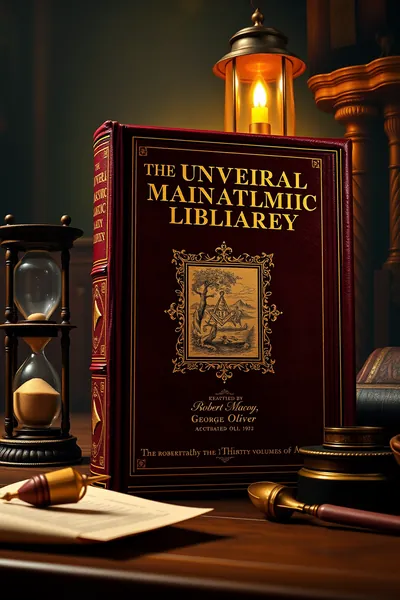







More by Robert Macoy
All books →

More Free Freemasonry & Secret Societies Books
View all →