Robert Macoy
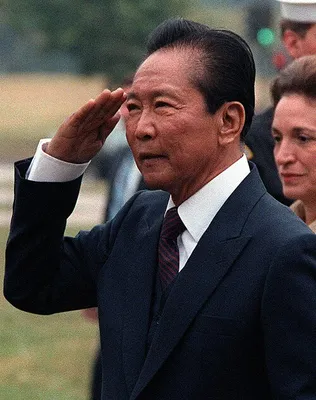
Ferdinand Marcos was a Filipino lawyer and politician who served as president, whose rule was marked by authoritarianism and controversy.
Ferdinand Emmanuel Edralin Marcos Sr. was a Filipino lawyer, military officer, and politician who held the office of president for an extended period, from 1965 to 1986. His tenure is frequently described as a kleptocracy, and he governed under martial law as a dictator between 1972 and 1981. Born in 1917, Marcos had a complex early life, including a conviction for assassination that was later overturned on appeal. He served in the U.S. Army during World War II, though claims about his military record have been disputed. After the war, he entered politics, serving in the House of Representatives and the Senate before becoming president.
Marcos's presidency began with infrastructure development but later faced economic crises and social unrest. His declaration of martial law led to a period of authoritarian rule, characterized by suppression of opposition and constitutional changes to consolidate power. Following the assassination of Ninoy Aquino and a deepening economic crisis, Marcos was eventually deposed by the People Power Revolution in 1986. He died in exile in 1989, remaining a contentious figure due to widespread condemnation of corruption, brutality, and extravagance associated with his regime.
Early Life and Education
Born in 1917 in Ilocos Norte, Ferdinand Marcos was the son of a lawyer and politician. He attended various elementary and secondary schools before pursuing higher education at the University of the Philippines, where he studied liberal arts and law. During his university years, Marcos was academically successful, excelling in studies and extracurricular activities like sports and debate. He was also a top scorer in the bar exam and graduated with honors. His early life also involved a controversial murder conviction related to the assassination of a political rival, Julio Nalundasan, which was subsequently overturned by the Supreme Court.
Military Service and Political Ascent
Marcos's military service during World War II saw him join the United States Army after Pearl Harbor, fighting against the Japanese until his capture. Official records suggest he served in intelligence, but his later claims of heroism and extensive decorations have been widely disputed and found to be inaccurate by researchers. Following his release from Japanese captivity, Marcos claimed to have led a significant guerrilla force, assertions also contradicted by U.S. Army investigators. After the war, he entered politics, serving in the Philippine House of Representatives and later the Senate, where he held the position of Senate President. His political career was notably advanced by exaggerated accounts of his military achievements.
Presidency and Authoritarian Rule
Elected president in 1965 and re-elected in 1969, Marcos initially focused on infrastructure projects funded by foreign loans. His second term was marked by economic instability and social unrest, leading him to declare martial law in 1972. During this period, he ruled as a dictator, revising the constitution to increase his powers, silencing media and opposition, and using force against political adversaries. He termed his ideology the "movement for a new society" and established the Kilusang Bagong Lipunan party. After the formal end of martial law in 1981, he was elected to a third term, but his popularity waned due to economic collapse and political events, culminating in his removal from power in 1986.
Controversy and Legacy
Ferdinand Marcos remains a highly controversial figure, with his presidency widely condemned as a kleptocracy characterized by corruption, extravagance, and violence. His wife, Imelda Marcos, also became known for the excesses of their rule. Allegations of significant financial theft from the state persist. Despite his removal from power and death in exile, many figures from his regime continued in politics, and his children remain active in Philippine politics, with his son currently serving as president. The Marcos family has attempted to distance themselves from the controversial aspects of their parents' legacy.
Books by Robert Macoy
5 free public domain books · Read online or download