Yama
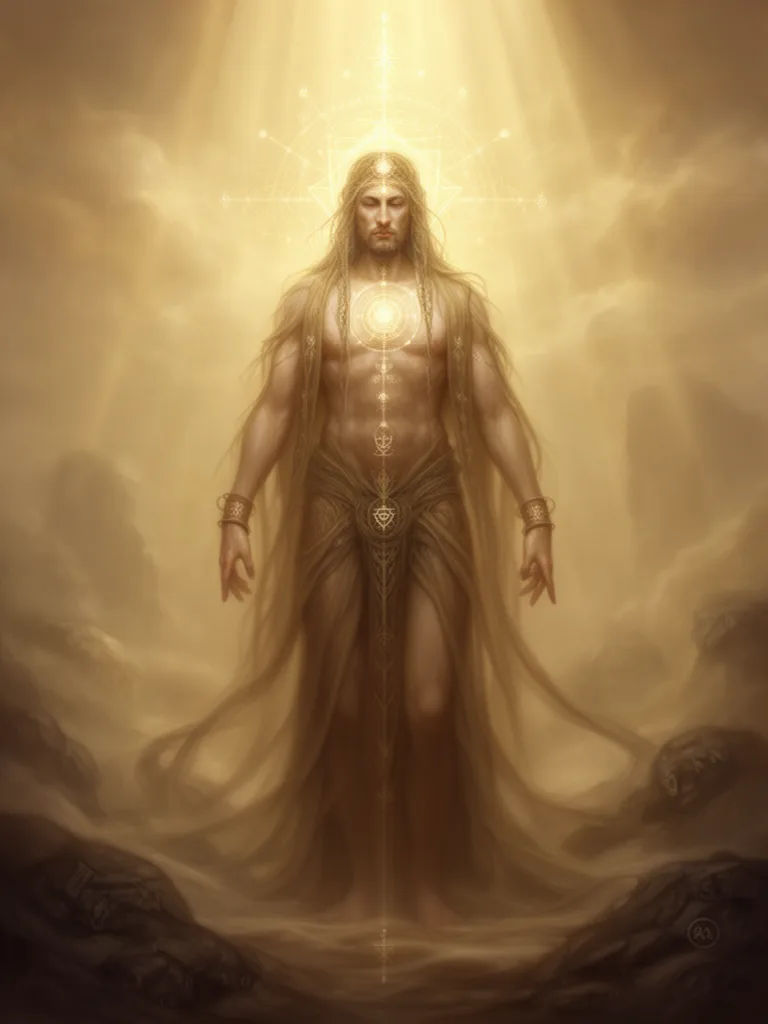
Yama is the Hindu god of death and the underworld, often depicted as a judge of the departed. He is also a concept in Buddhism representing ethical restraints or moral discipline, crucial for spiritual progress.
Where the word comes from
The Sanskrit word "Yama" (यम) derives from the Proto-Indo-European root *yem-, meaning "to restrain" or "to hold." In Vedic tradition, Yama is the first mortal to die and lord of the departed. The term first appears in the Rigveda, solidifying his role as ruler of the dead.
In depth
Tiie personified third root-race in Occultism. In the Indian Pantheon Yama is the subject of two distinct versions of the myth. In the Vcdas he is the god of the dead, a Pluto or a IMinos. with whom the shades of the departed dwell (the Kamarupas in KamalokaV A hymn speaks of Yama as the first of men that died, and the first that departed to the world of bliss (Devachan). This, because Yama is the embodiment of the race wiiich was the first to be endowed with conaciouaness (Manas), without whichtliere is neither Heaven nor Hades. Yama is represented as the son of Vivaswat (the Sun). He had a twin-sister named Yanu, who was ever urging him, according to another hymn, to take her for his wife, in order to perpetuate the species. The above has a very suggestive symbolical meaning, which is explained in Occultism. As Dr. ;Muir truly remarks, the Rig-Veda — the greatest authority on the primeval myths which strike the original key-note of the themes that underlie all the subsequent variations — nowhere shows Yama "as having anything to do with the punishment of the wicked". As king and judge of the dead, a Pluto in sliort, Yama is a far later creation. One has to study the true character of Yama-Yami throughout more than one hymn and epic poem, and collect the various accounts scattered in dozens of ancient works, and then he will obtain a consensus of allegorical statements which will be found to corroborate and justify the Esoteric teaching, that Yama-Yami is the symbol of the dual Manas, in one of its mystical meanings. For instance, Yami-Yami is always represented of a gree^i colour and clothed with red, and as dwelling in a palace of copper and iran. Students of Occultism know to which of the human "principles" the green and the red colours, and by correspondence the iran and copper are to be applied. The "twofold-ruler" — the epithet of Yama-Yami — is regarded in the exoteric teachings of the ChinoBuddhists as both judge and criminal, the restrainer of his own evil
How different paths see it
What it means today
H.P. Blavatsky, in her characteristic synthesis of ancient lore, presents Yama as a figure of profound, multi-layered significance, extending beyond the simple identification with the god of the dead. Her reference to Yama as the "personified third root-race" hints at a cosmic evolutionary schema, where consciousness itself, born from primordial unity, progresses through distinct stages of manifestation. This is a far cry from the grim reaper of Western folklore. Instead, Yama, in his Vedic context as the first man to die, becomes a progenitor of mortality, the one who first charted the passage from embodied existence to the subtle realms. This act, she suggests, is intrinsically linked to the dawn of Manas, or mind, the faculty that allows for self-awareness and, consequently, the experience of both heaven and hell, or Devachan and Kamaloka.
The distinction Blavatsky draws between the Vedic Yama and the later "Pluto" figure is crucial. The Rig-Veda, she notes, does not depict Yama as a punisher of the wicked. This aligns with scholarly interpretations that see the earlier Yama as a sovereign of the ancestral realm, a guide rather than a tormentor. Mircea Eliade, in his vast studies of comparative religion, often emphasized the chthonic deities' role in mediating between the living and the dead, facilitating the transition and maintaining cosmic balance. Yama's noose, rather than a tool of torture, can be seen as a symbolic cord connecting the earthly plane to the ancestral world, a means of guidance and remembrance.
In Buddhism, this concept evolves into a powerful ethical imperative. King Yama becomes the embodiment of karmic retribution, not as divine wrath, but as the impersonal law of cause and effect. As D.T. Suzuki elucidated the Buddhist understanding of emptiness and interdependence, so too does Yama's role underscore the interconnectedness of actions and their consequences. He is the cosmic accountant, ensuring that the ledger of karma is meticulously balanced, thereby encouraging adherence to the Noble Eightfold Path. This dual nature of Yama, as both the harbinger of death and the guardian of moral order, offers a potent reminder to the modern seeker that the cessation of physical life is not an end, but a transition governed by principles of cosmic justice, urging us to cultivate wisdom and compassion in our brief sojourn.
Related esoteric terms
Books on this concept








No reflections yet. Be the first.
Share your interpretation, experience, or question.
