Vishnu
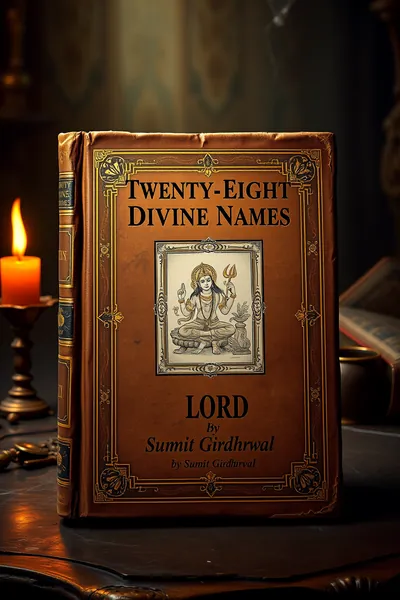
Vishnu is a principal deity in Hinduism, revered as the preserver and protector of the universe. He is often depicted with four arms, holding a conch, discus, mace, and lotus, symbolizing his cosmic powers and role in maintaining cosmic order. Vishnu is believed to incarnate in various avatars to restore dharma.
Where the word comes from
The name "Vishnu" is of Sanskrit origin. Its precise etymology is debated among scholars, but it is often linked to the root viṣ, meaning "to pervade" or "to enter." This suggests a deity who is all-pervading, present throughout creation. The name appears in ancient Vedic texts, solidifying its deep roots in Hindu tradition.
In depth
Lalita Vistara (Sk.). A celebrated biography of Sakya Muni, the Lord Buddha by Dharmarakcha, a.d. 308.
How different paths see it
What it means today
The concept of Vishnu, the preserver, offers a profound counterpoint to the ceaseless flux of existence. In a world often characterized by entropy and decay, the idea of a divine force actively maintaining cosmic order resonates deeply. Mircea Eliade, in his studies of religion, highlighted the human need for a stable, ordered cosmos, a desire Vishnu’s presence fulfills. His cyclical avatars, as explored in texts like the Bhagavad Gita, suggest a divine responsiveness to the world's needs, a principle not unlike the Jungian concept of the Self's self-regulation manifesting through archetypes. The devotee's relationship with Vishnu, often through bhakti or devotional practices, mirrors the profound personal connection mystics across traditions seek with the divine, a direct address to the immanent. This deity’s pervasive nature, implied by his name, speaks to a spiritual reality that is not distant but interwoven with the fabric of being, a concept echoed in various non-dual philosophies. His presence assures that even in the face of overwhelming change, a fundamental continuity, a divine stewardship, persists. The story of Vishnu is a cosmic reassurance, a divine hand steadying the spinning wheel of time.
Related esoteric terms
Books on this concept







No reflections yet. Be the first.
Share your interpretation, experience, or question.
