Vara
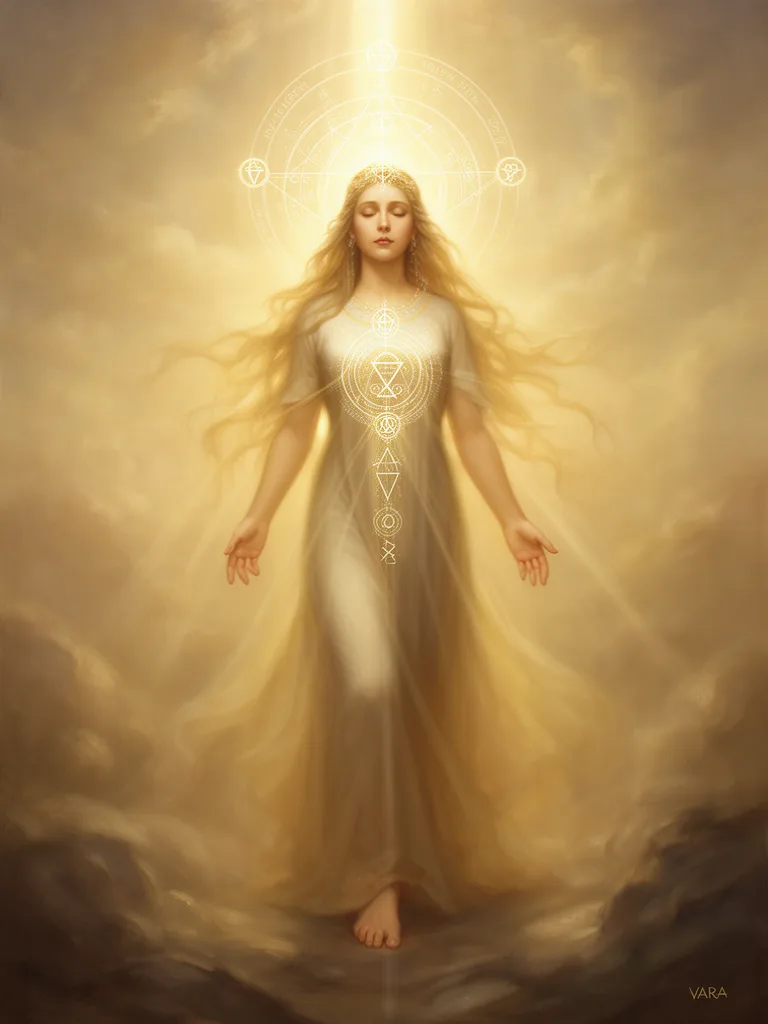
Vara signifies a divine enclosure or protective space, often described as an ark or a spiritual vehicle. In ancient Persian texts, it represents a celestial refuge built by Ahura Mazda to protect humanity. It can also denote the human body as the vessel for the inner self or soul.
Where the word comes from
The term "Vara" originates from Avestan, an ancient Iranian language, where it means "enclosure," "fortress," or "space." It is related to the Sanskrit word "var," meaning "to cover" or "to surround." The concept of a protective enclosure appears in various Indo-Iranian mythologies.
In depth
A term used in the Veiididdd, whertAhura-mazda eommands Yinni to build Vara. It also sifrnifit-s an enelosure or vehicle, an ark (arrjha), and at the same time i^l an (versr 30). Vara is the vehicle of our informing Etjus, i< ., /he human liody. the soul in which is typified by the txpression a "window self-shining within'*. Varaha (SI,-.). The boar-avatar of Vishnu; the third in number.
How different paths see it
What it means today
The concept of Vara, as presented in the Avestan tradition and echoed in other mythologies, speaks to a profound human need for sanctuary and a container for the sacred. Mircea Eliade, in his seminal work "The Sacred and the Profane," explored how humans have consistently sought to create "hierophanies," moments and places where the divine manifests, thereby establishing a center in the midst of undifferentiated space. Vara functions as such a center, a cosmic egg or a divine ark, safeguarding the nascent spiritual life from the surrounding void or the forces of dissolution.
This notion of an enclosure as a vehicle for spiritual advancement is particularly potent. Blavatsky herself connects it to the human body, the "vehicle of our informing spirit." This echoes Gnostic ideas of the body as a temporary dwelling for the divine spark, a "chariot" for the soul, as explored by scholars like Henry Corbin in his work on Islamic mysticism and the imagination. The body, when understood not as a mere biological machine but as a sacred vessel, becomes a microcosm of the divine Vara, a space where the "self-shining window" of consciousness can perceive higher realities. The act of building or entering such a space, whether literal or metaphorical, is an act of spiritual discipline, a conscious effort to create order and meaning within the flux of existence. It suggests that the path to spiritual realization often involves the creation of intentional, sacred boundaries that foster inner growth and protect the fragile flame of awareness. The idea of Vara invites us to consider the spaces we inhabit, both internal and external, and how they might serve as conduits for the divine.
Related esoteric terms
Books on this concept








No reflections yet. Be the first.
Share your interpretation, experience, or question.
