Khem
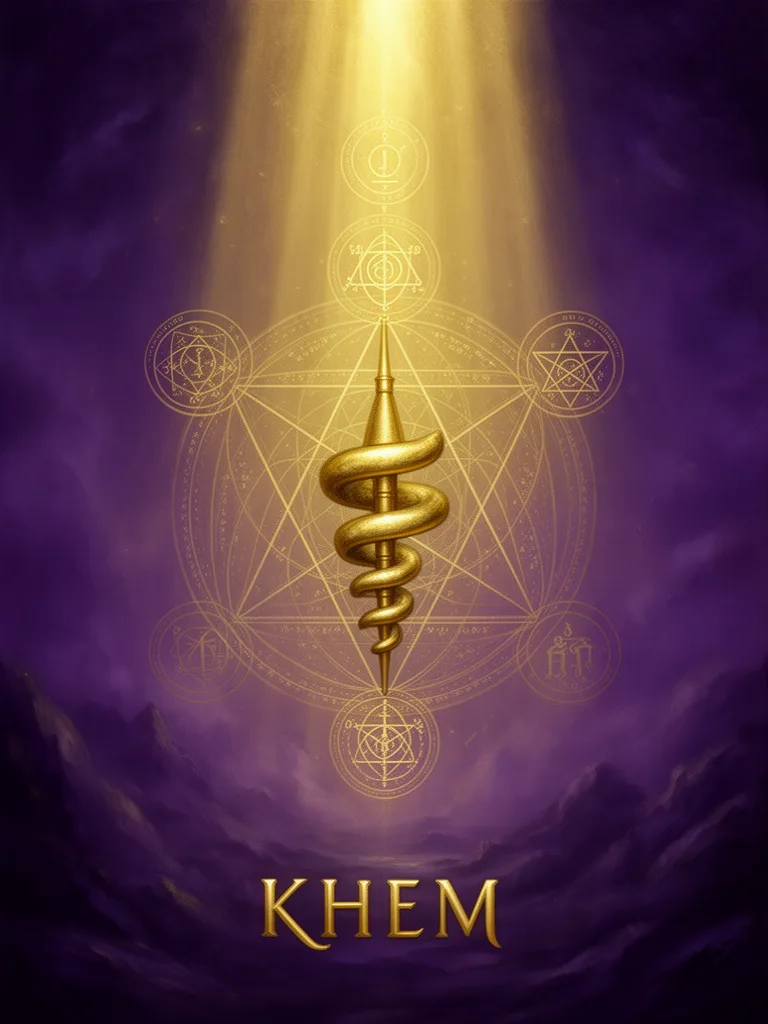
Khem, an ancient Egyptian term, refers to the fertile black soil of the Nile Valley, symbolizing generative power, creation, and the primal substance from which life emerges. It is associated with the god of fertility, Min, and represents the alchemical principle of matter.
Where the word comes from
The word "Khem" (or Kmt) originates from ancient Egyptian, meaning "black" or "fertile soil." This designation distinguished the rich, life-giving alluvial deposits of the Nile Delta from the "red land" (Deshret), the surrounding desert. The term's antiquity is tied to the very origins of Egyptian civilization.
In depth
The same as Ilorus. "The God Khem will avenge his father Osiris"; says a text in a papyrus.
How different paths see it
What it means today
The term Khem, meaning "black" in ancient Egyptian, speaks to more than just the rich alluvial soil of the Nile Valley. It is a profound symbol of generative power, the very essence of creation and fertility. For the ancient Egyptians, this black earth was the source of all sustenance, the primordial substance from which life sprang forth, a stark contrast to the barren "red land" of the desert. This duality, between the fertile and the desolate, is a recurring motif in human spiritual thought.
In Hermetic philosophy, Khem becomes the prima materia, the undifferentiated potential that lies at the heart of all transformation. It is not inert matter, but a living, fertile ground awaiting the alchemist's touch, akin to the divine spark that animates the cosmos. Mircea Eliade, in his studies of shamanism and alchemy, highlights how the earth itself is often seen as a cosmic womb, a source of renewal and rebirth. The alchemist, therefore, is not merely working with substances but participating in a sacred act of co-creation, mirroring the earth's own ceaseless generative cycle.
This concept echoes in other traditions as well. The Hindu reverence for Prithvi, the Earth Mother, as the nurturing womb of existence, shares a similar reverence for the generative power of the terrestrial realm. The Egyptian god Min, often depicted with an erect phallus, was the deity of fertility and procreation, intrinsically linked to Khem. To understand Khem is to grasp a fundamental principle: that creation is not a singular event but an ongoing, fertile process, deeply rooted in the very substance of existence, a constant invitation to participate in the unfolding of life. It reminds us that even in the seemingly mundane, there lies the potential for extraordinary abundance, if only we cultivate the fertile ground.
Related esoteric terms
Books on this concept






No reflections yet. Be the first.
Share your interpretation, experience, or question.
