Sephira
Sephira, plural Sephiroth, refers to the ten divine emanations or attributes of God in Kabbalistic mysticism. These emanations form a cosmic tree, the Tree of Life, symbolizing the path from the unknowable divine to the manifest world.
Where the word comes from
The Hebrew term "Sephira" (סְפִירָה) likely derives from "Sefir" (סְפִיר), meaning "to count" or "to number," suggesting divine enumeration or calculation. It also shares roots with "Sappir," meaning "sapphire," perhaps alluding to divine brilliance. The concept first appears in early Kabbalistic texts like the Sefer Yetzirah.
In depth
An emanation of Deity; the parent and synthesis of the ten Sei>hiroth when she stands at the head of the Sephirothal Tree; in the Kahhalah, Sephira, or the "Sacred Aged", is the divine Intelligence (the same as Sophia or Metis), the first emanation from the "Endless" or Ain-Suph. Sephiroth (Ifi />.;. The ten emanations of Deity; the highest is formed by the eoiicentration of the Ain Soph Aur, or the Limitless Light, and each Sephira produces by emanation another Sephira. The names of the Ten Sephiroth are — 1. Kether — The Crowni; 2. Chokmah — "Wisdom; :i. Binah — Understanding; 4. Chesed. — Mercy; 5. Geburah — Power; 6. Tipliereth — Beauty ; 7. Netzach — Victory ; 8. Hod— Splendour ; 9. Jesod — Foundation; and 10. Malkuth — The Kingdom. The conception of Deity embodied in the Ten Sephiroth is a very sublime one. and each Sephira is a picture to the Kabbalist of a group of exalted ideas, titles and attributes, which the name but faintly represents. Each Sepliira is called either active or passive, though this attribution may lead to error; passive does not mean a return to negative existence; and the two words only express the relation between in dividnal Se])hiroth, and not any ab.solute quality, [w.w.w.]
How different paths see it
What it means today
The Sephiroth, those ten luminous vessels of divine energy in Kabbalah, present a fascinating cartography of the sacred. They are not mere abstract theological points but vibrant, relational forces that structure not only the cosmos but also the human soul. As Gershom Scholem, the foundational scholar of Kabbalah, illuminated, these emanations are the very sinews of existence, the divine breath made manifest. Each Sephira, from the incandescent Kether (Crown) to the grounding Malkuth (Kingdom), represents a distinct phase in the divine unfolding, a step in the journey from the utterly transcendent to the immanent.
Consider the interplay between Chesed (Mercy) and Geburah (Severity). They are not opposing forces in a dualistic sense, but rather complementary aspects of divine action, like the expansion and contraction of a cosmic breath. The Kabbalists envisioned the Tree of Life, formed by these Sephiroth, as a living organism, a cosmic body through which divine lifeblood flows. This intricate structure, described by scholars like Moshe Idel, invites contemplation of the divine not as a distant, inaccessible deity, but as an immanent presence, accessible through the understanding of these emanations.
For the modern seeker, the Sephiroth offer a potent antidote to spiritual atomization. They suggest that the divine is not a singular, monolithic entity but a spectrum of radiant qualities, each with its unique function and relationship. The practice of contemplating the Sephiroth, often through visualization and meditation, becomes a process of integrating these divine qualities within oneself, recognizing their presence in the external world, and understanding the interconnectedness of all things. It is a path that acknowledges the profound mystery of creation while simultaneously offering a tangible framework for engaging with its divine source. The Sephiroth, in their multiplicity, ultimately point to the unity from which they arise, a unity that is both the beginning and the end of all.
Related esoteric terms
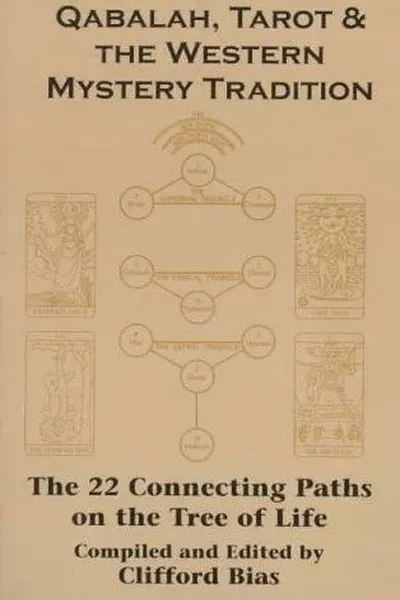
Books on this concept







No reflections yet. Be the first.
Share your interpretation, experience, or question.
