Samadhi
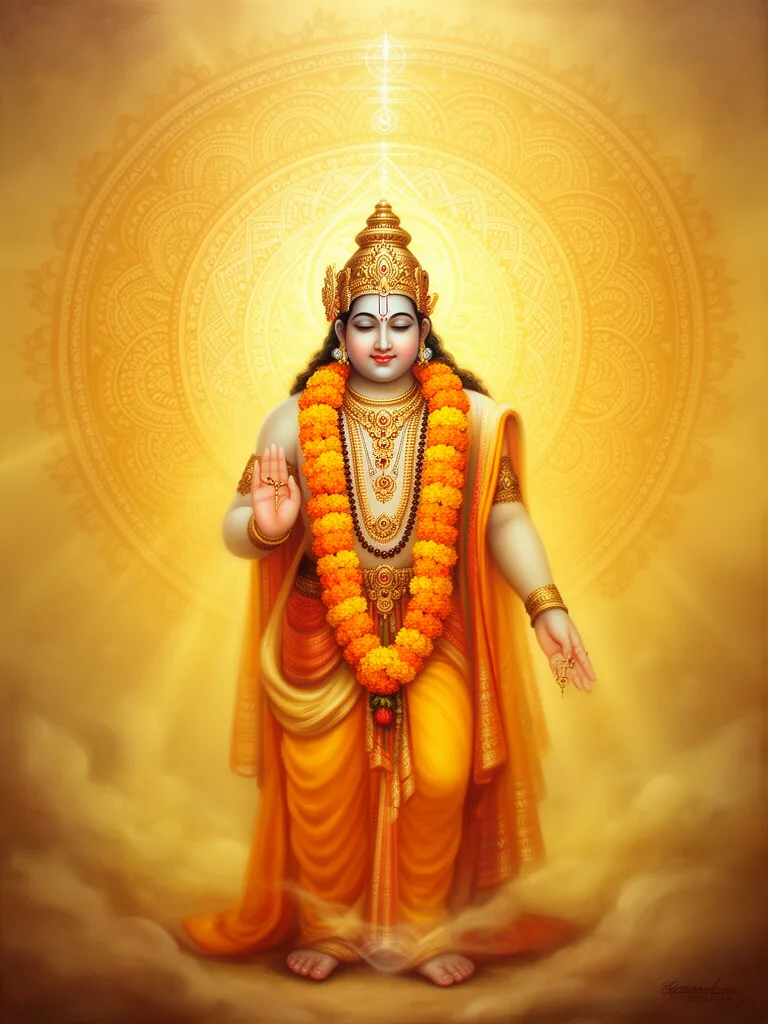
Samadhi is a profound state of meditative consciousness in Hinduism and Buddhism, characterized by deep absorption, inner stillness, and a transcendence of the ordinary self. It represents a peak experience of spiritual realization, often described as ecstatic union or profound peace.
Where the word comes from
The Sanskrit term "Samadhi" (समाधि) derives from the prefix "sam-" meaning "together" or "completely," and the root "dha-" meaning "to place" or "to put." It signifies a state of being "placed together" or "unified," first appearing in ancient Vedic texts and evolving through classical Sanskrit literature.
In depth
A state of ecstatic and complete trance The term comes from the words Sam-ddha, "self-pos.scssion". He who pos.ses.scs this power is able to exercise an al)solute control over all his faculties, physical or nn-ntal; it is the highest state of Yoga.
How different paths see it
What it means today
Blavatsky’s definition, though rooted in the terminology of her era, points toward a core understanding of Samadhi as a state of supreme self-possession, an absolute mastery over the inner and outer faculties. This is not a passive surrender but an active engagement with the deepest strata of consciousness, akin to what Mircea Eliade described as the ecstatic ascent of the shaman or the yogi, a journey beyond the confines of ordinary space and time. The Sanskrit root, suggesting a state of being "put together" or unified, hints at the dissolution of internal fragmentation, the reintegration of the scattered self into a cohesive whole.
Carl Jung, in his exploration of archetypes and the collective unconscious, might see Samadhi as a profound encounter with the Self, the archetype of wholeness, where the individual ego merges with the greater psychic reality. The meditative practice leading to Samadhi, whether the focused concentration (Samatha) or the insight meditation (Vipassana) described in Buddhist traditions, cultivates a stillness that allows the deeper currents of being to surface. This is not an escape from the world, but a more profound way of being in it, as Suzuki noted regarding Zen Buddhism, where enlightenment is found in the midst of everyday life. The experience, often described as ecstatic or blissful, is a consequence of the mind’s release from its habitual patterns of grasping and aversion, a state of unadulterated presence. It represents a profound reorientation, a shift in perspective where the illusory boundaries of the individual self dissolve, revealing a boundless, interconnected reality. The profound peace associated with Samadhi is not an absence of experience, but an experience of fundamental reality stripped bare of the distortions of egoic identification.
RELATED_TERMS: Nirvana, Moksha, Enlightenment, Satori, Gnosis, Self-realization, Cosmic Consciousness, Trance
Related esoteric terms
Books on this concept








No reflections yet. Be the first.
Share your interpretation, experience, or question.
