Rupa
Rupa signifies form or matter in Sanskrit, encompassing the physical body, material objects, and even the perceived forms of deities. It represents the tangible, visible aspect of existence, a fundamental concept in Indic philosophies distinguishing the manifest from the unmanifest.
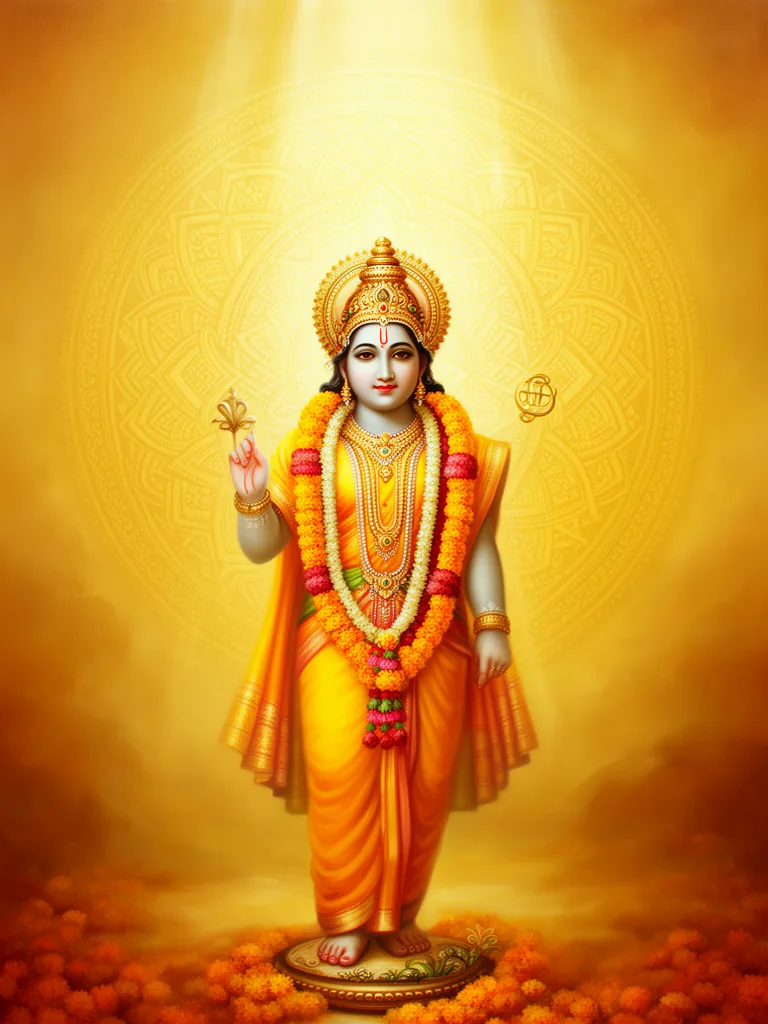
Where the word comes from
The term "Rupa" derives from the Sanskrit root rup, meaning "to be beautiful," "to form," or "to shape." It first appeared in Vedic literature and is central to philosophical discussions on materiality and perception. The concept extends to the physical manifestation of all things, from the grossest matter to the subtlest forms.
In depth
Body; any form, applied even to the forms of the gods, which are subjective to us.
How different paths see it
What it means today
The Sanskrit term Rupa, often translated as "form" or "matter," invites a profound re-examination of our relationship with the tangible world. Blavatsky’s definition, encompassing "any form, applied even to the forms of the gods," suggests a radical inclusivity, blurring the lines between the mundane and the divine through the lens of manifestation. This concept resonates deeply with the perennial philosophical quest to understand the nature of reality, a quest that has occupied thinkers from ancient India to the modern West.
In Hindu philosophy, Rupa is inextricably linked to Prakriti, the primal matter or nature, which undergoes constant transformation. It is the visible, perceivable aspect of existence, subject to the laws of cause and effect, birth and death. This stands in stark contrast to Purusha, the pure consciousness, the unchanging witness. The spiritual path, therefore, often involves transcending the identification with Rupa, with the physical body and its sensory experiences, to realize the eternal Self. As Mircea Eliade observed in his studies of archaic religions, the material world is often seen as a symbolic language, a cosmic text to be deciphered.
Buddhism similarly engages with Rupa, integrating it into the doctrine of Anatta (non-self) and the five skandhas. Rupa, the material form, is one of the constituents of our perceived existence, but it is inherently impermanent and devoid of an independent, enduring essence. The clinging to Rupa, and indeed to all the skandhas, is identified as a root cause of suffering. The practice of mindfulness, as elucidated by scholars like Walpola Rahula, encourages a clear perception of Rupa not as a solid, fixed entity, but as a process, a flux of energy and sensation.
For the modern seeker, Rupa offers a potent antidote to the illusion of solidity and permanence that often underpins our anxieties. It prompts us to view our physical forms, our possessions, and even the structures of our societies not as immutable facts, but as fluid expressions of a deeper, more fundamental reality. The understanding of Rupa encourages a detachment that is not nihilistic but liberating, allowing for a more fluid and compassionate engagement with the world. It is in recognizing the ephemeral nature of form that we may begin to apprehend the eternal.
Related esoteric terms
Books on this concept








No reflections yet. Be the first.
Share your interpretation, experience, or question.
