Gopis
The Gopis are milkmaids and cowherd women from the village of Vrindavan in Hindu tradition, primarily known as the devoted companions and lovers of the god Krishna. They represent the soul's ecstatic devotion to the divine, embodying selfless love and spiritual longing.
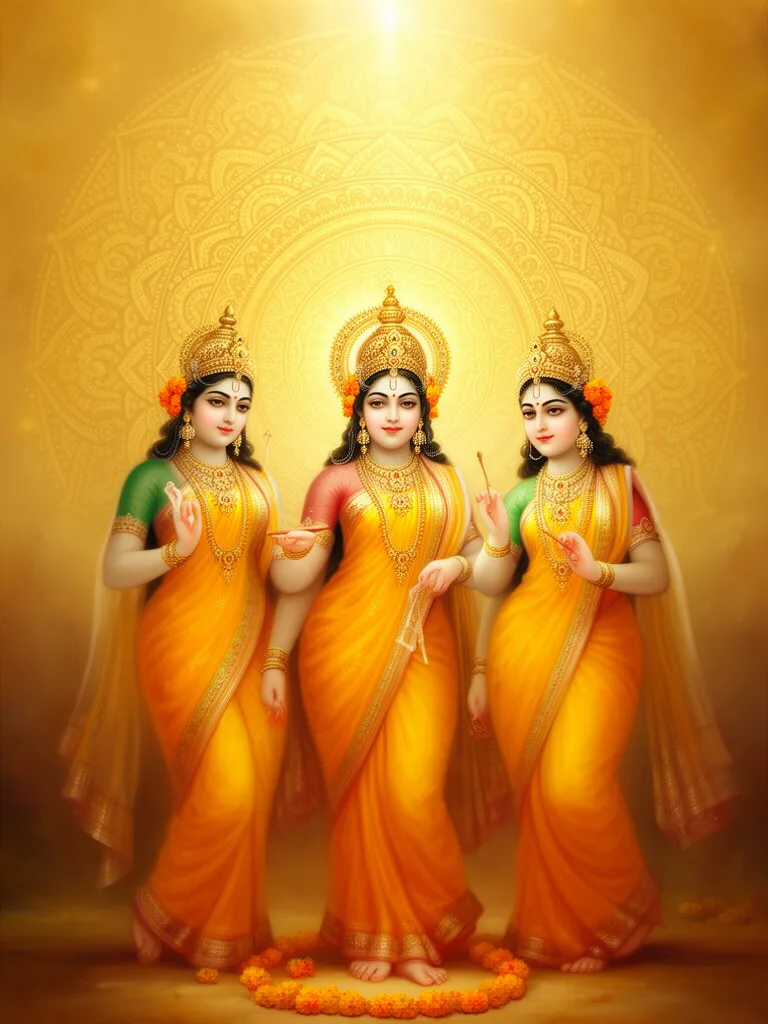
Where the word comes from
The Sanskrit term "Gopi" (गोपी) means "cowherd woman" or "milkmaid." It derives from the root word "gopa" (गोप), meaning "herdsman" or "guardian of cows." This term appears in ancient Vedic texts and is central to the Puranic literature describing Krishna's life.
In depth
Shepherdes.ses — the playmates and companions of Krishna, among whom was his wife Raddiia.
How different paths see it
What it means today
The Gopis, as immortalized in the Bhagavata Purana, are more than mere shepherdesses; they are the archetypal devotees whose relationship with Krishna embodies the loftiest aspirations of the soul towards the Divine. Helena Blavatsky's brief definition hints at their role as "playmates and companions," but the depth of their spiritual significance, as explored by scholars like Mircea Eliade and later commentators, is far richer. They represent the human heart's capacity for selfless, passionate love, a love that seeks no reward, no recognition, only union with the Beloved. Their devotion is often described as madhurya bhava, the mood of conjugal love, which, in its most elevated form, signifies the soul's complete abandonment of self-interest to merge with the divine presence.
The Rasa Lila, their most famous cosmic dance with Krishna, is not simply a pastoral idyll but a profound allegory. As Swami Vivekananda might have suggested, it speaks to the ecstatic state where individual consciousness dissolves into a universal harmony, where each Gopi experiences Krishna as uniquely her own, yet all are united in his divine embrace. This is not a literal depiction of romantic love but a symbolic representation of the soul's journey towards liberation, a journey fueled by an intense, all-consuming yearning for God. The Gopis, in their uninhibited emotional expression and their willingness to forsake all for Krishna, offer a powerful counterpoint to more austere or intellectual paths of spiritual seeking. They remind us that the divine can be approached not only through asceticism or knowledge but through the unadulterated outpouring of the heart. Their story resonates with the mystical traditions across the globe, from the Sufi lover's passionate lament for the absent Beloved to the Christian mystic's ecstatic union with Christ. They are the embodiment of bhakti, devotion, elevated to its highest, most transformative power.
The concept of the Gopis challenges modern sensibilities that often prioritize rational understanding over emotional experience. Their spiritual path is one of surrender, of vulnerability, of an almost childlike faith that allows for an unmediated connection with the divine. They are the ones who, when Krishna disappears from the Rasa Lila, are consumed by such longing that their very essence becomes Krishna-consciousness. This profound identification, this dissolution of self in the object of love, is the ultimate goal of many esoteric traditions. The Gopis, therefore, are not just characters in a myth; they are living embodiments of a spiritual possibility, a testament to the power of love to transcend all boundaries.
RELATED_TERMS: Bhakti, Krishna, Vrindavan, Rasa Lila, Divine Love, Soul's Union, Spiritual Yearning
Related esoteric terms
No reflections yet. Be the first.
Share your interpretation, experience, or question.
