Rabbinical
Rabbinical refers to the teachings, interpretations, and legal decisions of Jewish rabbis, particularly those derived from the Talmud and other post-biblical rabbinic literature. It encompasses the body of Jewish law, ethics, and tradition that has shaped Jewish life and thought for centuries.
Where the word comes from
The term "Rabbinical" derives from the Hebrew word "rav," meaning "great one" or "master." It emerged with the rise of the rabbinic movement following the destruction of the Second Temple in 70 CE, signifying the authority and teachings of the Sages who codified Jewish oral law.
In depth
Asoka (Sk.). A celebrated Indian king of the Morya dynasty which reigned at ^lagadha. There were two Asokas in reality, according to the chronicles of Northern Buddhism, though the first A.soka — the grandfather of the .second, nanu-.l by Prof. Max Miiller the "Constantine of India", was !)etter known by his name of ('li:mdragupta. It is the former who was called. /'wf/</.si (Pali) "the beautifid", and Dnu'niam-pina "the beloved of the gods", and also Kalnsoka; while the name of his grandson was Dharmasokd — the Asoka of the good law — on accouni of his devotion to Buddhism. .Moreover, according to the same source, the second Asoka had never followed the P>rahmanical faith, but was a Buddhist born. It was his grandsire who had been tirst converted to the new faith, after which he had a nund)er of edicts inscribed on jdllars and rocks, a custom followed also by his grandson. But it was the second 34 THEOSOPHKAL Asoka who was tlu* most zealous supporter of Buddlusni ; lu', wlio maintained in his j)alac'C' from GO to 70.000 monks and i)riests. wlio erected 84,000 topes and stupas tliroufihout India, reijrned 30 years, and sent missions to Ceylon, and throug^hout the world. The inscriptions of various edicts publislied by him display most noble ethical sentiments, especially the edict at Allaliabad. on tlie so-called " Asoka 's column", in the Fort. The sentimi-nts are lofty and poetical, breatliinf? tenderness for animals as well as men, and a lofty view of a kind's mission witli regard to his peoj)le, that might be followed with great success in the present age of cruel wars and barbarous vivisection.
How different paths see it
What it means today
The term "Rabbinical," in its essence, points to a profound method of spiritual and legal cultivation, one deeply rooted in the meticulous study and interpretation of scripture and tradition. It signifies a lineage of scholars, the rabbis, who, in the wake of seismic historical shifts, took upon themselves the monumental task of preserving, codifying, and transmitting the essence of Jewish life and thought. This was not a passive inheritance, but an active, intellectual, and spiritual wrestling with the divine word, a process that gave birth to the vast edifice of the Talmud and subsequent rabbinic literature.
Mircea Eliade, in his explorations of the sacred and the profane, would likely find in rabbinical practice a compelling example of how the everyday is infused with the transcendent. The meticulous attention to detail in halakha, Jewish law, is not merely a set of rules, but a framework for sanctifying existence, for imbuing mundane actions with profound meaning. It is a testament to the belief that the divine is not confined to temples or celestial realms, but is intimately present in the ordering of one's household, the conduct of one's business, and the articulation of one's prayers.
This intellectual rigor, this commitment to reasoned discourse and dialectic, is a hallmark of the rabbinical tradition. It is a spiritual practice that engages the mind as fully as the heart. The debates and discussions recorded in the Talmud, the careful weighing of differing opinions, reveal a profound trust in the capacity of human intellect to approach divine truth, however imperfectly. This is a far cry from blind faith; it is a faith that is constantly being tested, refined, and deepened through rigorous inquiry.
For the modern seeker, the rabbinical tradition offers a powerful model for engaging with inherited wisdom. It suggests that true spiritual growth often comes not from discarding the past, but from engaging with it deeply, critically, and creatively. It is an invitation to see the sacred not as a distant ideal, but as a living reality to be cultivated through diligent practice and thoughtful interpretation, finding the divine in the very fabric of our lived experience. The ongoing conversation, the relentless questioning, is itself a form of prayer.
Related esoteric terms
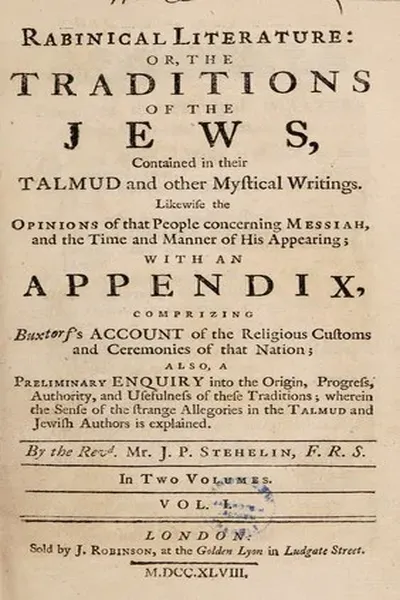
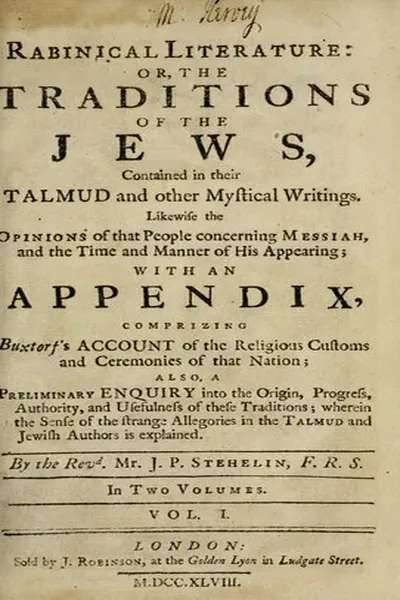
Books on this concept






No reflections yet. Be the first.
Share your interpretation, experience, or question.
