Kabbalah
Kabbalah is a Jewish mystical tradition that explores the divine nature of God and the universe through symbolic interpretation of scripture and esoteric practices. It seeks to understand the hidden meanings of creation and humanity's relationship with the divine.
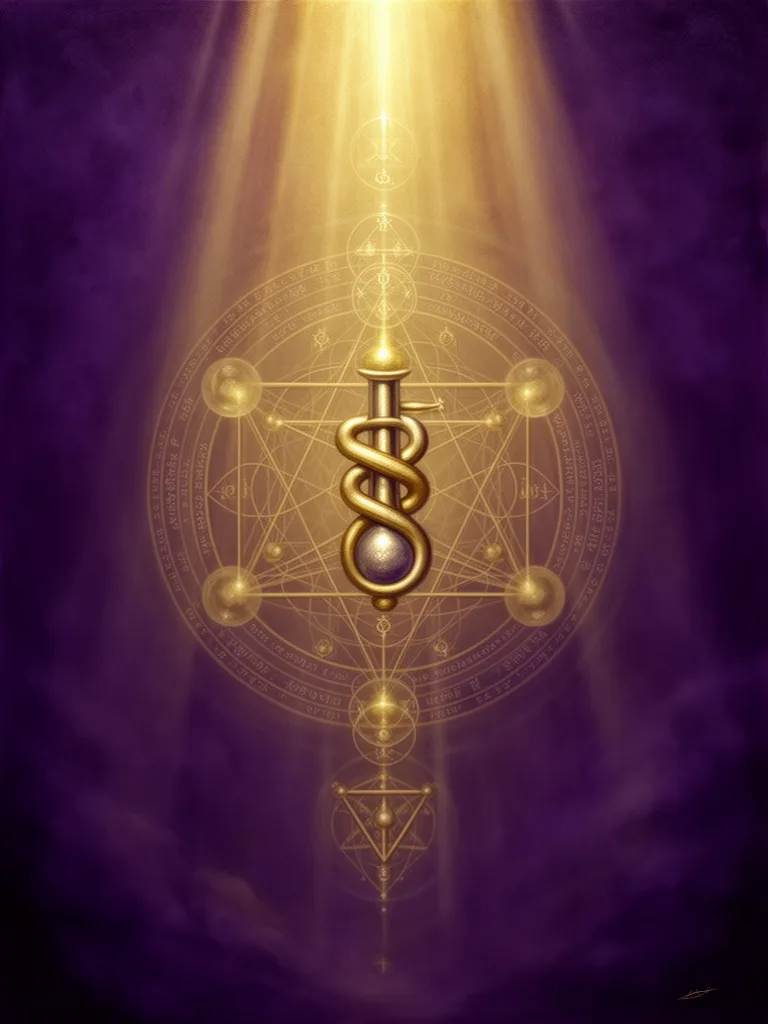
Where the word comes from
The term "Kabbalah" derives from the Hebrew word qabbalah, meaning "reception" or "tradition." It signifies the oral transmission of mystical knowledge passed down through generations, originating within Jewish esotericism, with its roots traceable to ancient Hebrew mystical traditions.
In depth
Kabbalah or Qabalah ( kə-BAH-lə, KAB-ə-lə; Hebrew: קַבָּלָה, romanized: Qabbālā, pronounced [kabaˈla] ; lit. 'act of receiving, acceptation') is an esoteric method, discipline, and school of thought in Jewish mysticism. It forms the foundation of mystical religious interpretations within Judaism. A traditional Kabbalist is called a Mekubbal (מְקֻובָּל, Məqubbāl, 'receiver'). Kabbalists originally developed transmissions of the primary texts of Kabbalah within the realm of Jewish tradition and often...
How different paths see it
What it means today
Kabbalah, a word meaning "reception," is less a doctrine and more a way of receiving the ineffable, a method for apprehending the divine not as a static entity but as a vibrant, unfolding process. It is the esoteric heart of Jewish mysticism, a profound exploration of God's hidden nature and the intricate architecture of existence. Scholars like Gershom Scholem have illuminated its development from early Merkavah mysticism to the rich symbolic language of the Zohar, revealing a tradition deeply concerned with the relationship between the transcendent and the immanent.
At its core, Kabbalah presents the Sephirot, ten divine emanations or attributes, as a cosmic tree through which divine light flows into creation. This Tree of Life is not merely a symbolic diagram but a map for spiritual ascent, a guide for understanding the subtle energies that bind the universe together. It posits a cosmology where the divine is both the source and the substance of all things, and human consciousness is a microcosm reflecting this grand design. The Kabbalist, the Mekubbal or "receiver," seeks to attune themselves to these divine currents, to understand the hidden connections between seemingly disparate phenomena, and ultimately, to participate in the Tikkun Olam, the mending of the world.
This esoteric discipline invites a profound re-envisioning of our place in the cosmos. It suggests that the divine is not separate from us, but is the very fabric of our being, and that through contemplation, prayer, and ethical action, we can facilitate the flow of divine grace and restore harmony. It is a path that demands intellectual rigor and spiritual discipline, a willingness to engage with symbolic language and to perceive the sacred in the mundane. The Kabbalistic vision is one of ultimate unity, a return to the source, where the perceived separation between God, humanity, and the universe is revealed as an illusion. It offers a profound framework for understanding the mysteries of existence and for cultivating a life lived in conscious connection with the divine.
Related esoteric terms
Books on this concept







No reflections yet. Be the first.
Share your interpretation, experience, or question.
