Pagan Gods
"Pagan Gods" refers to deities worshipped in polytheistic religions outside the Abrahamic traditions, often misunderstood as mere idols. In esoteric thought, they symbolize abstract natural forces, virtues, or spiritual potencies of the cosmos, rather than anthropomorphic figures.
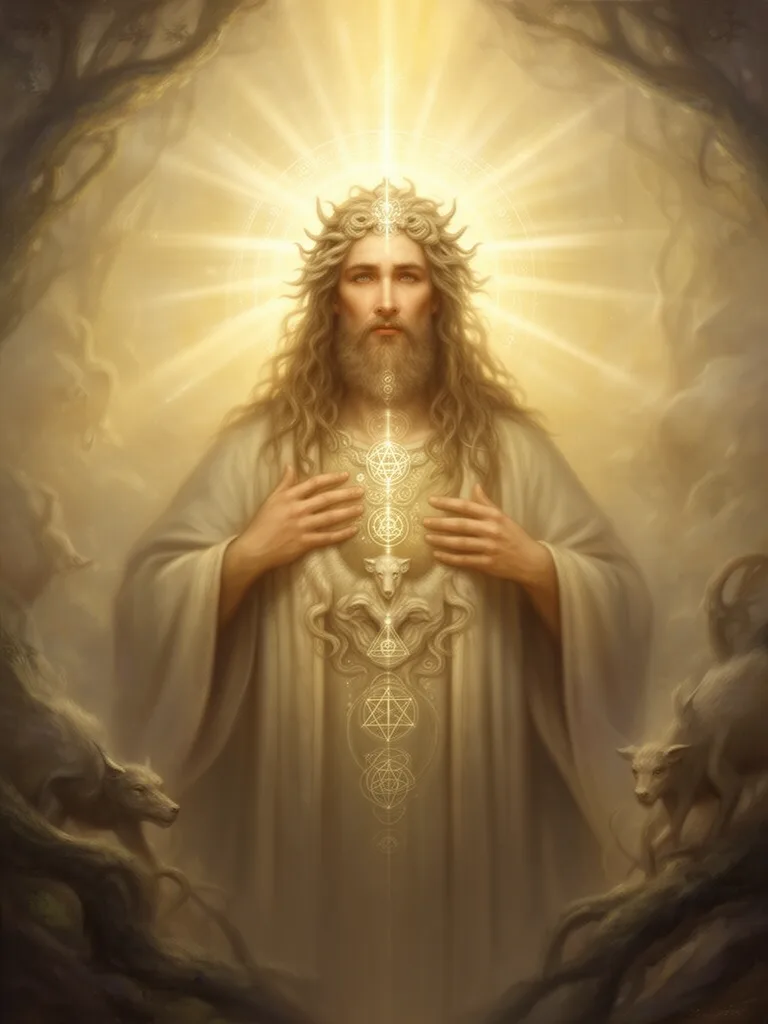
Where the word comes from
The term "pagan" derives from the Latin "paganus," meaning "villager" or "country dweller," originally used by Christians to denote those outside urban centers who retained older, rural religious practices. It emerged in late antiquity, around the 4th century CE, as Christianity became dominant.
In depth
The term is erroneously understood to mean idols. The philosophical idea attached to tliem was never that of something objective or anthropomorphic, but in each case an abstract potency, a virtue, or quality in nature. There are gods who are divine planetary spirits (Dhyan Chohans) or Devas, among which are also our Egos. With this exception, and especially whenever represented by an idol or in anthropomorphic form, tlie gods represent symbolically in tlie Hindu, Eg}-ptian, or Chaldean Pantheons — formless spiritual Potencies of the "Unseen Kosmos".
How different paths see it
What it means today
Blavatsky's definition challenges the common, often dismissive, understanding of "pagan gods" as primitive idolatry. She insists on a philosophical interpretation, viewing them as representations of "abstract potency, a virtue, or quality in nature." This echoes the insights of Mircea Eliade, who described how in archaic societies, the sacred is not separate from the natural world but is immanent within it. The bull, the storm, the river—these are not just phenomena but are imbued with divine presence. The anthropomorphic form of a god, whether Zeus or Osiris, is a vessel, a recognizable human-like structure designed to facilitate human communion with these vast, often incomprehensible, cosmic energies. They are, in essence, focal points for devotion and understanding, allowing the worshipper to grasp the formless through the formed. This perspective aligns with Carl Jung's concept of archetypes, which manifest in myth and religion as divine figures, representing fundamental patterns of the human psyche and the collective unconscious. The "gods" become, for the modern seeker, not objects of blind faith, but profound symbols that can illuminate the inner workings of both the cosmos and the self. They invite contemplation on the nature of power, virtue, and the divine immanence that permeates existence, urging us to look beyond the surface of form to the potent, unseen forces they signify.
Related esoteric terms
No reflections yet. Be the first.
Share your interpretation, experience, or question.
