Ganadevas
Ganadevas are celestial beings in Hinduism, often described as attendants of Shiva, who inhabit higher realms like Maharloka. They are considered cosmic administrators, ruling over specific cycles of creation and dissolution known as Kalpas, their existence tied to the vast temporal scales of the universe.
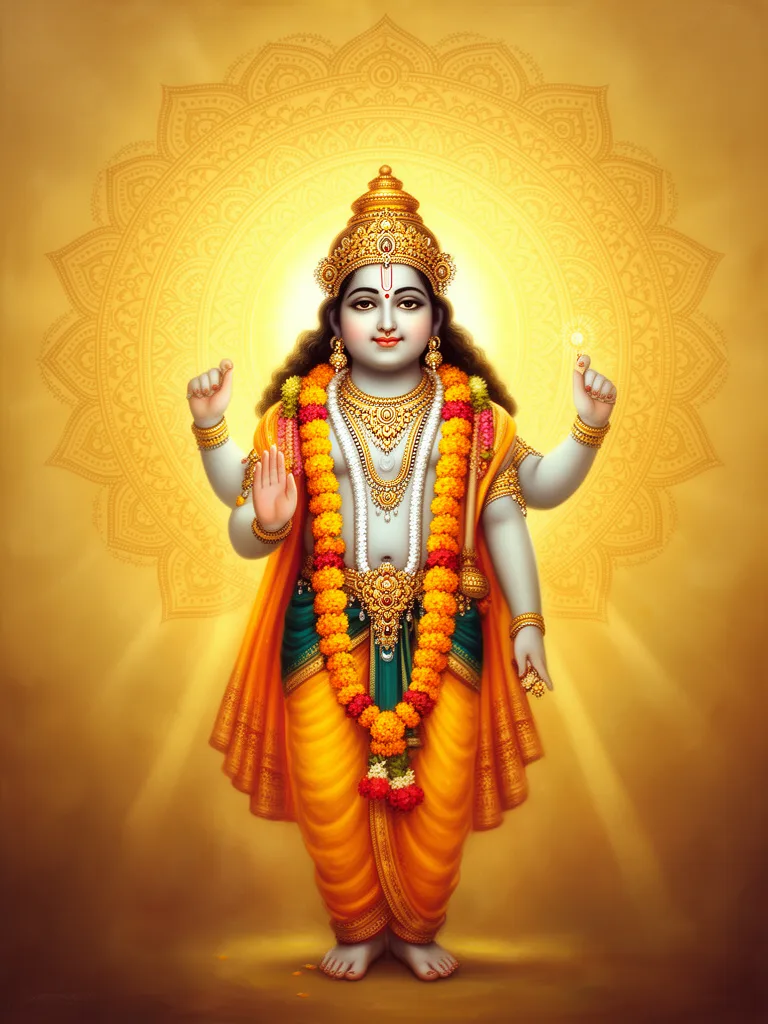
Where the word comes from
The term "Ganadevas" derives from Sanskrit, combining "gana" meaning "group," "host," or "attendants," and "devas" meaning "divine beings" or "gods." This etymology suggests a collective of divine entities, often associated with Shiva's celestial retinue, the Ganas. The concept of Kalpadhikarins, "lords of the Kalpa," further specifies their role in cosmic governance.
In depth
A certain class of celestial Beings who are said to inhabit Maharloka. They are the rulers of our Kalpa (Cycle) and therefore termed Kalpadhikarins, or Lord of the Kalpas. They last only "One Day" of Brahma.
How different paths see it
What it means today
The Ganadevas, as described in Hindu traditions, present a fascinating lens through which to view the management of existence. They are not mere passive inhabitants of celestial realms but active participants in the grand cosmic drama, ruling over specific epochs, or Kalpas. This notion of "lords of the Kalpa" speaks to a universe governed by intricate cycles, a concept explored by scholars like Mircea Eliade in his studies of eternal return and cosmic time. The Ganadevas are part of an intricate hierarchy, often associated with Shiva, the destroyer and regenerator, suggesting that the forces of change and renewal are overseen by divine entities.
Their existence in Maharloka, a higher plane of consciousness, implies a detachment from the immediate concerns of the material world, yet a profound responsibility for its overarching structure. This mirrors the idea of a guiding intelligence or a cosmic bureaucracy that ensures the continuity and transformation of reality. For the modern seeker, the Ganadevas can represent the underlying order that persists even amidst apparent chaos. They remind us that cycles of creation and destruction are natural, and that within these vast temporal scales, there is a form of administration, a divine stewardship.
The ephemeral nature of their reign, lasting but "One Day" of Brahma, further underscores the impermanence of all forms, even divine ones. This resonates with Buddhist philosophies on Anicca, the doctrine of impermanence, and with the Sufi understanding of the divine as both transcendent and immanent, constantly manifesting and withdrawing. The Ganadevas, therefore, offer a perspective on divine power that is both majestic and transient, a reminder that all structures, however grand, are part of a larger, ever-shifting cosmic flow. Contemplating their role can foster a sense of perspective on our own fleeting existence within the vastness of time.
Related esoteric terms
No reflections yet. Be the first.
Share your interpretation, experience, or question.
