Deva-lokas
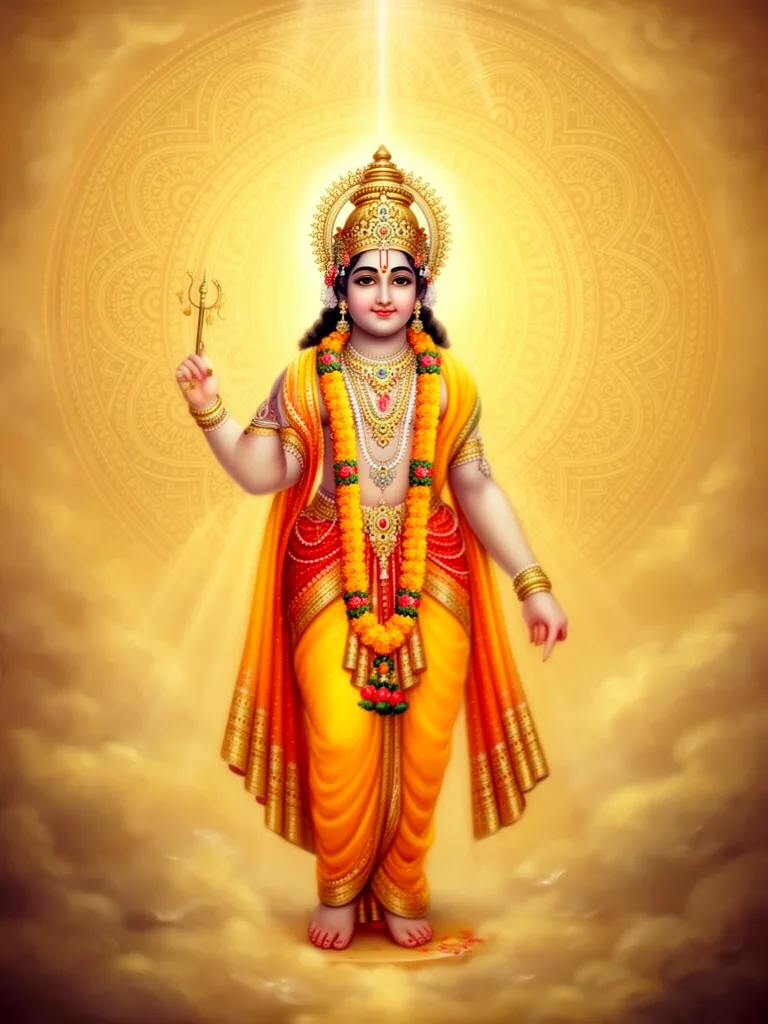
Deva-lokas are the celestial realms or heavenly abodes inhabited by the Devas, divine beings in Hindu cosmology. These realms are considered higher planes of existence, distinct from the mortal world, and are often depicted as seven in number, situated above the mythical Mount Meru.
Where the word comes from
The term "Deva-lokas" originates from Sanskrit, a fusion of "deva," meaning "god" or "divine being," and "loka," meaning "world" or "realm." This compound signifies "worlds of the gods." The concept of multiple celestial realms is ancient, appearing in Vedic literature and evolving through Puranic texts.
In depth
The abodes of the Gods or Devas in superior spheres. The seven celestial worlds above Meru.
How different paths see it
What it means today
The concept of Deva-lokas, the celestial abodes of the gods in Hindu cosmology, offers a fascinating lens through which to examine the human aspiration for higher states of being. These are not static, eternal paradises in the Western sense, but rather more refined planes of existence, accessible through accumulated spiritual merit. Mircea Eliade, in his exploration of sacred space, would recognize in these layered heavens a cosmic architecture that mirrors the human psyche's own quest for transcendence, a vertical ascent from the mundane to the divine.
Blavatsky's description of "seven celestial worlds above Meru" points to a meticulously structured cosmos, where each lokas represents a distinct vibratory frequency or state of consciousness. The Devas themselves are not omnipotent deities but powerful beings who, like humans, are bound by the wheel of karma and reincarnation (samsara). Their existence, though blissful and prolonged compared to human life, is ultimately impermanent. This understanding is crucial: it suggests that even the highest achievable states within the manifest universe are not the ultimate goal, but rather stepping stones.
The practice associated with aspiring to or understanding the Deva-lokas is not one of mere petition but of spiritual cultivation. It involves ethical living, selfless action (karma yoga), devotion (bhakti yoga), and meditative absorption (raja yoga), all of which purify the mind and generate the merit necessary to experience these higher realms. Carl Jung's concept of archetypes might find resonance here, with the Devas representing potent symbols of divine power and wisdom that can be both externalized as cosmic beings and internalized as aspects of the Self. The ultimate aim, however, transcends even these celestial abodes, pointing towards moksha, liberation from the cycle of birth and death altogether. The Deva-lokas, therefore, serve as a potent reminder of the vastness of existence and the potential for spiritual evolution, yet they also underscore the transient nature of all conditioned phenomena, urging the seeker toward an unconditioned reality.
RELATED_TERMS: Samsara, Karma, Moksha, Brahman, Atman, Yoga, Reincarnation, Cosmology
Related esoteric terms
No reflections yet. Be the first.
Share your interpretation, experience, or question.
